
Effects of Corn Processing Method and Dietary Inclusion of Wet Distillers Grains with Solubles (WDGS) On Enteric Methane Emissions of Finishing Cattle

Waste to Worth: Spreading science and solutions logoWaste to Worth home | More proceedings….

Abstract

The use of wet distiller’s grains with solubles (WDGS) in feedlot diets has increased as a result of the growing U.S. ethanol industry.  However, few studies have evaluated the use of WDGS in finishing diets based on steam-flaked corn (SFC), the processing method used extensively in the Southern Great Plains.  The effects of corn processing method and WDGS on enteric methane (CH4) production, carbon dioxide (CO2) production and energy metabolism were evaluated in two respiration calorimetry studies.  In Exp. 1, the effects of corn processing method (SFC or dry rolled corn – DRC) and WDGS inclusion (0 or 30% of diet dry matter- DM) were studied using a 2 x 2 factorial arrangement of treatments and four Jersey steers in a 4 x 4 Latin square design.  In Exp. 2, the effects of WDGS inclusion rate (0, 15, 30, or 45% of diet DM) on CH4 and CO2 production were measured in a 4 x 4 Latin square design. Results indicate that cattle consuming SFC-based diets produce less enteric CH4 and retain more energy than cattle fed  DRC-based diets.  When dietary fat levels were held constant, dietary inclusion of WDGS at 15% of diet DM did not affect enteric CH4 production, WDGS inclusion at 45% of diet DM significantly increased enteric CH4 production and WDGS inclusion at 30% of diet DM had variable effects on enteric CH4 production.

Purpose

Our objectives were to determine the effects of corn processing method and WDGS inclusion rate on enteric methane losses from finishing cattle using respiration calorimetry.

What Did We Do?

Steer in open circuit respiration calorimetry chamber.

Eight steers were used in two studies.  In each study steers were fed one of four diets at 2 x maintenance energy requirements in a 4 x 4 Latin square design.  Each period of the Latin squares included a 16 d adaptation period followed by 5 days of total fecal and urine collection and measurement of gas exchange in respiration chambers.  In Experiment 1 dietary treatments consisted of corn processing method (steam flaked -SFC or dry rolled -DRC) and WDGS inclusion rate (0 or 30% of DM).  All diets were balanced for ether extract.   In Exp. 2, cattle were fed SFC-based diets containing 0, 15, 30 or 45% WDGS (DM basis).  The calorimetry system consisted of 4 chambers with an internal volume of 6500 L.   Outside air was pulled through chambers using a mass flow system.  Gas concentrations were determined using a paramagnetic oxygen analyzer and infrared methane and carbon dioxide analyzers (Sable Systems, Las Vegas, NV)  Data were statistically analyzed using the Mixed procedure of SAS.

What Have We Learned?

In Exp. 1. no iteractions between grain processing method and WDGS inclusion were detected (P > 0.47).  Cattle fed DRC-based diets had greater (P < 0.05) CH4 production (L/steer, L/kg of DMI, % of gross energy intake, and % of digestible energy intake) than cattle fed SFC-based diets probably the result of differences in ruminal fermentation and ruminal pH.  Methane losses as a proportion of GE intake (2.47 and 3.04 for SFC and DRC-based diets, respectively) were similar to previous reports and to IPCC (2006) values but were somewhat lower than EPA (2012) values.  Grain processing method did not affect CO2 production (13 to 14 Kg/d).  WDGS  inclusion rate did not affect CH4 or CO2 production.  In Exp. 2, CH4 production (L/d) increased quadratically (P = 0.03) and CH4 production as L/kg of DMI and as a proportion of energy intake increased linearly (P < 0.01) with increasing concentrations of WDGS in the diet.  Feeding WDGS did not affect (P > 0.23) total CO2 production.  Conclucions: Our results indicate that cattle consuming DRC-based finishing diets produce approximately 20% more enteric CH4 than cattle fed SFC-based diets.  When WDGS comprised 30% or less of the diet and diets were similar in total fat content, feeding WDGS had little effect on enteric CH4 but when fed at higher inclusion rates enteric CH4 production was increased by approximately 40%.

Future Plans

Over 80% of the enteric methane emissions of the U.S. beef cattle herd are produced by cows, calves, and yearling on pasture.  Therefore, additional research will study the effects of supplementation strategies and forage quality on enteric methane production by cattle.

Authors

N. Andy Cole; Research Animal Scientist/Research Leader; USDA-ARS-CPRL, Bushland, TX andy.cole@ars.usda.gov

Kristin E. Hales, Research Animal Scientist, USDA-ARS-MARC, Clay Center, NE

Richard W. Todd, Research Soil Scientist, USDA-ARS-CPRL, Bushland, TX

Ken Casey, Associate Professor, Texas AgriLife Research, Amarillo, TX

Jim C. MacDonald, Associate Professor, Dept. of Animal Science, Univ. of NE, Lincoln

Additional Information

Hales, K. E. , N. A. Cole, and J. C. MacDonald.  2013. Effects of increasing concentrations of wet distillers grains with solubles in steam-flaked corn-based diets on energy metabolism, carbon-nitrogen balance, and methane emissions of cattle. J. Anim. Sci. (in press)

Hales, K. E. , N. A. Cole, and J. C. MacDonald.  2012. Effects of corn processing method and dietary inclusion of wet distillers grains with solubles on energy metabolism, carbon-nitrogen balance, and methane emissions of cattle. J. Anim. Sci. 90:3174-3185.

Acknowledgements

Mention of trade names or commercial products in this article is solely for the purpose of providing specific information and does not imply recommendation or endorsement by the USDA.  USDA is an equal opportunity provider and employer.

We wish to thank USDA-NIFA for partial funding through Project # TS-2006-06009 entitled “Air Quality: Odor, Dust and Gaseous Emissions from Concentrated Animal Feeding Operations in the Southern Great Plains”

The authors are solely responsible for the content of these proceedings. The technical information does not necessarily reflect the official position of the sponsoring agencies or institutions represented by planning committee members, and inclusion and distribution herein does not constitute an endorsement of views expressed by the same. Printed materials included herein are not refereed publications. Citations should appear as follows. EXAMPLE: Authors. 2013. Title of presentation. Waste to Worth: Spreading Science and Solutions. Denver, CO. April 1-5, 2013. URL of this page. Accessed on: today’s date.
Greenhouse Gas Emissions From Land Applied Swine Manure: Development of Method Based on Static Flux Chambers

Waste to Worth: Spreading science and solutions logoWaste to Worth home | More proceedings….

Abstract

A new method was used at the Ag 450 Farm Iowa State University (41.98N, 93.65W) from October 24, 2012 through December 14, 2012 to assess GHG emission from land-applied swine manure on crop land. Gas samples were collected daily from four static flux chambers.  Gas method detection limits were 1.99 ppm, 170 ppb, and 20.7 ppb for CO2, CH4 and N2O, respectively.  Measured gas concentrations were used to estimate flux using four different models, i.e., (1) linear regression, (2) non-linear regression, (3) non-equilibrium, and (4) revised Hutchinson & Mosier (HMR). Sixteen days of baseline measurements (before manure application) were followed by manure application with deep injection (at 41.2 m3/ha), and thirty seven days of measurements after manure application.  

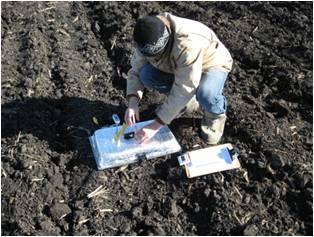
Static flux chamber (pictured) method was developed to measure greenhouse gas emissions from land-applied swine manure from a corn-on-corn system in central Iowa in the Fall of 2012.  Gas samples were collected in vials and transported to the Air Quality Laboratory at Iowa State University campus. 

Why Study Greenhouse Gases and Land Application of Swine Manure?

Assessment of greenhouse gas (GHG) emissions from land-applied swine manure is needed for improved process-based modeling of nitrogen and carbon cycles in animal-crop production systems.

What Did We Do?

We developed novel method for measurement and estimation of greenhouse gas (CO2, CH4, N2O) flux (mass/area/time) from land-applied swine manure. New method is based on gas emissions collection with static flux chambers (surface coverage area of 0.134 m^2 and a head space volume of 7 L) and gas analysis with a GC-FID-ECD.

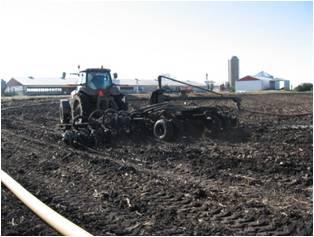
Baseline (post tilling) greenhouse gas (GHGs) emissions monitoring was followed with swine manure application in the Fall of 2012 (pictured) and about 10 weeks of post-application monitoring of GHGs.

New method is also applicable to measure fluxes of GHGs from area sources involving crops and soils, agricultural waste management, municipal, and industrial waste.  New method was used at the Ag 450 Farm Iowa State Univeristy (41.98 N, 93.65 W) from October 24, 2012 through December 14, 2012 to assess GHG emission from land-applied swine manure on crop (corn on corn) land. Gas samples were collected daily from four static flux chambers. Gas method detection limits were 1.99 ppm, 170 ppb, and 20.7 ppb for CO2, CH4, and N2O, respectively.

What Have We Learned?

Measured gas concentrations were used to estimate flux using four different mathematical models, i.e., (1) linear regression, (2) non-linear regression, (3) non-equilibrium, and (4) revised Hutchinson & Mosier (HMR). Sixteen days of baseline measurements (before manure application) were followed by manure application with deep injection (at 41.2 m3/ha), and thirty seven days of measurements after manure application.   Preliminary net cumulative flux estimates ranged from 115,000 to 462,000 g/ha of CO2, -4.65 to 204 g/ha of CH4, and 860 to 2,720 g/ha N2O.  These ranges are consistent with those reported in literature for similar climatic conditions and manure application method.

Greenhouse gases (GHGs) were analyzed in the Air Quality Laboratory (ISU) using dedicated GHGs gas chromatograph.  The picture above shows an example of gas sample analysis for CO2, GH4 and N2O.  Each ‘peak’ represents one of the tagget GHGs.  Gas concentrations were used in a mathematical model to estimate GHG flux (mass emitted/area/time).

Future Plans

Spring 2013 measurements of GHG flux from land-applied swine manure are planned.  The spring study will follow the protocols developed for the Fall 2012 season.  Estimates of the Spring and Fall GHG flux will be used to develop GHG emission factors for emissions from swine manure in Midwestern corn-on-corn systems.  Emission factors will be compared with literature data.

Authors

Dr. Jacek Koziel, Associate Professor, Iowa State University Department of Agricultural and Biosystems Engineering koziel@iastate.edu

Devin Maurer, Research Associate, Iowa State University Department of Agricultural and Biosystems Engineering

Kelsey Bruning, Undergraduate Research Assistant, Iowa State University Department of Civil, Construction and Environmental Engineering

Tanner Lewis, Undergraduate Research Assistant, Iowa State University Department of Agricultural and Biosystems Engineering

Danica Tamaye, Undergraduate Research Assistant, University of Hawaii College of Agriculture, Forestry, and Natural Resource Management

William Salas, Applied Geosolutions

Acknowledgements

We would like to thank the National Pork Board for supporting this research.


The authors are solely responsible for the content of these proceedings. The technical information does not necessarily reflect the official position of the sponsoring agencies or institutions represented by planning committee members, and inclusion and distribution herein does not constitute an endorsement of views expressed by the same. Printed materials included herein are not refereed publications. Citations should appear as follows. EXAMPLE: Authors. 2013. Title of presentation. Waste to Worth: Spreading Science and Solutions. Denver, CO. April 1-5, 2013. URL of this page. Accessed on: today’s date.

Litter Generated Ammonia Captured by Activated Carbon Derived ffrom Broiler Litter

Waste to Worth: Spreading science and solutions logoWaste to Worth home | More proceedings….

Abstract

In 2011, the production rate of broilers was 8.6 billion with a value of $23.2 billion (USDA 2012).  Both CERCLA and EPCRA have reporting requirements for ammonia (NH3) of 100 lb of NH3/d or 18.3 tons/yr, a level that may affect large animal production facilities (NRC 2003). Although USEPA (2009) has provided an exemption for animal waste producing farms under CERCLA for reporting hazardous air emissions, it is expected that this exemption will be revoked once valid methodologies are established for monitoring. Two of the 24 sites in the NAEMS monitoring study reported similar NH3 emissions of 3.6 – 5.3 tons of NH3 per house per year (Burns et al. 2009, Heber 2010). Emissions of this level indicate a need for developing technologies that can reduce the NH3 levels produced by broiler operations. This research is focused on the use of broiler litter as activated carbon (BAC) to reduce aerial NH3 generated by litter, an opportunity to not only reuse the manure, but also treat the emissions from or within broiler houses. The objective of this study was to evaluate the efficacy of BAC to remove NH3 volatilized from litter samples in a laboratory acid-trap system. Preliminary studies using NH3/air mixture indicated that the BAC capacity to adsorb NH3 was approximately double that of Vapure 612, a commercial carbon. In the litter emission study, the BAC and Vapure performance was comparable. Breakthrough for both carbons occurred within 14 hours of the test start. At the end of the 3 day test, the NH3 emission for BAC was 75% of the litter only control, whereas, the Vapure emission was 64% of the control. The results of the study demonstrate the potential for a cyclical waste utilization strategy in using broiler litter activated carbon to capture NH3 volatilized from litter.

Why Study Ammonia and Poultry Litter?

Overall purpose of this study is to develop innovative solutions for animal waste reuse and minimize emissions from poultry operations. The specific objective of this phase of the study was to evaluate the efficacy of activated carbon from broiler litter (BAC) to remove NH3 volatilized from litter samples in a laboratory acid-trap system.

What Did We Do?

The broiler litter for producing the BAC was obtained from a commercial farm in Mississippi, where the original bedding was pine shavings.  The broiler litter as collected had a moisture content of 25 to 30%.  The commercial carbon, Vapure 612 carbon (Norit Americas, Marshall, Texas), is a steam activated coal-based carbon manufactured for use in the removal of odors, toxic vapors, irritants, and corrosive gases.  After completing initial adsorption tests with the two carbons using the NH3 and air mixture, litter samples were collected from a commercial Mississippi farm where the bedding origin was also pine shavings to perform the litter emission test.  Eleven flocks had previously been grown on the litter.  The pH and moisture content were 8.32 and 17.9% respectively. The litter samples were placed in the acid trap system described below to determine the capture capacity of the carbons for NH3 volatilized from the litter. 

Litter emissions and carbon efficacy were evaluated using 50 g fresh litter samples in the laboratory using a chamber acid trap (CAT) system. The CAT system provides a straightforward method for determining differences in NH3 evolution by capturing off-gases in H3BO3. Twelve air-tight chambers, 1000 ml each, receive humidified air from a single manifold.  Weighed litter samples were placed in each air tight chamber.  To assess litter NH3 generation, exhaust air from each chamber flowed through a series of two H3BO3 flasks at approximately 115 ml/min.  The solution from the two flasks was combined into a single sample and titrated with HCl as above.  The NH3 trapped in solution was reported as mg N recovered.  For estimating carbon column efficiency, the columns described above were loaded with BAC and Vapure carbons and placed in the exhaust flow between the chambers and acid traps.  The litter only, BAC and Vapure columns were randomly assigned to the chambers in the CAT system and each replicated three times.  All treatments were titrated each morning and afternoon at consistent times for the three day test period. 


Chamber acid-trap system for capturing NH3 in the laboratory:  a) litter in chamber, b) activated carbon column, and c) boric acid traps. 

What Have We Learned?

Preliminary studies using NH3/air mixture indicated that the BAC capacity to adsorb NH3 was approximately double that of Vapure 612, a commercial carbon. In the litter emission study, the BAC and Vapure performance was comparable. Breakthrough for both carbons occurred within 14 hours of the test start. At the end of the 3 day test, the NH3 emission for BAC was 75% of the litter only control, whereas, the Vapure emission was 64% of the control. The results of the study demonstrate the potential for a cyclical waste utilization strategy in using broiler litter activated carbon to capture NH3 volatilized from litter. 

Future Plans

The development of these activated carbons and char from broiler litter will provide an effective means of reuse that will not only reduce waste volume, but in turn comprehensively treat the emissions from the waste during bird production, storage, and land application of litter. We will conduct greenhouse gas adsorption studies to determine the efficacy of activated carbon and char to adsorb CO2, CH4, and N2O.

Additionally, our plan is to develop an outreach program to be presented to poultry farmers in the Southeast U.S. along with other stakeholders addressing poultry farm emission regulations and technologies for remediation through workshops, a webinar and professional conferences.

Authors

Kari Fitzmorris Brisolara, ScD, Associate Professor of Environmental and Occupational Health, Louisiana State University, Health Sciences Center, School of Public Health, 2020 Gravier Street, New Orleans, Louisiana kbriso@lsuhsc.edu

Dana M. Miles, PhD, USDA-ARS-Mississippi State, Genetics & Precision Agriculture Research Unit, P. O. Box 5367, Mississippi State, Mississippi, 39762 dana.miles@ars.usda.gov

Isabel M. Lima, PhD, USDA-ARS-SRRC, P.O. Box 19687, New Orleans, Louisiana 70179 isabel.lima@ars.usda.gov


The authors are solely responsible for the content of these proceedings. The technical information does not necessarily reflect the official position of the sponsoring agencies or institutions represented by planning committee members, and inclusion and distribution herein does not constitute an endorsement of views expressed by the same. Printed materials included herein are not refereed publications. Citations should appear as follows. EXAMPLE: Authors. 2013. Title of presentation. Waste to Worth: Spreading Science and Solutions. Denver, CO. April 1-5, 2013. URL of this page. Accessed on: today’s date.

Mono-Slope Beef Barn Air Quality Research Project

monoslope beef barnResearchers and university specialists from USDA’s Meat Animal Research Center (USMARC), South Dakota State University, and Iowa State University recently finished a four-year study looking at mono-slope beef barns and how to improve cattle and environmental performance.
How Do Mono-slope Barns Stack Up For Air Quality?

A research team worked for three years to gather baseline data for the levels of gas emissions from mono-slope beef barns. The study involved a total of four mono-slope beef barns in South Dakota and Iowa. Researchers also evaluated two different manure-handling systems to determine if there are any differences in gas emissions.

The results of that study are summarized in a eight-page publication “Air Quality in Mono-Slope Bedded Beef Barns“. They measured ammonia, hydrogen sulfide, methane, carbon dioxide, and nitrous oxide. The first three are the primary focus of the publication, since those are most commonly associated with beef feedlots. Also discussed are impacts of building orientation, manure-handling system, pen density, bedding type, and curtain opening (ventilation).

Beef Facilities Conference

Over 300 people attended the November, 2013 conference on beef confinement buildings held in Sioux Falls, South Dakota. The recordings and written papers are linked below.

Environmental and Regulatory Aspects of Beef Barns

The page numbers next to each are the location of companion written papers in the Beef Facilities Conference proceedings.

  • Results of Air Quality Research on Mono-slope Bedded Beef Barns – pages 5-9.
  • Air Quality Regulations and implications of the air quality research project – pages 10-17

The third presentation focuses on manure and nutrient production, and nutrient management for manure produced in these systems.

  • Capturing, managing, and using nutrients from the barn – pages 18-21

Producer Panel – Virtual Tours

Four producers shared aspects of their different building designs including ventilation, manure management, what works well, and things they would change. Their summaries are on pages 22-26 of the Beef Facilities Conference Proceedings.

  • Hoop buildings – one farm tour and a short synopsis of different building designs in use in Iowa
  • Mono-slope buildings – narrow and wide designs
  • Slatted floor barn (with rubber mats) – originally built without mats

Cattle Performance and Comfort In Beef Barns

University specialists compared feed intake, animal performance, carcass characteristics, and management considerations with barns compared to other systems. The page numbers next to each are the location of a companion written paper in the Beef Facilities Conference Proceedings.

The third presentation looks at international and domestic research into the use of rubber mats in deep pit barns with concrete slats.

Webcasts

Two live webinars were recorded and archived. The presenters included researchers, extension specialists, and farmers.

Open Houses Provide Opportunities to Learn More

Photo of a bedded beef barn in South Dakota.
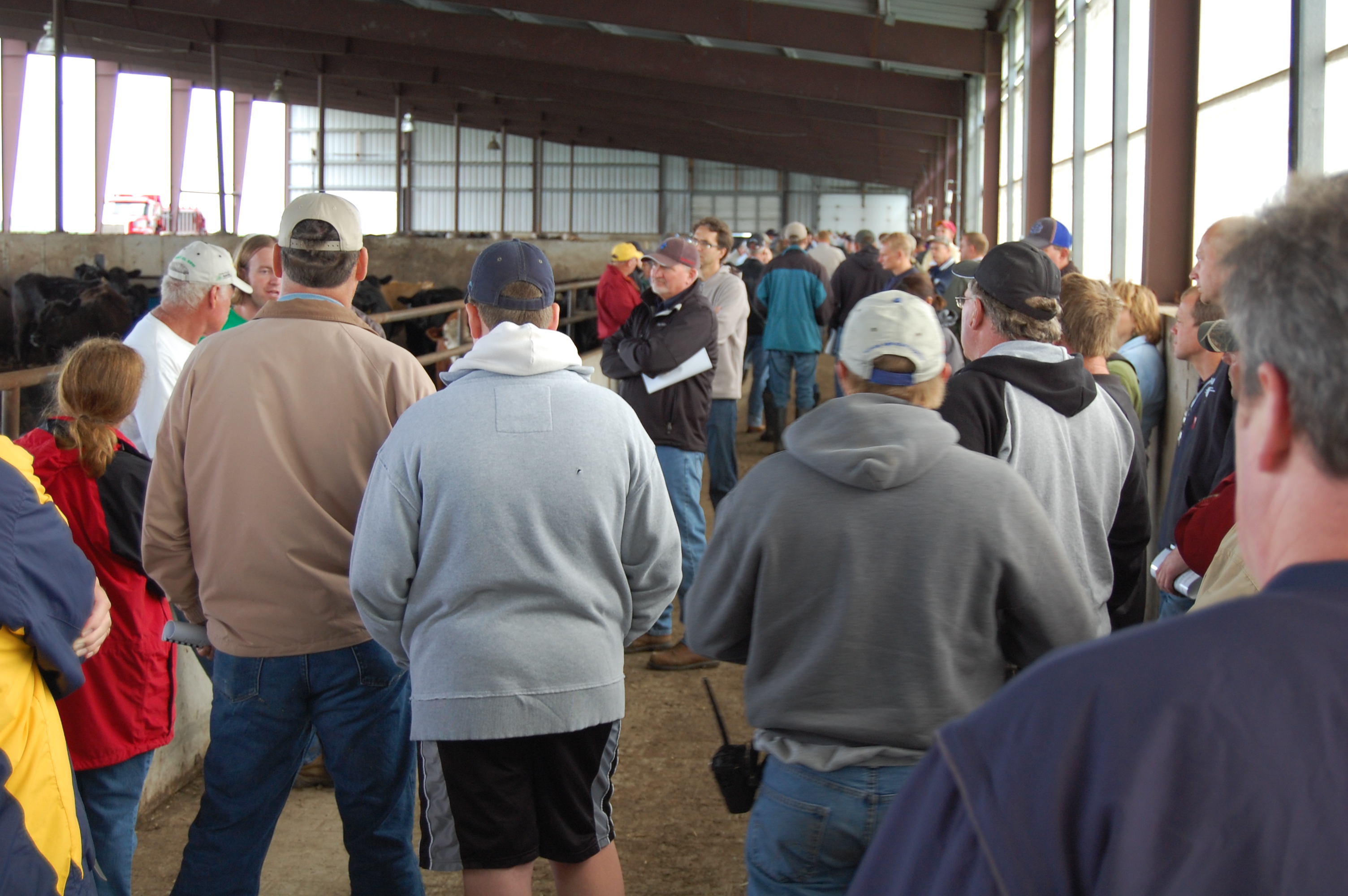
It was standing room only as participants listened to station presentations in the alleyway of the mono-slope barn.

As part of the outreach plan for this project, a series of open houses were scheduled to inform cattle producers, regulatory and technical agency staff, Extension employees, service providers and legislative and local policy-makers about air quality management and manure and environmental issues with these facilities.

Over 200 people from Iowa, Minnesota, South Dakota and Nebraska attended the Mono-Slope Beef Barn Open House in June of 2011. The open house was hosted by Ron and Clayton Christensen of Royal, Iowa and featured barn and manure management, cost-sharing opportunities, the tri-state air quality project and environmental regulations.

The open house was organized by ISU Extension and Outreach, SDSU Ag and Biosystems Engineering, and the USDA Meat Animal Research Center at Clay Center, NE.  Sponsors included Animal Medical Centers of Spencer, Clay County Cattlemen’s Association, Clay County Farm Bureau, Coalition to Support Iowa’s Farmers, Farm Credit Services of America -Emmetsburg, Spencer Ag Center and Spencer Chamber of Commerce Ag Committee.

A second open house was hosted in South Dakota in August of 2011. The open house was hosted by Goodwin Heritage Cattle Company, with approximately 125 people in attendance from South Dakota and neighboring states. Sponsors included Coteau Hills Cattlemen’s Association, Watertown Chamber of Commerce Ag Committee, SPN & Associates, Glacial Lakes Energy LLC., Landmark Builders Inc., South Dakota Farm Bureau, Ag United for South Dakota, Banner Associates and Form-A-Feed, Inc.

As a result of the two open houses:

  • 95% had a better understanding of the air quality regulations and why this research is needed*
  • 88% learned where they could find financial resources to construct a mono-slope barn*
  • 89% had improved knowledge about how gases and dust are measured*

*Based on 19.7% participation in a short survey after each open house

Learn more about the successes of these open houses.

A facility tour, Science Behind Environmental Policy, was held June 22, 2012 in NW Iowa.  This tour was attended by state and federal legislators, state policy makers and stakeholders representing Extension and university specialists. Enthusiasm for research efforts was proclaimed by the legislators. See what they learned.

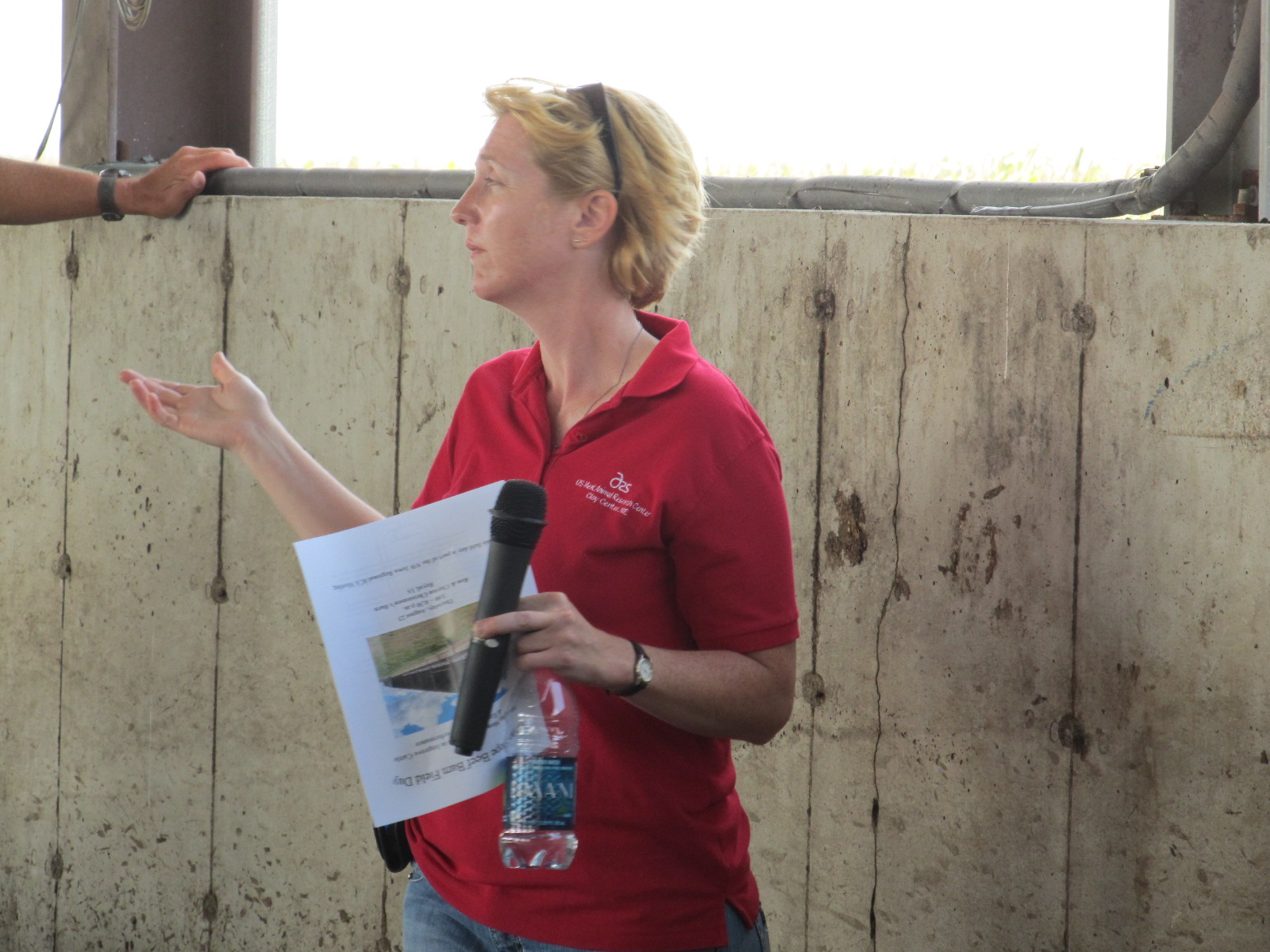
NW Iowa cattlemen listened to Mindy Spiehs, researcher with USDA ARS Meat Animal Research Center at Clay Center, share progress about the Tri-State Air Quality Project.  The update and tour at the Christensen barn were part of a NW regional meeting sponsored by the Iowa Cattlemen’s Association on August 23, 2012.

Mindy Spiehs
Mindy Spiehs talks about the Tri-State Air Quality Project.

Waste to Worth Conference Presentations

In April, 2013 researchers presented air emissions results from this project at the Waste to Worth: Spreading Science and Solutions conference in Denver, CO. These proceedings include a short written paper, recording and links to additional information. The different aspects presented were:

The above proceedings compliment the Beef Facilities Conference recordings and webcasts on the research project (both further up on this page).

Acknowledgements

This page was developed as a part of the Monoslope Beef Barn Air Quality Research project that was funded by Agriculture and Food Research Initiative Competitive Grant no. 2010-85112-20510 awarded to South Dakota State University, USDA ARS U.S. Meat Animal Research Center, Iowa State University, and University of Nebraska – Lincoln from the USDA National Institute of Food and Agriculture. For more information about the research study, contact Erin Cortus erin.cortus@sdstate.edu or Mindy Spiehs mindy.spiehs@ars.usda.gov. For more about the outreach and extension, contact Beth Doran doranb@iastate.edu.

project partner logos - South Dakota State University, USDA-ARS, Iowa State University, and University of Nebraska - Lincoln

Evaluating Air Quality in Animal Housing

Air quality in animal feeding operations (AFOs) is relevant not only for human health but also the health and productivity of the animals living in that environment. What are some of the main principles in measuring air quality? What are some of the instruments that can be used? The following materials were developed for college instructors to utilize in their classrooms when presenting about air quality measurement in animal agriculture.

Fact Sheet

Acknowledgements

These materials were developed by the Air Quality Education in Animal Agriculture (AQEAA) project with with financial support from the National Research Initiative Competitive Grant 2007-55112-17856 from the USDA National Institute of Food and Agriculture.

For questions about the materials on this page contact Dr. Eileen Wheeler, Pennsylvania State University. For questions about the AQEAA project, contact Dr. Rick Stowell, Unviersity of Nebraska (rstowell2@unl.edu).

If you have presentations, photos, video, publications, or other instructional materials that could be added to the curricula on this page, please contact  Jill Heemstra (jheemstra@unl.edu).

Measuring Particulate Matter (Dust) in Animal Agriculture

Particulate matter (often called dust) is made up of particles that are suspended in the air. The following materials were developed for college instructors to utilize in their classrooms when presenting about particulates and livestock or poultry farms.

Laboratory Exercises

Presentation Slides

Techniques for Determining Particle Size Distribution (PSD) of Particulate Matter

This presentation was given to the American Chemical Society in 2011 and focuses on comparisons between different techniques as well as the challenges is making these measurements. (36 slides; 6 MB). Download a copy of this presentation.

Note: Some of the graphics are missing in the Slideshare preview below, but they are all available in the download link.

Photo Slide Show


Clicking on a photo will take you to its page with the description and the person that should be credited if you use the photo in a presentation.

Acknowledgements

These materials were developed by the Air Quality Education in Animal Agriculture (AQEAA) project with with financial support from the National Research Initiative Competitive Grant 2007-55112-17856 from the USDA National Institute of Food and Agriculture.

For questions about the materials on this page contact Dr. Eileen Wheeler, Pennsylvania State University or the author, Dr. Lingjuan Wang-Li, North Carolina State University. For questions about the AQEAA project, contact Dr. Rick Stowell, Unviersity of Nebraska (rstowell2@unl.edu).

If you have presentations, photos, video, publications, or other instructional materials that could be added to the curricula on this page, please contact  Jill Heemstra (jheemstra@unl.edu).

Air Quality Resources for Policy Makers

Healthy communities include healthy businesses. A proposed new or expanded animal feeding operation can challenge the harmony of a local community. One commonly expressed concern regards the health impacts of the airborne emissions. Resources are available to help community members dealing with difficult decisions related to animal feeding operations. This 12 minute video explains some common air issues related to livestock and poultry production and science-based resources available to help policy makers and community members better understand odor, health and zoning issues as they develop policy.

Policy and Air Quality Resources

Setback estimation tools are available to help local policy makers and feeding operation owners assess the potential odor impact of a new or expanding operation on nearby neighbors and public areas. After odors, the most common livestock and poultry air emissions to receive scrutiny from regulators are ammonia and hydrogen sulfide. Both of these gases are important in a piece of federal legislation known as the Environmental Planning and Community Right-to-Know Act (EPCRA).

Some of the management practices available to farmers mentioned in this video include:

More Videos in This Series

Additional educational materials are available at Air Quality in Animal Agriculture

Acknowledgements

For more information about this video or these resources, contact Dr. Kevin Janni, University of Minnesota kjanni@umn.edu

These materials were based upon work supported by the by the National Institute of Food and Agriculture, U.S. Department of Agriculture under Agreement No. 2010-85112-20520.

Any opinions, findings, conclusions, or recommendations expressed in this video are those of the speaker and do not reflect the view of the U.S. Department of Agriculture.

Feedlot Air Emissions Treatment Cost Calculator

logoThere are several techniques that animal feeding operation owners and managers can use to manage odors and gas emissions. Each technique has different costs and benefits. The Feedlot Air Emissions Treatment Cost Calculator is a tool that can be used to compare alternative technologies and designs with different costs and benefits. The calculator has information on biofilters, covers, scrubbers, manure belts, vegetative buffer and anaerobic digesters.

This spreadsheet tool is intended to assist the operator of a livestock or poultry operation to calculate the costs and benefits of installing technologies to treat odors and gases that could be emitted from the facility.

Download the Air Emissions Treatment Cost Calculator

The tool requires Excel 2007 or later versions. Download the spreadsheet. Note: This is a spreadsheet with active macros. Depending on your security settings, you may have to tell your spreadsheet program that it is OK to open it. The four videos below provide instructions on how to use the decision tool.

Instructional Videos for the Air Emissions Treatment Cost Calculator

Four videos below describe the cost calculator and how to use it.

Introduction

Biofilters and Covers

Scrubbers, Manure Belts, Buffers, Digesters

Benefits and Summary

Acknowledgements

Additional materials in this series (videos):

The Feedlot Air Emissions Treatment Cost Calculator was developed by Dr. Bill Lazarus (wlazraus@umn.edu) in the Applied Economics Department at the University of Minnesota for a multistate USDA funded research and Extension project. The calculator was suggested by stakeholders that included producers and managers of swine, poultry and dairy producing operations, equipment manufacturers and suppliers, human medicine, veterinary medicine, local and state regulators, local and county elected officials, Extension and NRCS.

Supported by the National Institute of Food and Agriculture, U.S. Department of Agriculture, under Agreement No. 2010-85112-20520. If you have any questions about the project, contact Dr. Kevin Janni, University of Minnesota, kjanni@umn.edu

Managing Odors, Neighbor Relations, and Estimating Setbacks for Animal Feeding Operations

When a new or expanded animal feeding operation is proposed, air quality and odors are often identified as a concern by community members. Available science-based resources will help you better understand odor, health and zoning issues. Understanding these issues can help community members with diverse interests and perspectives engage in informed conversations as they deal with community decisions regarding zoning and land use related to large animal feeding operations.

Neighbor Relations and Odor Management

Odor is a surprisingly complex issue that can impact neighbors and others. Farmers care about their impact on neighbors and look for effective methods to reduce odors. The goal is to keep odors at non-detectable or non-offensive levels. This 9 minute video will introduce some odor management issues and options available to reduce odors. Odor mitigation includes careful site planning and, as needed, the use of natural (windbreaks and setbacks), technological and management practices. The costs of different odor reduction practices vary and should be carefully considered to determine if they are a good fit for each individual operation. Visit the Feedlot Air Emissions Treatment Cost Calculator to download a spreadsheet to help calculate costs and benefits of installing technologies to treat odors and gas emissions from animal feeding operations.

Setback Tools

This nine minute video describes three setback estimation tools developed and used in Minnesota, Nebraska and Iowa as the result of extensive research. These tools determine appropriate setback distances to manage odors when building new or expanding existing livestock or poultry facilities.

The siting of a livestock or poultry production facility is the first step in odor control to minimize impacts on nearby neighbors and public areas. Each facility needs a site-specific plan as there is no one-size-fits-all recommendation. Topography, local weather, presence of other odor sources in the area, sensitivity of the neighbors, and the characteristics of the animal facility all play a role in determining setbacks. Fortunately there are science-based tools available to assist producers, concerned citizens, and policy makers in making sound decisions.

Some of the ways farmers can manage odors include:

Also see the excellent video on “Odors on Livestock Farms: A Case Study From Nebraska” and visit the Livestock and Poultry Environmental Learning Center air quality page for more resources on managing air emissions.

More Videos in This Series

Additional educational materials are available at Air Quality in Animal Agriculture

Acknowledgements

For more information about this video or these resources, contact Dr. Kevin Janni, University of Minnesota kjanni@umn.edu

These materials were based upon work supported by the by the National Institute of Food and Agriculture, U.S. Department of Agriculture under Agreement No. 2010-85112-20520.

Any opinions, findings, conclusions, or recommendations expressed in this video are those of the speaker and do not reflect the view of the U.S. Department of Agriculture.

Manure Covers and Biofilters for Managing Odor and Air Emissions

Covers and biofilters are two techniques that can be used to help manage odors and other airborne emissions from animal feeding operations and manure storage units. Watch these two videos to learn about covers and biofilters, how they work, and related costs and benefits of different methods to reduce airborne emissions. Links to additional techniques and information are given below.

Manure Storage Covers for Reducing Odor Emissions

Visit the Feedlot Air Emissions Treatment Cost Calculator website to download a spreadsheet to help calculate costs and benefits of installing technologies to treat odors and gas emissions from animal feeding operations. A good tool to assess current management practices and their impact on air emissions, including odor, is to use the National Air Quality Site Assessment Tool (NAQSAT). Manure Storage Covers includes many more resources on this topic.

Biofilters for Reducing Odors and Gas Emissions

More is available on Biofilters. There are several methods that can be used to manage odor and other airborne emissions from animal feeding operations. Additional techniques and management information include:

More Videos in This Series

Additional educational materials are available at Air Quality in Animal Agriculture including an archived webinar on “Clearing the Air on Biofilters“

Acknowledgements

For more information about this video or these resources, contact Dr. Kevin Janni, University of Minnesota kjanni@umn.edu

These materials were based upon work supported by the by the National Institute of Food and Agriculture, U.S. Department of Agriculture under Agreement No. 2010-85112-20520.

Any opinions, findings, conclusions, or recommendations expressed in this video are those of the speaker and do not reflect the view of the U.S. Department of Agriculture.