Abandoning animal carcasses and allowing scavengers to dispose of them is risky.
Though dragging off a carcass to the boneyard has been a historical practice, abandonment is NOT recommended and is likely ILLEGAL in most states. Examples include: carcasses abandoned on the surface, in open pits, ditches, water features and sinkholes or in wells. Abandonment promotes extreme biological and disease hazard, threats to water quality, odors, flies, scavengers, rodents and visual pollution.
Scroll through the slideshows below to see many of the frequently asked questions (FAQs) about managing animal carcasses. After each question you can play a short (1-2 minute) video or scroll to the next question. Also see the page “Managing Livestock and Poultry Mortalities“. This series of short (<2 minutes each) videos is also gathered into playlist on YouTube.
Options to Dispose of Livestock and Poultry Carcasses
Options for Managing Animal Mortalities
No farmer or ranch likes to lose an animal, but the need to dispose of livestock or poultry carcasses is an inescapable part of farming.
Storified by LPE Learning Center · Thu, Oct 04 2012 09:09:17
Why Is It Important to Manage Animal Mortalities Properly?
FAQ(v): Why is proper livestock disposal important?lpelc
What Are the Options for Animal Mortality Management?
FAQ(v): What are some common animal mortality disposal methods?lpelc
Animal Mortality Composting
FAQ(v): What is animal mortality composting?lpelc
Burial of Dead Animals
FAQ(v): Is Burial an Option for Managing Animal Mortalities?lpelc
Rendering Animal Mortalities
FAQ(v): Can I use rendering as an option for livestock mortalities?lpelc
Incineration For Managing Animal Mortalities
FAQ(v): Can I use incineration as an option for livestock mortalities?lpelc
Land Fills As An Option for Animal Carcasses
FAQ(v): Can I use landfills as an option for livestock mortalities?lpelc
Composting Animal Mortalities
Composting Animal Mortalities
One option for managing livestock or poultry carcasses is composting. What are some of the most frequently asked questions when people first consider composting dead animals?
Storified by LPE Learning Center · Thu, Oct 04 2012 09:31:49
What Is Animal Mortality Composting?
FAQ(v): What is animal mortality composting?lpelc
Why Should I Consider Composting Animal Mortalities?
FAQ(v): Why should I consider composting livestock mortalities?lpelc
How Long Does Animal Mortality Composting Take?
FAQ(v): Approximately how long does livestock or poultry mortality composting take?lpelc
Economics of Composting Livestock Mortalities
FAQ(v): How much does livestock mortality composting cost?lpelc
What Are the Materials Needed for Composting Livestock or Poultry Mortalities (C:N Ratio, Moisture, etc.)?
FAQ(v): What are the necessary materials for composting livestock mortalities?lpelc
What Carbon Source Should I Use For Composting Livestock Mortalities?
FAQ(v): What carbon source can I use to compost animal mortalities?lpelc
When Should You Turn a Compost Pile Containing Animal Mortalities?
FAQ(v): How do you know when to turn the livestock mortality compost pile?lpelc
Will Odors Be a Problem When I Compost Animal Carcasses?
FAQ(v): Is odor a concern when composting livestock mortalities?lpelc
Will Scavengers Be a Problem When I compost Animal Carcasses?
FAQ(v): Are scavenger animals a concern when composting livestock or poultry mortalities?lpelc
Can I Compost Dead Animals In the Winter?
FAQ(v): Can you compost livestock or poultry mortalities in the winter?lpelc
Do the Bones Break Down When Composting Carcasses?
FAQ(v): Do the bones break down? If not, what should I do with them?lpelc
Catastrophic Mortality Management
Catastrophic Mortality Management
Sometimes fires, natural disasters, disease, or other problems unfortunately result in the loss of large numbers of livestock. If you do not plan ahead, you could be overwhelmed if this situation occurs for you.
Storified by LPE Learning Center · Thu, Oct 04 2012 10:42:04
What Happens If I Have Multiple Animal Mortalities?
FAQ(v): What if I have multiple livestock mortalities?lpelc
Composting Catastrophic Poultry Mortalities Using the Mix and Pile Method
Composting Catastrophic Poultry Mortalities In-House Using the Mix and Pile Methodlpelc
Composting Catastrophic Poultry Mortalities in Outdoor Windrows
Composting Catastrophic Poultry Mortalities in Outdoor Windrows.mp4lpelc
June, 2009 webcast presentation on Managing Livestock Mortalities Discusses regulations and an overview of several methods with an emphasis on composting.
The need to dispose of livestock or poultry carcasses is an inevitable part of farming and ranching. What is this process and is it environmentally sound?
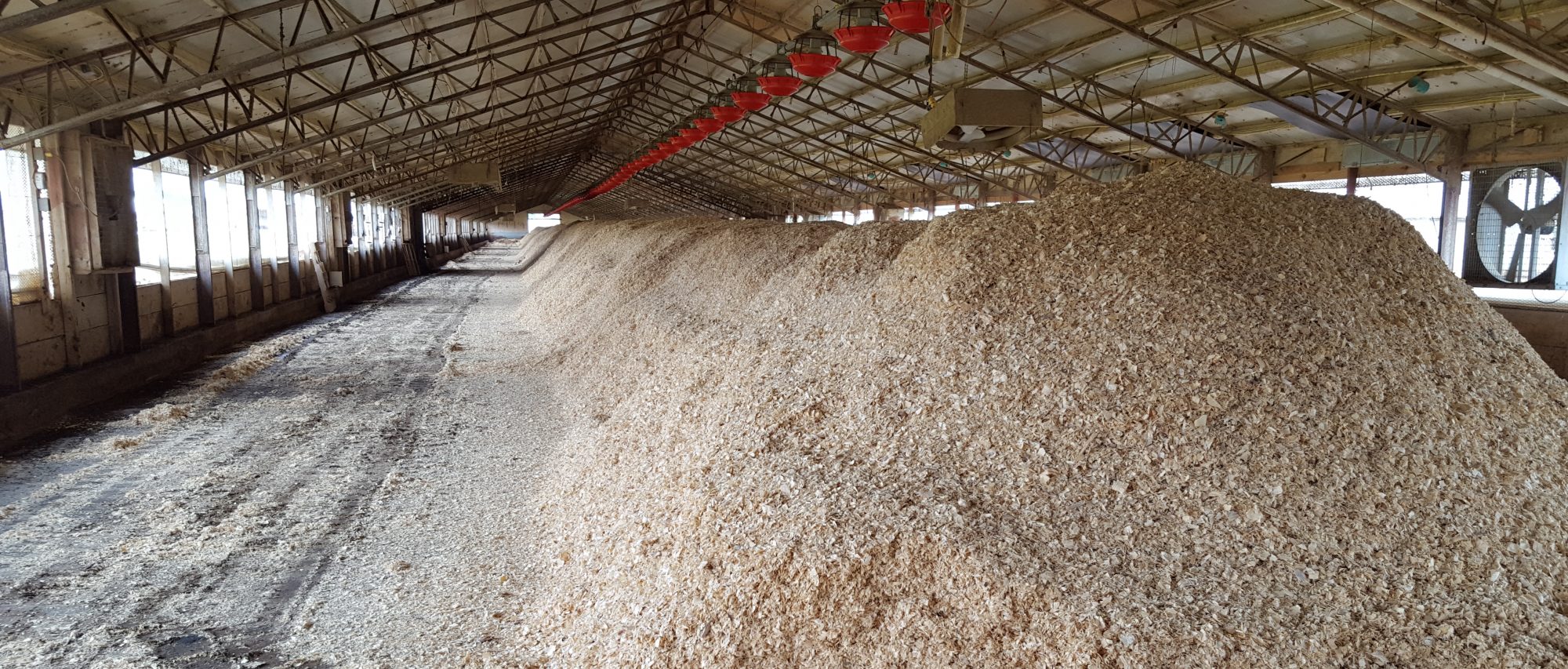
Composting is a natural process in which microorganisms convert organic matter into a stabilized product termed compost, which can then be used as a beneficial soil amendment. In the case of livestock mortality composting, the carcass can be placed in a compost bin. At this location, we have used net wire supported by t-posts as our compost bin. The carcass is then covered with a supplemental carbon source. In this case, we have used wood shavings mixed with manure. The carcass is then allowed to decompose through natural microbial activity which breaks down both soft tissue and bones. This process usually takes several months to form a stabilized product.
Composting livestock and poultry carcasses is a cost effective way to manage mortalities on a farm or ranch.
The cost of composting livestock depends largely on the cost of your local carbon source. Sometimes wood chips or shavings can be obtained locally for free from tree removing companies or from local county fair barns and arenas. If building a compost bin, a producer can spend around $50 per bin constructing when using tee-posts and net wire construction. Keep in mind that the carbon source and the bin can be reused for future mortalities.
Managing manure and manure nutrients is one of the most visible aspects of environmental stewardship for many farms. The materials on this page developed for use in classrooms and extension programs, and for self-study by farmer, and ag professionals.
Agriculture Professionals and Farmers
These materials were used to create a self study module which includes the option to receive a certificate upon successful completion of the quiz.
Teachers and extension staff are welcome to download these materials and utilize them in your classroom or programs. To preview the materials before downloading, scroll below the table. View Lesson Plan.
If you utilize these materials please take 3 minutes and tell us if they are helpful. Thank you!! Go to survey…
Check out more educational modules available on livestock and poultry environmental stewardship. These modules have been cross-referenced to the National AFNR career content cluster standards.
6. Liquid and Solid Manure Application
(7 files; 65 MB)
Note: due to size, the “Surface Application” video is not in the ZIP file and needs to be downloaded separately.
*Use the .pdf format if you wish to print the fact sheets and use as-is. Use the .docx format if you want to edit the fact sheet.
Preview 1-3: Nutrient Management Planning, Regulations, Water Quality
Note: the activity preview only shows four (of 52) slides. The links (blue text) do not function in this preview, but they will work when you download the .ppt version.
Jerry Clark, Jerome.Clark@wisc.edu, University of Wisconsin-Madison, Division of Extension, Chippewa and Eau Claire Counties
Carl Duley, University of Wisconsin-Madison, Division of Extension, Buffalo County, Carl.Duley@wisc.edu
Ted Bay, University of Wisconsin-Madison, Division of Extension, Grant County
Dave Lucinani, University of Wisconsin-Madison, Division of Extension, dluciani@wisc.edu
Reviewers: USDA NRCS staff
Building Environmental Leaders in Animal Agriculture (BELAA) is a collaborative effort of the National Young Farmers Educational Association, University of Nebraska-Lincoln, and Montana State University. It was funded by the USDA National Institute for Food and Agriculture (NIFA) under award #2009-49400-05871. This project would not be possible without the Livestock and Poultry Environmental Learning Center the National eXtension Initiative, National Association of County Ag Agents (NACAA), National Association of Agriculture Education (NAAE), Farm Credit Services of America, American Registry of Professional Animal Scientists (ARPAS), and Montana FFA Association.
Air emissions from animal agriculture operations and their associated manure storage are being examined more closely as a way to mitigate potentially harmful gases and odors. Manure additives and litter amendments go right to the source and are used to change one or more characteristics of manure to try and reduce emissions emissions of odorous gases. The materials on this page were developed to assist educators and professors who include manure additives or litter amendments as a topic in their classrooms or educational programs.
These materials were developed by the Air Quality Education in Animal Agriculture (AQEAA) project with with financial support from the National Research Initiative Competitive Grant 2007-55112-17856 from the USDA National Institute of Food and Agriculture.
For questions about the materials on this page contact Dr. Kevin Janni, University of Minnesota (kjanni@umn.edu). For questions about the AQEAA project, contact Dr. Rick Stowell, Unviersity of Nebraska (rstowell2@unl.edu).
If you have presentations, photos, video, publications, or other instructional materials that could be added to the curricula on this page, please contact Dr. Janni or Jill Heemstra (jheemstra@unl.edu).
Air emissions from animal agriculture operations and their associated manure storage are being examined more closely as a way to mitigate potentially harmful gases. Covers are becoming popular as a way to collect methane (a potent greenhouse gas) for beneficial reuse as a renewable energy source. The materials on this page were developed to assist educators and professors who include manure storage covers as a topic in their classrooms or educational programs.
These materials were developed by the Air Quality Education in Animal Agriculture (AQEAA) project with with financial support from the National Research Initiative Competitive Grant 2007-55112-17856 from the USDA National Institute of Food and Agriculture. For questions about the materials on this page contact Dr. Kevin Janni, University of Minnesota (kjanni@umn.edu). For questions about the AQEAA project, contact Dr. Rick Stowell, Unviersity of Nebraska (rstowell2@unl.edu). If you have presentations, photos, video, publications, or other instructional materials that could be added to the curricula on this page, please contact Dr. Janni or Jill Heemstra (jheemstra@unl.edu).
The key difference is that facilities that are designed and managed as lagoons provide treatment in addition to storage. In some areas, people have come to refer to any earthen facility that contains wastewater as a lagoon, so referring to the specially designed systems as “treatment lagoons” may help to appropriately distinguish them.
The most noticeable difference between a storage pond and a treatment lagoon is size. For a given scenario, a treatment lagoon is much larger than a storage pond.
A storage pond is an earthen structure designed to store manure and other biodegradable byproducts of animal production (soiled bedding, wash water, unclean runoff, etc.) over the critical time period when it cannot be applied to farm land. This period could be three to six months or more, depending on geographical location and/or regulatory requirements. Before the next critical storage period begins, all of the storage pond contents that equipment can practically reach must be removed to make room for the manure and wastewater generated during the upcoming storage period. Some states require that additional storage volume be provided so 1 to 2 feet of liquid are left in the bottom to prevent the earthen floor from drying out.
A treatment lagoon provides volume for storage (like a storage pond) but also provides significant additional volume to accommodate the dilution that is necessary for desired biological treatment of collected material. A certain volume of liquid?called a “permanent pool”?must be maintained in a treatment lagoon at all times to ensure that the needed dilution and desired treatment occur. As the contents of a treatment lagoon are biologically broken down, a small fraction settles to the bottom and forms a sludge layer. A lagoon must also provide volume for sludge accumulation, and this sludge must be removed periodically to maintain the design treatment volume. For these reasons, treatment lagoons are much larger than their storage-only cousins and are not normally emptied while in operation.
Biological treatment is highly dependent on temperature. For this reason, lagoons do not work as well in colder midwestern U.S. climates as in more southern and western U.S. locations.
While treatment lagoons are generally more expensive to build, a lagoon stabilizes added organic matter, reducing odor and influencing nutrient content. The resulting liquid contents of a treatment lagoon are much lower in nutrient content. Less land is required annually for application of “lagoon effluent” than for slurry from a storage pond. However, in years when sludge is removed, land requirements may be dramatically higher since phosphorus and other minerals are retained in the sludge. The storage pond, on the other hand, conserves more nutrients. Material taken from a storage pond is generally more nutrient-dense than is lagoon effluent and has more value overall for use in growing crops. Material from a storage pond is also more odorous, so there is greater need for it to be promptly incorporated into the soil than for lagoon effluent.
For active decomposition of animal carcasses, compost microorganisms require a source of nitrogen (N) (dead livestock or birds), carbon (C) (straw, corn stalks, shavings, litter, etc.), oxygen, water and elevated temperatures. An ideal C:N ratio should fall between 15:1 to 35:1. Oxygen (air) can be introduced when turning the compost. If proper moisture is not supplied, the organisms cannot survive. Ideally, moisture content should range from 45-55%, or wet enough when the compost is squeezed to leave your hand feeling moist, without actually forming drops of water. When all components are present in the correct ratio, the compost pile heats naturally, destroying most pathogens while microbial activity degrades the carcasses.
Calibrating a manure spreader is critical to ensure that the appropriate rate of manure nutrients is being applied to a field. For some livestock operations, this practice may be a required practice as part of their permit. Calibration will differ depending on the equipment and type of manure being applied.
If you know the capacity of the spreader, you need to determine the width of each pass and the distance it takes to empty the spreader to determine the rate of application. A measuring wheel is a useful tool and can often be borrowed from a local Cooperative Extension or Natural Resources Conservation Service (NRCS) office. After you have determined both of those measurements, use the charts in the publication linked below to determine application rate.
If the capacity of the manure spreader is unknown and solid manure is being spread, you can use a process that involves setting out plastic sheets or tarps of known size and driving the manure spreader over them and weighing the amount of manure that is collected on the sheets. A 22-square-foot tarp is a convenient size because the net weight of the manure on the sheet will be equal to the application rate in tons per acre. A step-by-step guide on making these calculations for other size tarps is available in the publication linked below.
Author: Jill Heemstra, University of Nebraska Extension Educator
Manage Cookie Consent
To provide the best experiences, we use technologies like cookies to store and/or access device information. Consenting to these technologies will allow us to process data such as browsing behavior or unique IDs on this site. Not consenting or withdrawing consent, may adversely affect certain features and functions.
Functional
Always active
The technical storage or access is strictly necessary for the legitimate purpose of enabling the use of a specific service explicitly requested by the subscriber or user, or for the sole purpose of carrying out the transmission of a communication over an electronic communications network.
Preferences
The technical storage or access is necessary for the legitimate purpose of storing preferences that are not requested by the subscriber or user.
Statistics
The technical storage or access that is used exclusively for statistical purposes.The technical storage or access that is used exclusively for anonymous statistical purposes. Without a subpoena, voluntary compliance on the part of your Internet Service Provider, or additional records from a third party, information stored or retrieved for this purpose alone cannot usually be used to identify you.
Marketing
The technical storage or access is required to create user profiles to send advertising, or to track the user on a website or across several websites for similar marketing purposes.

 Air emissions