
Management of Dairy Operations to Prevent Excessive Ammonia Emissions

Reprinted, with permission, from the proceedings of: Mitigating Air Emissions From Animal Feeding Operations Conference.

This Technology is Applicable To:

Species: Dairy
Use Area: Animal Housing, Manure Storage
Technology Category: Management
Air Mitigated Pollutants: Ammonia

System Summary

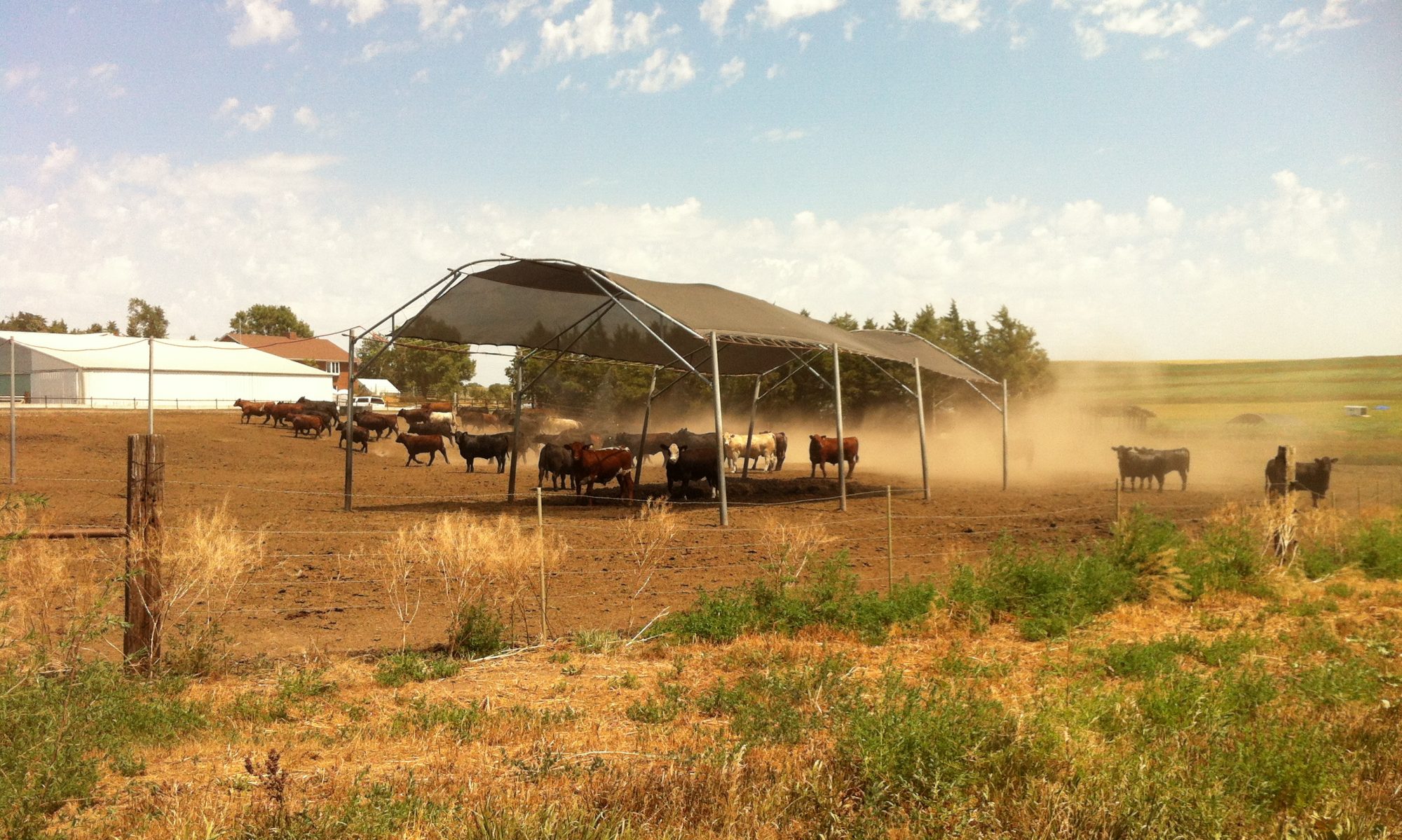
Ammonia emissions data from open-lot and hybrid (combination of free-stalls and open-lots) dairies in the milder climate of southwest US indicated that summer emissions from these facilities were nearly 50% higher than winter emissions. Due to their large surface areas, lagoons and open-lot corrals were the highest contributors of NH3 emissions but little NH3 was emitted from lagoons during the winter months. Within open-lot corrals and free-stalls, NH3 emissions increased with greater manure loading and actively composting manure emitted considerable NH3 even during winter months. While reduction in dietary N intake is known to reduce manure nitrogen content, no information on technologies to mitigate NH3 emissions from these two types of dairy operations is available. Management practices such as frequent removal of manure from heavily loaded areas of open-lots and free-stalls, proper management of lagoons and other manure storage structures, summer irrigation of lagoon effluent during cooler temperatures, and where possible, incorporation or injection of effluent will help reduce excessive NH3 emissions. While frequent scrapping of targeted open-lot corral areas can be achieved without substantial increase in costs, covering lagoons to reduce NH3 emissions will be a very expensive mitigation practice.

Applicability and Mitigating Mechanism

  • Ammonia volatilization rate from dairy manure and processes generated waste water exposed to the environment depends upon total ammonium concentration, pH, moisture content, air velocity, temperature etc.
  • The management practices apply to mitigation of excessive NH3 emitting from open-lot corrals, lagoons, and free-stall surface of dairy operations
  • Existing dairy waste management practices can be adopted to reduce excessive NH3 emissions from critical sites at the dairy operation and during effluent irrigation during summer season


Limitations

  • Lack of excess fresh or recycled water for frequent flushing
  • Lack of extra storage capacity of retention control structures (RCS) to store additional flushed effluent.
  • Terminating or relocating the composting system out of the dairy operation


Cost

Increased frequency of flushing will require more fresh or recycled water as well as a higher storage capacity of an existing RCS or building a new one, adding higher costs to implement this practice. Another substantial cost may be covering large storage and treatment structures such as anaerobic lagoons to reduce NH3 emissions.

Authors

Saqib Mukhtar, Atilla Mutlu, Shafiqur Rahman
Texas A&M University System
Point of Contact:
Saqib Mukhtar, mukhtar@tamu.edu

The information provided here was developed for the conference Mitigating Air Emissions From Animal Feeding Operations Conference held in May 2008. To obtain updates, readers are encouraged to contact the author.

A Surface Aeration Unit for Odor Control from Liquid Swine Manure Storage Facilities

Reprinted, with permission, from the proceedings of: Mitigating Air Emissions From Animal Feeding Operations Conference.

The proceedings, “Mitigating Air Emissions from Animal Feeding Operations”, with expanded versions of these summaries can be purchased through the Midwest Plan Service.

This Technology is Applicable To:

Species: Swine, Dairy, Poultry
Use Area: Manure Storage
Technology Category: Aeration
Air Mitigated Pollutants: Odors

System Summary

A surface aeration system composed of an aerator module with six venturi air injectors has been demonstrated to effectively reduce odor level (measured by odor detection threshold) emitted from an operating swine manure anaerobic lagoon. Past research reports have shown that partially aerating manure can reduce the power consumption by up to 80% as compared to full aeration, while still achieving satisfactory odor amelioration. Data from this project provide further evidence that it is not only feasible but also affordable for animal producers to consider using this technology to control odor. A reduction in odor detection threshold by about 67% was achieved after the surface aeration system started operation in the test lagoon for about 10 days. It was also observed that the aeration treatment could maintain a dissolved oxygen level of 0.3 mg/L in the top lagoon liquid and the aerated layer worked like a biological cover that had the capability of destroying the odorous compounds passing through it. Although the surface aeration technology presented in this paper is tested in swine manure lagoons, it is expected that the technology can also be applied to manure lagoons of other animal species such as dairy and poultry. As a matter of fact, there are already experiments being carried out on a poultry lagoon in Texas using the same aeration apparatus, the results from which will be compared with those presented here. It is anticipated that the aeration system will be available to animal producers in the near future.

Applicability and Mitigating Mechanism

  • The surface aeration system can be applied to any open liquid manure storage facilities
  • Odorous compounds are intermediate products during anaerobic digestion and, without treatment, they will be emitted into air causing odor problems
  • Aeration is to provide oxygen to the aerobic microorganisms in the liquid so that they can actively decompose these odorous compounds
  • Surface aeration establishes a biological cover in which aerobes use the provided oxygen to clean up the odorous materials before they reach the air


Limitations

  • This technology is not suitable for in-barn manure storage structures such as deep pits
  • Since the surface aeration system is placed outdoors, the ambient temperature should always be above freezing point so the technology cannot be used in northern states of the country in winter.
  • Ammonia emission from the lagoon liquid under treatment may be increased due to increased pH in the liquid and the mixing effect


Cost

The capital cost of this surface aeration system is relatively inexpensive and all the venturi air injectors are commercially available (under $200/each). For a one-acre lagoon, the equipment cost including materials and installation may be anywhere between $10,000 and $15,000 and the running cost (for a 4.5 horsepower pump running 24 hours a day, 365 days a year) will be 4.5 hp x 0.75 kW/hp x 24 h/day x 365 day/year = 29,565 kWh. Assuming the price per kWh being at $0.07, the total annual cost for the operation will be 29,565 kWh x $0.07 = $2,070. Considering the particular lagoon receiving manure from 4,000 head finishing pigs and 2.5 production cycles a year, the treatment cost per pig marketed is only around 21 cents.

Authors

Jun Zhu1, Chunying Dong1, Cutis Miller1, Liang Wang1, Yecong Li1, Saqib Mukhtar21University of Minnesota, 2 Texas A&M University
Point of Contact:
Jun Zhu, zhuxx034@umn.edu

The information provided here was developed for the conference Mitigating Air Emissions From Animal Feeding Operations Conference held in May 2008. To obtain updates, readers are encouraged to contact the author.
RAPP Technology for Control of Gas and Odor from Swine Manure Pits

Reprinted, with permission, from the proceedings of: Mitigating Air Emissions From Animal Feeding Operations Conference.

The proceedings, “Mitigating Air Emissions from Animal Feeding Operations”, with expanded versions of these summaries can be purchased through the Midwest Plan Service.

This Technology is Applicable To:

Species: Swine
Use Area: Manure Storage
Technology Category: Chemical Amendment
Air Mitigated Pollutants: Odors, Ammonia, Carbon Dioxide, Sulfur Dioxide

System Summary

This gas and odor reduction technology, Rapp Technology, consists of an oil cover and a neutralizer that is an alkaline solution. The laboratory study in swine manure reactors to simulate deep manure pit demonstrated statistically significant reductions of ammonia, carbon dioxide, sulfur dioxide, and odor from the treated reactors. Compared with previously tested commercial manure additives, this technology is more effective in mitigating gas and odor emissions from simulated deep manure pits.

Applicability and Mitigating Mechanism

  • The oil cover is added at initial application. It floats on the surface of the manure slurry to slow the releases of gases and odorous molecules while allowing excrement to pass through.
  • The neutralizer solution is injected beneath the oil cover periodically. It neutralizes the volatile fatty acids and phenols in the slurry to their ammonium salts. Such salts are more prone to stay in the aqueous slurry because they are more water-soluble and less volatile than the original acids.


Limitations

  • The oil cover is not suitable for applying on the manure on the barn floors.
  • The effect of neutralizer on emission reduction could not be differentiated from the effect of oil cover in the lab test.
  • Future high quality field studies are needed.

Cost

During the lab test, the oil and the neutralizer (both by Custom Formulating & Blending, Bristol, IN) cost $1.13 and $ 0.67 per reactor, respectively. According to Juergens Environmental Control (Carroll, Iowa) for field application of the neutralizer, the fixed cost of the system for 1000 to 8000-pig finishing operations averages $2.50 – $5.00 per pig per 3-year term (shipping and labor not included). The cost of neutralizer operation averages $ 0.01 per pig per day over one year.

Authors

Ji-Qin Ni1, Sam Hanni1, Albert J. Heber1, Warren M. Kosman2, Gary Rapp3, 1Purdue University, 2Valparaiso University, 3Juergens Produce and Feed Company
Point of Contact:
Gary Rapp, garyrapp@westianet.net

The information provided here was developed for the conference Mitigating Air Emissions From Animal Feeding Operations Conference held in May 2008. To obtain updates, readers are encouraged to contact the author.

Negative Air Pressure Cover for Preventing Odor Emission from Earthen Manure Storage

Reprinted, with permission, from the proceedings of: Mitigating Air Emissions From Animal Feeding Operations Conference.

The proceedings, “Mitigating Air Emissions from Animal Feeding Operations”, with expanded versions of these summaries can be purchased through the Midwest Plan Service.

This Technology is Applicable To:

Species: Swine
Use Area: Manure Storage
Technology Category: Covers
Air Mitigated Pollutants: Odors

System Summary

An impermeable synthetic cover system was developed by DGH Engineering in Manitoba, Canada for mitigating odor emission from earthen manure storage basins (EMSB). The system uses lightweight plastic as the cover so that it is affordable to producers. An air pumping system creates negative pressure between the cover and the manure surface to hold down the cover to ensure the cover is robust enough to withstand wind forces. The air pumping system consists of small exhaust fans (four to six fans of 50 – 70 L/s each) and perforated ducts placed about the EMSB perimeter. Odor emission from the NAP covered EMSB (due to the air pumping system) is negligible (1%) in comparison with the open EMSB. Additional benefits of the NAP cover system include the retention of manure nitrogen, thus increasing the fertilizer value of manure; isolating precipitation from the manure, thereby increasing storage volume; and reducing greenhouse gas (methane) emissions.


Applicability and Mitigating Mechanism

  • Large surface areas of earthen manure storage basins emit large amount of odor to the atmosphere
  • A NAP cover forms a physical barrier between the manure surface and the atmosphere to prevent odor release into the atmosphere
  • The negative pressure between the cover and the manure surface holds the cover down to resist wind forces.


Limitations

  • When using traditional agitation and pump-out equipment, removing and replacing the cover for pump-out may increase the wear on the cover and add labor and time to the pump-out operation.
  • An air assisted agitation system should be used.


Cost

The capital cost varies from $10.00 to $15.00 per m², installed. The annual cost per pig marketed for typical 5,000 and 10,000 head swine finisher operations is estimated to be $1.40 and $1.13.

Authors

Q. Zhang1, D. Small 2
1University of Manitoba, 2 DGH Engineering
Point of Contact:
Doug Small, dgh@dghengineering.com

The information provided here was developed for the conference Mitigating Air Emissions From Animal Feeding Operations Conference held in May 2008. To obtain updates, readers are encouraged to contact the author.

The Use of Vegetative Environmental Buffers For Livestock and Poultry Odor Mitigation

Reprinted, with permission, from the proceedings of: Mitigating Air Emissions From Animal Feeding Operations Conference.

The proceedings, “Mitigating Air Emissions from Animal Feeding Operations”, with expanded versions of these summaries can be purchased through the Midwest Plan Service.

This Technology is Applicable To:

Species: Poultry, Dairy, Beef, Swine
Use Area: Animal Housing and Manure Storage
Technology Category: Vegetative Buffers
Air Mitigated Pollutants: Particulate Matter, Odor, Ammonia

System Summary

Vegetative Environmental Buffers (VEBs) – linear arrangements of trees and shrubs planted near and around livestock/poultry production sites – have been shown to incrementally mitigate odors, particulates, and ammonia through a complex of dynamics. Among the most important dynamics are: 1) enhancement of vertical atmospheric mixing through forced mechanical turbulence – leading to enhanced dilution/dispersion of odor; 2) odor filtration through particulate interception and retention – odor largely travels by way of particulates; capturing particulates also captures odors; 3) odor/particulate fallout due to gravitational forces enhanced by reduced wind speeds; 4) adsorption and absorption of ammonia onto and into the plant – this is due to a chemical affinity that ammonia has to the waxy coating on tree leaves; 5) softening socio-psychological responses to odor due to improved site aesthetics and creating “out of sight, out of mind” dynamics; and 6) improved producer/community relations by using highly visible odor management technology.

Applicability and Mitigating Mechanism

  • As air moves across vegetative surfaces, leaves and other aerial plant surfaces can remove odors, dust, gas, and microbial constituents of airstreams.
  • VEBs can mitigate odors/ particulates from all livestock/poultry species;
  • VEBs are size neutral technology and can be used to mitigate odors/particulates from all sources of odor: buildings, manure storage, and land application.
  • Trees/shrubs are among the most efficient natural filtering structures in a landscape.

Limitations

  • Mitigation effectiveness is highly site specific and will vary considerably from farm to farm.
  • VEBs often require considerable land area and may take up to five years to become physically effective.
  • Care in VEB design must be taken to avoid causing snow deposition, ventilation, and on-farm visibility problems.
  • At best, odor/particulate mitigation will be “incremental” and therefore should be always used with other odor management strategies.

Cost

Costs for VEB systems are highly variable and are site/design specific – but for midsized producers (and larger) VEBs likely amount to just a few cents per animal produced. There are three main categories of expenses associated with VEBs: 1) Site prep costs, 2) tree establishment costs, and 3) long term maintenance costs. It should be noted that the majority (usually in the range of 40-70%) of the total cost is “upfront” and is tied to the cost of the initial planting stock (e.g. older, larger nursery stock can be considerably more expensive than bare-root seedlings but such an investment may “buy time” in VEB establishment). Long term maintenance costs vary depending upon the overall health of the VEB. It should be recognized that there are expenditures that occur regularly throughout the life of a VEB and maintenance is an annual process, however as a VEB system matures the annual maintenance requirements will likely decrease over time.

Authors

John C. Tyndall11Department of Natural Resource Ecology and Management
Point of Contact:
John C. Tyndall, jtyndall@iastate.edu

The information provided here was developed for the conference Mitigating Air Emissions From Animal Feeding Operations Conference held in May 2008. To obtain updates, readers are encouraged to contact the author.

A Receptor-Based Siting Strategy for Swine Production Systems

Reprinted, with permission, from the proceedings of: Mitigating Air Emissions From Animal Feeding Operations Conference.

The proceedings, “Mitigating Air Emissions from Animal Feeding Operations”, with expanded versions of these summaries can be purchased through the Midwest Plan Service.

This Technology is Applicable To:

Species: Swine
Use Area: Animal Housing, Manure Storage
Technology Category: Facility Siting
Air Mitigated Pollutants: Odor

System Summary

A model, called the Community Assessment Model for Odor Dispersion (CAM), was developed to predict receptor odor exposure from multiple swine production sources. The intended use of CAM was to provide a tool for evaluating the odor exposure to receptors in a community when siting new swine production systems and how a change in odor control technology alters the odor exposure to receptors. CAM can handle up to 20 swine production sources with up to 100 receptors in a community of any size. The model incorporates historical (10+ years) average local weather data, coordinates locations of all sources and receptors, ground and above-ground area sources, seasonal variations in odor emission, source production footprint and orientation, and documented proven odor mitigation technologies. CAM does not predict the influence of calm conditions, topography, or obstruction downwash. CAM predicts the number of hours of exposure to weak (2:1) and greater or identifiable (7:1) and greater odors and these are used to assess siting options.

Applicability and Mitigating Mechanism

  • Site location planning for new swine housing and manure storage systems
  • Model developed specific for swine production systems
  • CAM can model up to 20 swine sources and up to 100 receptors in a land area of any size

Limitations

  • CAM has been developed and calibrated for swine systems only
  • Calm conditions not modeled
  • Terrain features beyond rural terrains not modeled
  • CAM requires local historical weather data (10+ years)

Cost

The CAM model requires site specific information to properly implement. Currently CAM is implemented with the ½-time support of an on-campus staff member with no charge to the farmer. A more formal procedure is being developed where a CAM evaluation will require a farmer-fee of either $500/siting case or $1,000/siting case depending on the complexity of the proposed site. A $500 cost to a farmer would be a situation where a campus or extension field staff member is required to visit a proposed site to help guide siting decisions using localized odor plots (described in paper). If the complexity of the proposed site warrants a full CAM modeling run, an additional $500 is required from the farmer.

Authors

Steven J. Hoff1, Dwaine S. Bundy1, Jay D. Harmon1, Colin D. Johnson11Iowa State University Point of Contact:
Steven J. Hoff, hoffer@iastate.edu

The information provided here was developed for the conference Mitigating Air Emissions From Animal Feeding Operations Conference held in May 2008. To obtain updates, readers are encouraged to contact the author.

Siting of Livestock & Poultry Facilities Using MNSET

Reprinted, with permission, from the proceedings of: Mitigating Air Emissions From Animal Feeding Operations Conference.

The proceedings, “Mitigating Air Emissions from Animal Feeding Operations”, with expanded versions of these summaries can be purchased through the Midwest Plan Service.

This Technology is Applicable To:

Species: Poultry, Dairy, Beef, Swine
Use Area: Animal Housing, Manure Storage
Technology Category: Facility Siting
Air Mitigated Pollutants: Odor, Hydrogen Sulfide, Ammonia

System Summary

MNSET predicts three separate air quality impacts. The first prediction is for odor impacts at any given distance downwind from the facilities. The second prediction is for the frequency of exceeding the MN state standard for hydrogen sulfide (30 ppb / 30-minute average not to be exceeded twice in a five day period). Although this may not be applicable for other states it does show relative impacts of hydrogen sulfide. Additionally, MNSET estimates both daily and annual pounds of hydrogen sulfide and ammonia emitted from the modeled facility. Remember however that the outputs of the models are only as valid as the inputs. A literature review was done to develop the flux values used in the model.

MNSET can be used to evaluate the impact of existing sites and quantify reductions of these impacts using various treatment technologies. Unfortunately, this requires reliable quantification of the emission reductions from the mitigation technologies.

Applicability and Mitigating Mechanism

  • Tool for predicting air quality impacts for odor, hydrogen sulfide and ammonia
  • Allows for adding mitigation to reduce these impacts
  • Free downloadable spreadsheet
  • User can add new technologies

Limitations

  • Based on average flux values
  • Conservative predictions
  • Based on Minnesota weather conditions and regulations

Cost

This software can be downloaded free at University of Minnesota Manure Management. The use of MNSET to evaluate the downwind impacts of any mitigation technologies is very valuable both in new construction and in solving existing air quality problems.

Authors

David Schmidt and Larry Jacobson, University of Minnesota
Point of Contact:
David Schmidt, schmi071@umn.edu

The information provided here was developed for the conference Mitigating Air Emissions From Animal Feeding Operations Conference held in May 2008. To obtain updates, readers are encouraged to contact the author.

Siting Animal Production Facilities and Evaluating Odor Control Options Using the Odor Footprint Tool

Reprinted, with permission, from the proceedings of: Mitigating Air Emissions From Animal Feeding Operations Conference.

This Technology is Applicable To:

Species: Poultry, Dairy, Beef, Swine
Use Area: Animal Housing, Manure Storage
Technology Category: Facility Siting
Air Mitigated Pollutants: Odor

System Summary

The Odor Footprint Tool is a worksheet/spreadsheet that provides objective, science-based information on the risk-based impact of odors generated by livestock facilities. The user enters information about the livestock facilities for a given site, the site location (for selection of regional weather data), use of supplemental odor control, and any special terrain around the site. After using the Odor Footprint Tool, the user obtains minimum setback distances in four directions matching up with targets for avoiding odor annoyance. The Odor Footprint Tool can help assess the reduction in the size of a facility’s odor footprint due to use of proven odor control technology.

By using the Odor Footprint Tool, producers and their advisors can mitigate neighbor impacts of odor and air-borne pollutants through improved siting of facilities. They can also use the Odor Footprint Tool to assess the benefit of odor control technologies in terms of reduced area of odor impact, which encourages the utilization of effective control technologies.

Applicability

  • Assesses frequency of odor annoyance from housed swine, cattle and poultry production facilities
  • Considers animal housing facilities and manure storage facilities
  • Assesses reduction in odor footprint due to using proven odor control technology
  • Used on a regional basis within a state
  • Recommended for use as a planning and screening tool

Limitations

  • Not ready for use with open lots, treatment lagoons, and other large area sources
  • Not for assessing odor annoyance during application of manure
  • Requires its own set of emission values
  • Dispersion modeling is required upfront for confident use in a new region having differing weather patterns.
  • Simplified footprints may seem over-simplified or lack desired level of precision

Cost

There is no direct cost for using the publicly available versions of the Odor Footprint Tool to obtain directional setback distances or for conferring with an Extension educator. When producers defer use to an advisor/consultant, it is reasonable to expect to pay for consultant time associated with using the tool, getting their technical response and recommendations, creating project-specific visuals, and presenting material to permitting authorities, local zoning commissions, lenders, etc.

The primary costs associated with the Odor Footprint Tool are upfront costs of calibrating and validating the dispersion model and performing dispersion modeling using weather data for a specific area. Grant funds have been utilized within Nebraska and South Dakota for this purpose.

Authors

Rick Stowell, Chris Henry, Crystal Powers, and Dennis Schulte
University of Nebraska-Lincoln
Point of Contact:
Rick Stowell, rstowell2@unl.edu

The information provided here was developed for the conference Mitigating Air Emissions From Animal Feeding Operations Conference held in May 2008. To obtain updates, readers are encouraged to contact the author.

Manure Storage Safety

Manure storage structures are an integral part of livestock feeding operations. They allow for manure containment until conditions are favorable for land application or other treatment. Manure may be stored in enclosed structures, near or directly below the animal housing facility or it may be stored in open structures such as above ground tanks or storage ponds/lagoons.

Recommended Resources:

Archived webinar: Manure Safety & Transport

Penn State Extension Manure Pit Safety Fact Sheet Series

The risks differ for each type of manure handling system. Enclosed structures are commonly associated with asphyxiation hazards related to gases produced during manure decomposition. Open structures are most often associated with drowning. Most systems include pumps or mechanical components that present the risk of entanglement. It is critical that producers take the time to assess the risks on their operation and evaluate ways to prevent hazardous situations and to develop emergency response plans. Related: Manure Storage Safety fact sheet

Enclosed Structure Hazards

Enclosed structures, especially those located below ground, are potentially the most hazardous for people and livestock. While being stored, manure undergoes decomposition. As a result, many potentially harmful or fatal gases are produced, but most remain at low levels or are adequately diluted by the ventilation system. Situations in which these gases can become deadly include:

  • Agitation of the liquid manure prior to or during pumping from the pit
  • Power outage or other failure of the ventilation system
  • Buildup of flammable or explosive gases

Manure Gases and Their Associated Safety Concerns

Hydrogen Sulfide

lagoon

A sign like this “Danger: Liquid Manure Storage” should posted for all types of liquid manure storage, enclosed or open. Consider posting this message in other languages if there are non-English speakers living or working on or near the farm.

Hydrogen sulfide is the greatest danger to humans in enclosed manure storage areas. It has a characteristic “rotten egg” smell and is heavier than air, so it tends to collect in the lower levels of a structure and in corners of the storage area where air circulation is least available. It quickly desensitizes the sense of smell so that a person does not detect greater levels of the gas after breathing it. It can be rapidly released when manure is agitated. At low levels (10 ppm) it can irritate the eyes. Death can occur when it reaches levels of 500 ppm or greater.

Ammonia

Ammonia has a distinctive, sharp odor and is heavier than air. It becomes irritating to humans at around 50 ppm. If it reaches levels of 1000 ppm or more, it can be deadly, although most people are so uncomfortable at this level, they usually seek relief by leaving a building before it reaches dangerous concentrations. Prolonged exposure to high ammonia levels can also impact animal performance.

Methane

Methane is a concern because it is potentially explosive at levels above 50,000 ppm. It is lighter than air and odorless. In the fall of 2009, enough manure pit-related fires and explosions were reported to attract renewed attention to the safety concerns related to gas buildup. Other potentially explosive gases produced by manure decomposition are hydrogen sulfide (H2S) and phosphine (PH3, but both become lethal to animals and humans at concentrations far below that required for ignition. A literature review by Iowa State University (supported by the Pork Board) provides additional information on this topic. Deep Pit Swine Facility Flash Fires and Explosions.

In a properly designed anaerobic digester, methane production can be enhanced and possibly captured for use in electrical generation. For more information see Introduction to Biogas and Anaerobic Digestion.

Carbon Dioxide

Carbon dioxide is odorless, but can cause asphyxiation if it displaces enough oxygen in the air. It is heavier than air and tends to accumulate in the same areas as hydrogen sulfide.

Open structure hazards

image

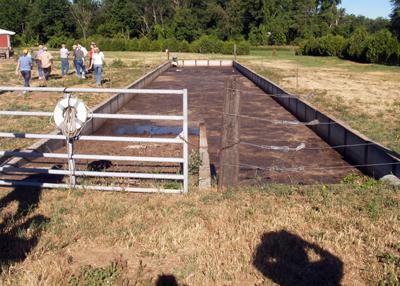
This manure storage structure is fenced and has a life preserver in a prominent location. The concrete ramp by the gate provides an easy escape point for humans and wildlife that fall into the pit. Note that this fencing will discourage entry but will not prevent a determined child from exploring the pit. If young children live on or visit your farm, a chain link fence will provide a higher degree of deterrence than multi-strand wire fences and gates such as this.

Open manure storage ponds or above ground storage tanks also pose hazards, the most obvious of which is drowning. A storage pond may form a crust on the surface that appears solid and capable of holding a person’s weight. Unfortunately, this is not always the case. Children are also at risk of drowning in these structures and safety considerations must always include ways to prevent access to these areas, such as fencing, gates with locks and outside walls on concrete structures that preclude easy entry.

To prevent drowning, it is recommended that farmers purchase and install safety measures such as life preservers or life vests, throw ropes, and/or safety harnesses (with anchor points around the structure). This equipment can save lives; not only for the victim but rescuers who can safely assist without entering the structure themselves. This was illustrated in May, 2012 in a tragic incident in Maryland. A farmer and two of his teenage sons were drowned in a manure storage structure while attempting to pump the manure out for land application. There were no surviving witnesses, but the

likely scenario is that one of the three fell into the pit and the other two died trying to rescue him.

Recommended Reading

Case Studies

Authors: Chip Petrea, University of Illinois and Jill Heemstra University of Nebraska
Reviewers: Saqib Mukhtar, Texas AgriLife Extension; Jennifer Zwicke, USDA NRCS; Troy Chockley, USDA NRCS, Greg Martin, Penn State

Liquid Manure Storage Treatment Options, Including Lagoons

A vital component of liquid livestock and poultry manure collection and handling systems is storage capacity for the collected manure and associated material(flush water, wasted feed, etc.). This manure storage capacity is typically in the form of under-floor pits or outside storage tanks or ponds and/or treatment lagoons. These structures accumulate collected wastes and allow the waste management system operator to move away from a “daily scrape (collect) and haul” situation. This reduces time and labor needed for final disposition (either land application or off-farm “value-added” processing) of these manure accumulations.

What Is a Liquid Manure System?

“Liquid” livestock manure collection and handling systems are actually “fluid” livestock manure collection and handling systems. These systems are selected based upon the consistency or “thickness” of the manure and its flow characteristics. Manure flow characteristics are highly dependent on “solids content” or “percent solids” of the manure volume.

Liquid manure storage volume size depends on the amount of time in a year that is not available for land application or other manure utilization strategies. This is the design storage period. Land application time depends on growing season of the target crop(s) and local weather. Manure storage volume should be emptied by the end of the design storage period to be able to hold the expected amount of manure accumulation during the next storage period.

Earthen storage structure with artificial liner (from Proper Lagoon Management to Reduce Odor and Excessive Sludge Accumulation).

This web page deals with two general categories of liquid systems:

  • Pits or slurry systems for storage only
  • Lagoons with both slurry/wastewater storage and treatment (see National Center White Paper summary, Manure Management Strategies).

Types of Manure

“As-excreted” livestock manure moisture content changes as it moves through the collection process into storage. Liquid collection and handling systems add waste drinking water, wash water, flush water, rain, and stormwater runoff, lowering solids content below the 15% level typically used to define “solid” manure. A manure volume of 5 to 15% solids is “slurry” manure, with consistency and flow characteristics similar to thick chocolate malt. Manure volumes with 0 to 5% solids content have consistency and flow characteristics similar to water.

What Is the Difference Between Storage and Storage With Treatment?

Contrasting storage and storage w/treatment, a manure containment structure which is emptied at the end of the storage period is essentially a storage structure. A lagoon has storage volume but will also have a permanent pool for residual treatment volume that provides a bacterial seed bed for continual bacterial action at an elevated level. This permanent pool is not considered in the design of a structure used for storage alone. Essentially whatever goes into a properly managed storage structure is what is pumped out. A lagoon, however, is designed to promote decomposition of organic matter entering the lagoon. For this reason, a lagoon is much larger than a storage pond.

Management of Lagoons

A manure containment structure which is not emptied at the end of the storage period is being operated as a lagoon, whether designed that way or not. Storage operated in this manner becomes a smelly, overloaded lagoon. Generally, when agitation is used to put settled or floating solids into suspension before pumping out the effluent, or the slurry, the structure is being operated as storage.

Digested solids do accumulate in a lagoon and should be removed once every ten or more years, or as specified by the system design to restore residual treatment volume. In rare circumstances, particular to specific lagoons approaching this restoration point, some engineers recommend some agitation during normal pumpout to remove some of this accumulation. Routine pumping from the storage volume portion of a lagoon involves only wastewater (<5% solids) and requires no agitation.

Related Web Pages

Recommended Educational Resources

National Center for Manure and Animal Waste Management white paper summary, Manure Management Strategies published by North Carolina State University. A two page Executive Summary is available. The full white paper can be ordered from Midwest Plan Service, Iowa State University.

Page Managers: Ted Tyson, Auburn University, tysontw@auburn.edu and Saqib Mukhtar, Texas A&M University, mukhtar@tamu.edu .