Considerations in Evaluating Manure Treatment Systems for Dairy Farms

Advanced manure treatment may become a major system on some dairy farms in the future.  Reducing the impacts of excess nitrogen and or phosphorous may be necessary on farms with a limited or remote land base.  Additional treatments to recover solids, extract energy, concentrate nutrients, reduce odors, reduce the mass/volume, and/or reduce pathogens may become more of a priority as farms seek to move toward sustainability.  Potential systems should be evaluated from many perspectives including on an economic and effectiveness basis. There are many variables to consider in evaluating a manure management system. Potential systems should be selected based on many criteria including:  operational history, operational reliability, market penetration, capital cost, O&M cost, value proposition, and vendor information and documentation including case studies and customer reviews.

What did we do?

Manure management formally started in the second half of the 20th century with the development and implementation of the water quality best management practice (BMP) of long-term manure storage.  Storage provides farms with the opportunity to recycle manure to cropland when applied nutrients can be more efficiently used by the crop.  Many long-term manure storages were built to improve nutrient recycling and minimize risk. In some cases, anaerobic lagoons were built to both reduce the organic matter spread to fields and store manure.  Simultaneously as poultry and livestock consolidation escalated, more manure storages were built and their volume increased to reflect the recognized need to store manure longer. Cooperative Extension, Soil and Water Conservation Districts and Natural Resources Conservation Service have assisted in providing planning, design, construction and maintenance of these manure storage systems.

What have we learned?

Many lessons have been learned from storing manure long-term.  They include, but are not limited to:

    • While storing manure long-term reduces water quality impairment, it also produces and emits methane, a greenhouse gas.  Greenhouse gases are reported to contribute to global warming. The US dairy industry is under attack by some because of this, and it is likely that the decline in fluid milk sales has, in some part, been affected by this.  The lesson learned here is that the implementation of BMPs can have unintended consequences; therefore, all future BMPs need to be thoroughly vetted before substantial industry uptake happens in order to avoid undesirable unintended consequences.
    • Larger long-term storages are better than short-term (smaller) ones.  Storages that store manure for a longer period of time provide farms with increased flexibility when it comes to recycling manure to cropland.
    • Long-term storages can emit odors that can be offensive to neighbors and communities.  Farms have adopted improved manure spreading practices, namely direct incorporation, to reduce odor issues but incorporation doesn’t work well on some crops.  Some farms have also adopted anaerobic digestion as a long-term storage pre-treatment step in order to reduce odor emissions from storage and land application.
    • Substantial precipitation can accumulate in long-term storages located on farms in humid climates.  Increased storage surface area (generally an outcome of building larger storages) results in more precipitation to store and handle as part of the manure slurry.  Every acre-foot of net perception results in 325,900 gallons of additional slurry to store and spread. If each manure spreader load is 5,000 gallons, then this means 65 additional loads are required.
    • Neighbors of larger farms are more sensitive to intensive truck traffic than regular but low-level truck traffic.  Long-term storages require intensive, focused effort to empty and the over the road truck traffic can be offensive in some farm locations.
    • Insufficient storage duration results in the need to recycle manure to cropland during inopportune times and thus may not be contributing to the BMP goal.  Fall spreading is still required on many farms; however, it also may be unlikely that a sufficient spring planting window exists for farms to spread all their manure in the spring, avoid compacting wet soils and also get spring crops planted in time.
    • Where longer term storage duration and or incorporation of the manure to prevent odor emissions is needed to facilitate spring and summer manure spreading, farms may have more manure nutrients than needed to meet crop demand.

Future Plans

The above lessons learned support the need for advanced manure treatment systems on some farms that can also be used as the basis for considerations that should be included when evaluating all manure treatment systems.  It is important that the manure treatment equipment/system components and the overall system address the farm need(s) as best as possible. A challenge with evaluating the existing manure treatment equipment available to the farmer is the lack of performance and economic data.  Comparatively, advanced manure treatment (we define this as treatment above basic primary solid-liquid separation) is in its infancy stage of adoption and thus little field performance data exists. Our plans are to continue (as funding allows) to perform more on-farm manure treatment system evaluations and to report facts to our US dairy industry stakeholders.

Corresponding author, title, and affiliation

Curt Gooch, Environmental Systems Engineer, PRO-DAIRY Dairy Environmental System Program, Dept. of Animal Science, Cornell University

cag26@cornell.edu

Other authors

Peter Wright, Agricultural Engineer, PRO-DAIRY Dairy Environmental System Program, Dept. of Animal Science, Cornell University

Additional information

Additional project information, including reports about on-farm assessment of manure treatment systems, is available on the Dairy Environmental System Program webpage: www.manuremanagement.cornell.edu

Acknowledgements

New York State Department of Agriculture and Markets for their continued financial support of the PRO-DAIRY Program, the New York State Energy Research and Development Authority (NYSERDA) for funding many on-farm sponsored projects, and the US dairy farmers who have collaborated with us for over three decades.

The authors are solely responsible for the content of these proceedings. The technical information does not necessarily reflect the official position of the sponsoring agencies or institutions represented by planning committee members, and inclusion and distribution herein does not constitute an endorsement of views expressed by the same. Printed materials included herein are not refereed publications. Citations should appear as follows. EXAMPLE: Authors. 2019. Title of presentation. Waste to Worth. Minneapolis, MN. April 22-26, 2019. URL of this page. Accessed on: today’s date.
NRCS Solid-Liquid Separation Document – It is Finally Here!!

NRCS has a new technical document entitled “Solid-Liquid Separation Alternatives for Manure Handling and Treatment.”  It was created through efforts from Dr. John Chastain, Clemson University with funding provided by USDA-NRCS.

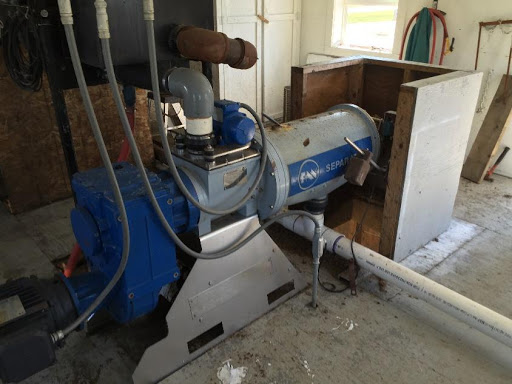
Screw press solid-liquid separator
Screw press solid-liquid separator (Source: USDA-NRCS)

This document brings together both the theory behind solid-liquid separation and the practical application of many different separation technologies.  Several farm scale demonstration projects are also summarized in the report. Solid-liquid separation can serve to achieve many livestock operational objectives such as nutrient partitioning, improved pumping characteristics, solids removal from storage facilities and reduced organic loadings.  The use of separation technologies is essential for many operations and has become an integral part of the efficient performance of these livestock facilities. Some of the purposes and uses of this document include assisting in solid-liquid separation technology selection, evaluating separation performance, and quantifying the impact of solid-liquid separation on manure management.  This presentation provides an overview of this document including methods of solid-liquid separation, influence of manure characteristics and handling methods, fundamentals of solid-liquid separation, performance of various solid-liquid separation technologies, unique separation technologies and applications and design considerations.

What Did We Do?

Use of coagulant and flocculant to enhance solid-liquid separation
Use of coagulant and flocculant to enhance solid-liquid separation (Source: USDA-NRCS)

Extensive effort through literature searches and testing went into compiling performance and design information on various types of solid-liquid separation technologies.  Separation theory was incorporated into the document to provide an understanding of separation principles and background information to assist in technology selection for improved system performance.  To improve usability of the document, it was divided into the following chapters: Methods of Solid-Liquid Separation, Manure Characteristics and Handling Methods, Fundamentals of Solid-Liquid Separation, Measures of Solid-Liquid Separation Performance, High-Rate Solid-Liquid Separation, Unique Applications of Solid-Liquid Separation Technology, and Design Considerations.  Several examples were provided throughout to assist in the design process of the various technologies. The document also includes information on the uses and benefits of coagulants and flocculants and separation methods associated with sand laden manure. Numerous system diagrams assist in illustrating the vast array of solid-liquid separation technologies that can be implemented in an animal manure treatment system.

What Have We Learned?

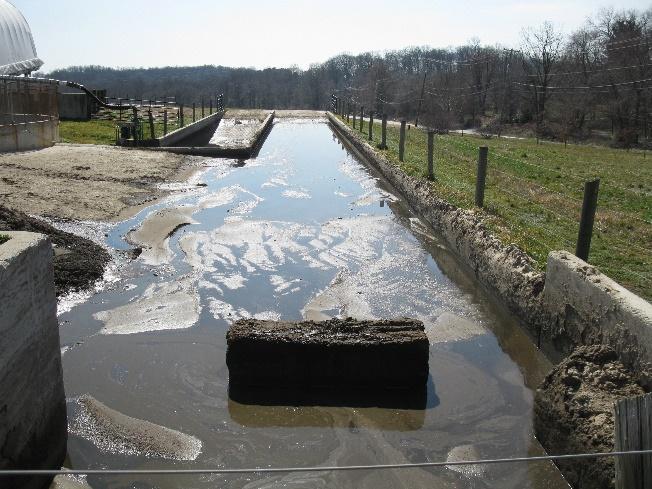
Sand settling land
Sand settling land (Source: USDA-NRCS)

This work brings together fundamental information about solid-liquid separation, benefits and limitations of many separation technologies, performance measurement techniques along with design considerations into one document.  Even though there are significant differences in performance and costs between the various separation technologies, the approach selected is largely dependent on critical elements such as landowner objectives, facility size, performance goals, operation and maintenance and other factors.  This document will help designers and operators choose the separation technology or technologies that will best meet the goals established for the operation.

Future Plans

This document will be published as chapter 4 of the USDA-NRCS National Engineering Handbook, Part 637 Environmental Engineering.

Author

Jeffrey P. Porter, P.E.

Animal Manure and Nutrient Management Team Leader

USDA-Natural Resources Conservation Service

jeffrey.porter@gnb.usda.gov

Additional information

Once published, a copy of the document can be found at https://directives.sc.egov.usda.gov/.

Acknowledgements

A special thank you goes out to the Piedmont-South Atlantic Coast Cooperative Ecosystems Studies Unit (CESU).  This Cooperative and Joint Venture Agreement allowed for this work to be completed.

Additional support was provided by the Confined Animal Manure Managers Program, Clemson Extension, Clemson University, Clemson, SC.

The authors are solely responsible for the content of these proceedings. The technical information does not necessarily reflect the official position of the sponsoring agencies or institutions represented by planning committee members, and inclusion and distribution herein does not constitute an endorsement of views expressed by the same. Printed materials included herein are not refereed publications. Citations should appear as follows. EXAMPLE: Authors. 2019. Title of presentation. Waste to Worth. Minneapolis, MN. April 22-26, 2019. URL of this page. Accessed on: today’s date.
Revenue Streams from Poultry Manure in Anaerobic Digestion (AD)

DUCTOR Corp. has developed a biological process that separates and captures nitrogen (ammonia) from organic waste streams. The biogas industry is a natural platform for this biotechnology as it solves the problem of ammonia inhibition, which has long bedeviled traditional anaerobic digestion (AD) processes. DUCTOR’s technology allows for stabilized and optimized biogas production from 100% high nitrogen feedstocks (such as poultry manure) and significantly strengthens the economics of biogas facilities: relatively inexpensive inputs, optimized gas production as well as new, higher value revenue streams from the organically produced byproducts—a pure Nitrogen fertilizer and a high Phosphorus soil amendment. DUCTOR’s mission is to promote biogas as a renewable energy source while securing efficient waste management and sustainable food & energy production, supporting the development of circular economies.

Purpose

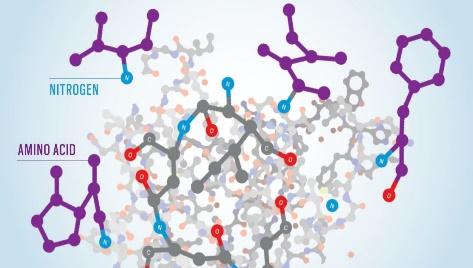
Figure 1. High Nitrogen Feedstock-molecular structure
Figure 1. High Nitrogen Feedstock

High concentrations of ammonia in organic waste streams have been a perpetual challenge to the biogas industry as ammonia is a powerful inhibitor of biogas production. In typical methanogenic communities, as ammonia levels exceed 1500mg/L Ammonia-N, the inhibition of methane production begins until it reaches toxic levels above 3000mg/L. Traditionally, various mechanical and chemical methods have been deployed to lower ammonia concentrations in high nitrogen organic feedstocks prior to or following biodigestion (Figure 1). These methods have proven cumbersome and operationally unstable. They either require dilution with often costly supplemental feedstocks, are fresh water intensive, waste valuable nutrients, or require caustic chemicals injurious to the environment. Without the application of these methods, nitrogen levels will build up in the digester and negatively affect the efficiency of biogas (methane) production. DUCTOR’s proprietary process revolutionizes ammonia removal with a biological approach, which not only optimizes the operational and economic performance of biogas production, it also allows for the ammonia to be recaptured and recycled as an organic fertilizer product (a 5-0-0 Ammonia Water). This biotechnical innovation represents a significant advancement in biogas technology.  

What did we do?

DUCTOR’s innovation is the invention of a fermentation step prior to the classic anaerobic digestion process of a biogas facility (Figure 2).  During this fermentation step in a pre-treatment tank, excess nitrogen is biologically converted into ammonia/ammonium and captured through a physical process involving volatilization and condensation of the liquid portion of the digestate.


Typical DUCTOR facility layout
Figure 2. Typical DUCTOR facility layout

We ran a demonstration biogas facility with these two steps in Tuorla, Finland for 2000 hours using 100% poultry litter as fermenter feedstock without experiencing ammonia inhibition of the methanogenesis process. While the control, a single-stage traditional digester, showed increased buildup of toxic ammonia, the fermented material coming out of the first stage of the DUCTOR process (having ~50-60% of its nitrogen volatilized and removed) exhibited uniform levels of nitrogen below the inhibition threshold (Figure 3). This allowed a stable and efficient digestion by the methanogenic microbial community in the second stage digester. The fermentation step effectively eliminates the need for co-digestion of poultry manures with other higher C/N ratio substrates.

Figure 3: Ammonium concentration & Methane quantities in treated and untreated substrates

What we have learned?

In addition to solving the problem of ammonia inhibition, DUCTOR’s innovation realizes the separation of valuable recycled nutrients in a manner that can produce additional revenue streams. The result of the fermentation process in the first stage digestion tank is an organically produced non-synthetic ammonia (NH4OH), which is condensed and collected. This ammonia water product can be marketed and sold as an organic fertilizer as it is the result of a completely biological process with no controlled chemical reactions. The non-synthetic ammonia produced comes from the digestion of poultry litter by ammonifying microorganisms in anaerobic conditions. Furthermore, this ammonia water is in a plant available form that can be metered onto fields based on crop demands and thus reduce the amount of excess nitrates leaching into the water table and surrounding watershed.

The solids byproduct that results from the completion of the anaerobic digestion process has a large fraction of phosphorus and potash. This digestate can be dried and pelleted to produce a high-phosphorus soil amendment. While recognizing demand for this product would vary by region based on existing phosphorus levels in the soil, it offers a transportable & storable way to return these valuable elements to the nutrient cycle.

nutrient life cycle

Finally, the importance of gas production as a form of sustainable, renewable energy cannot be understated. With 2/3rds of the world’s greenhouse gas emissions coming from the burning of fossil fuels for energy or electricity generation,1 biogas derived from anaerobic digestion can displace some of those processes and reduce environmental greenhouse gas emissions.2 Currently, there are many state and federal policies focusing on renewable energy credits and low carbon fuel standards to incentivize this displacement.3 With the ability to unlock poultry litter as an additional AD feedstock, biogas facilities can offer greater volumes of biogas production per ton of manure than either dairy or swine.

Future plans

We have several commercial projects that will feature the DUCTOR technology at various stages of development in North America. The demonstration facility at Tuorla has been disassembled and shipped to Mexico where it will be reassembled as part of a larger commercial project there. In cooperation with our Mexican partner, we will demonstrate successful operations under a new set of conditions, including different climate and a new source of poultry litter from different regional growing practices. We further intend to demonstrate the highly efficient water use of the process in a drought-prone area.

Additionally, we have received approval from the North Carolina Utilities Commission for entry into their pilot program for injecting biomethane into North Carolina’s natural gas pipelines. Our first project there is expected to begin construction in Spring 2019 to be completed and operational by early 2020. These projects, and others in development, will bring a very attractive and new manure management option to poultry farmers, while recycling nutrients from the waste stream and returning them to the soil in a measurable and sustainable manner.

Author

Bill Parmentier, Project Development, DUCTOR Americas

bill.parmentier@ductor.com

Additional information

https://www.ductor.com


1Global Greenhouse Gas Emissions Data, US Environmental Protection Agency (EPA), https://www.epa.gov/ghgemissions/global-greenhouse-gas-emissions-data

2Sources of Greenhouse Gas Emissions, US Environmental Protection Agency, https://www.epa.gov/ghgemissions/sources-greenhouse-gas-emissions

3Methane is a potent greenhouse gas that is over 20 times more damaging on the environment than carbon dioxide. Anaerobic digestion stops the release of methane into the environment by capturing it and using it for energy production or transportation fuel.

Federal incentives include the Rural Energy for America Program (REAP), Alternative Fuel Excise Tax Credit, & Federal Renewable Energy Production Tax Credit to name a few. Examples of state level incentives include various states Renewable Portfolio Standards (RPS) as well as California’s Low Carbon Fuel Standard (LCFS) or Oregon’s Clean Fuels Standard (CFS).


The authors are solely responsible for the content of these proceedings. The technical information does not necessarily reflect the official position of the sponsoring agencies or institutions represented by planning committee members, and inclusion and distribution herein does not constitute an endorsement of views expressed by the same. Printed materials included herein are not refereed publications. Citations should appear as follows. EXAMPLE: Authors. 2019. Title of presentation. Waste to Worth. Minneapolis, MN. April 22-26, 2019. URL of this page. Accessed on: today’s date.
Minnesota’s Runoff Risk Advisory Forecast: Forecasting the optimal time for manure application

The Runoff Risk project was started in Wisconsin in 2011, with the realization at that time, there was no real-time runoff risk guidance available for manure applicators. The project has grown, with four states (Michigan, Minnesota, Ohio and Wisconsin) now operating real-time runoff risk forecast websites.

screenshot of Minnesota runoff risk advisory forecast
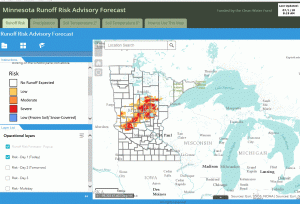
Figure 1. Minnesota Runoff Risk Advisory Forecast from July 1, 2018.

The Minnesota Runoff Risk Advisory Forecast (RRAF) system is a tool developed by the Minnesota Department of Agriculture (MDA) and the National Weather Service (NWS). It is designed to help farmers and commercial applicators determine the best time to apply manure to reduce the runoff risk of valuable nutrients and protect water resources. It is part of a regional risk advisory forecast project that utilizes existing NWS weather and watershed models in a water quality application. Figure 1 shows a screenshot of the website from July 1, 2018, indicating the runoff risk forecast in the central part of the state.

Runoff Risk Analysis

The NWS models continuously simulate soil moisture and temperature conditions as well as incorporating future precipitation and temperature forecasts and current and future snowpack. An algorithm that looks at chosen model state values is evaluated for a variety of risk conditions, such as runoff and soil saturation. Based on over 20 years of simulations, basin specific thresholds were created. Finally, there was post–processing of that data that is run on the output to produce risk events. This information is provided daily to the project partners through data servers. The data is processed and the website is updated twice daily. The graphic displays the different risk events predicting the likelihood of today (Day 1), tomorrow (Day 2), and Day 3 or multi-day (Day 1 through Day 3 combined) runoff events. Farmers and commercial applicators use an interactive map to locate their field and find their forecasted risk. Users can also sign up for email or text messages for their county that alert them to a severe runoff risk for that day.

screenshot of tabular format risk advisory forecast
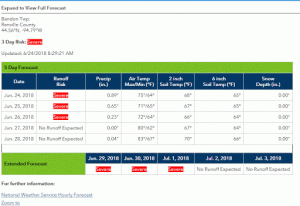
Figure 2. Tabular 5 day forecast from June 24, 2019 in Bandon Township, Renville County, Minnesota.

Runoff risk is grouped into four categories: No event, Low, Moderate and Severe. When the risk is Moderate or Severe, it is recommended that the applicator evaluate the situation to determine if there are other locations or later dates when the application could take place. Figure 2 shows results for a specific location in Bandon Township in Renville County, Minnesota. For the first three days, the risk of runoff at that specific location was Severe, which indicated that a producer should wait to apply.

Daily Mapping Information

screenshot of soil temperature map
Figure 3. Daily soil temperature forecast at 6 inch depth for Minnesota.

The RRAF website also provides statewide forecasted daily average two inch soil depth temperatures which can be useful at planting time, daily average six inch soil depth temperatures which are helpful when determining fall fertilizer application in appropriate areas and daily precipitation forecasts. Figure 3 shows the daily soil temperature forecast at the six inch depth for the state of Minnesota. The colored dots are real time soil temperature gauges that can be interactively clicked on to reveal current soil temperature. The color of the dot is not reflective of the temperature at the gauge. It simply notes what entity is in charge of the gauge.

Potential of RRAF

This is a relatively new application that has been implemented in Minnesota since March 2018. The potential impacts of usage on this could be quite large. Any time movement of manure to water resources can be minimized is a success for the farmer and the environment. The overall goal of the presentation is to make people aware of this tool, share information on the performance, and encourage potential users to add this tool to their “toolbox”. The main message is to check conditions, delay if necessary, and spread on the day when there is least potential impact to the environment.

Further partnerships are desired to continue to get the word out on this application. Yearly multi-state coordination meetings occur, with the next meeting coming up in Ohio in August 2019. Version 3 of the RRAF will be derived from the National Weather Service National Water Model. Development on this version will start in Spring 2019 and should take four years for it to be merged into the National Water Model system. For MDA, we continue to promote RRAF website and monitor the output, comparing it to real time data to make sure that the model is working correctly.

Heather Johnson, Hydrologist 3, Minnesota Department of Agriculture

Heather.johnson@state.mn.us

Additional information


The authors are solely responsible for the content of these proceedings. The technical information does not necessarily reflect the official position of the sponsoring agencies or institutions represented by planning committee members, and inclusion and distribution herein does not constitute an endorsement of views expressed by the same. Printed materials included herein are not refereed publications. Citations should appear as follows. EXAMPLE: Authors. 2019. Title of presentation. Waste to Worth. Minneapolis, MN. April 22-26, 2019. URL of this page. Accessed on: today’s date.

Regional Runoff Risk Tools for Nutrient Reduction in Great Lakes States

One method to reduce the impacts of excess nutrients leaving agricultural fields and degrading water quality across the Nation is to ensure nutrients are not applied right before a runoff event could occur.  Generally nutrient management approaches, including the 4-Rs (“right” timing, rate, placement, and source), include some discussion about the “right time” for nutrient applications, however that information is static guidance usually centered on the timing of crop needs.  What has been missing, and what will be discussed in this talk, will be the development and introduction to runoff risk decision support tools focused on providing farmers and producers real-time guidance on when to not apply nutrients in the next week to 10 days due to the risk of runoff capable of transporting those nutrients off their fields.  The voluntary adoption and use of runoff risk in short-term field management decisions could provide both environmental and economic benefits.

In response to the need for real-time nutrient application guidance and a request from states in the Great Lakes region, the National Weather Service (NWS) North Central River Forecast Center (NCRFC) has helped develop these runoff risk tools in collaboration with multiple state agencies and universities and with support from the Great Lakes Restoration Initiative (GLRI).  There are currently four active runoff risk tools in the Great Lakes region: Michigan, Minnesota, Ohio, and Wisconsin.  It is possible to develop similar tools for Illinois, Indiana, and New York if willing state partners are identified.  

What did we do?

Studies have shown that a few large runoff events per year contribute a majority of the annual load leaving fields.  In addition applications generally occur during the riskiest times of year for runoff (fall through spring) when fields experience the least vegetative cover and soils are vulnerable.  Knowing this information, real-time NWS weather and hydrologic models were evaluated to identify conditions that correlated with runoff observed at edge-of-field (EOF) locations.  The runoff risk algorithm identifies daily runoff events and stratifies the events by magnitude respective to each grid cell’s historical behavior.  The events are then classified into risk categories for the farmers and producers. In general, high risk events are larger magnitude events that don’t happen as often and also have a higher accuracy rate.  On the other end, low risk events are smaller magnitude events that have a higher chance of being a false alarm yet are also less likely to be associated with significant nutrient loss.

NWS models are run twice daily and simulate soil temperature, soil moisture, runoff, and snowpack conditions continuously.  The runoff risk algorithm is applied against the model output to produce runoff risk guidance which is sent to the state partners.  Each state has a working group and a lead agency or organization that manages the effort to produce and maintain the runoff risk websites as well as promote the tools and educate the users on how to interpret and use the guidance.  

What have we learned?

At this point there are four regional runoff risk tools available.  Response has been positive from both state agencies and when farming groups are asked about the runoff risk concept during post-presentation surveys and small focus groups.  There is a strong desire from the farming community to make the best decision during stressful times of the year when farming schedules and the weather are often in conflict.  

At this point, it is universally accepted among the runoff risk collaborators that there is a need to provide free, easily obtainable forecast guidance to the farming community so they can make the best nutrient application decisions for their operations and the environment.

Runoff risk tools are strictly for decision support and not meant to be a regulatory tool in nature.  This is due to the limitations in hydrologic models, weather forecasting, spatial scale issues, and that the tools have no way of incorporating farmer specific practices into the risk calculations.  Although model improvements will occur in the future, ensuring users understand the limitations but also the benefits they can provide are important components in the States’ outreach and education functions.  

Future Plans

Based on feedback from the states employing runoff tools, there is a second round of enhancement planned for the runoff risk algorithm in the summer of 2019.  Other improvements from the states’ perspective deal with updating webpages and building on and enhancing push notification capabilities such as text message and email alerts.

The next major step forward begins in spring 2019 with the start of version 3 runoff risk.  This 2-year development will transition runoff risk guidance from the current model over to the new NWS National Water Model (NWM).  The NWM framework will allow finer resolution guidance (1km or smaller) for numerous models runs per day all with full operational support.  Moving to the NWM also allows continuous improvement and future collaboration opportunities with universities to improve the underlying WRF-Hydro model as well as runoff risk and other derived decision support guidance.

Authors

Dustin Goering, Senior Hydrologist, North Central River Forecast Center, National Weather Service
Andrea Thorstensen, Hydrologist, North Central River Forecast Center, National Weather Service

Corresponding Author email
dustin.goering@noaa.gov

Additional Information

For further information on runoff risk background please visit this page: https://vlab.ncep.noaa.gov/web/noaa-runoff-risk/runoff-risk-background  (Still under construction)


To visit the state tools see the following links:


Michigan  

Minnesota 

Ohio  

Wisconsin  

Acknowledgements

There are many individuals across a wide spectrum of agencies, industry, and universities that have been instrumental in the development of runoff risk to this point.

Support for the development of runoff risk across the Great Lakes and the upcoming version 3 runoff risk from the National Water Model has been provided by multi-year grants from the Great Lakes Restoration Initiative.


The authors are solely responsible for the content of these proceedings. The technical information does not necessarily reflect the official position of the sponsoring agencies or institutions represented by planning committee members, and inclusion and distribution herein does not constitute an endorsement of views expressed by the same. Printed materials included herein are not refereed publications. Citations should appear as follows. EXAMPLE: Authors. 2019. Title of presentation. Waste to Worth. Minneapolis, MN. April 22-26, 2019. URL of this page. Accessed on: today’s date.

An Economical Method to Install Industrial Wastewater Storage Pond Liners


Proceedings Home W2W Home w2w17 logo

Purpose 

Over the past four decades, the number of custom slaughterhouses in Michigan has steadily decreased as the number of livestock producers declined. Those who remain are growing larger as they capitalize on the buy local food craze by providing fresh USDA-approved boxed meats at a meat counter or by adding value to the meats by further processing (i.e., sausages, hams, etc.). All slaughterhouses in the State are regulated by the Michigan Department of Environmental Quality (MDEQ) who issues permits for the proper disposal of the process wastewater for those operations that are not connected to a municipal sewer.

Typical disposal of the process wastewater involves removal of the solids through septic tank filtration and screens followed by storage of the process wastewater in ponds for eventual disposal on crop ground at agronomic rates. Facilities operating in this manner are issued a Groundwater Discharge Permit from MDEQ. However, because the state classifies slaughterhouses as an industry, the storage ponds require double liners and must meet a hydraulic conductivity of 1 x 10⁻⁷ centimeters/second.

A process wastewater storage pond is being designed for a slaughterhouse located in Coopersville, Michigan. The existing process wastewater holding pond is not sufficient to hold process water generated at the facility due to the recent expansions in slaughterhouse operations. Therefore, modifications to the existing holding pond and construction of a new holding pond to accommodate the process water generated is underway. The construction of the ponds is scheduled for spring 2017.

This paper evaluates the applicability, economic feasibility compared to geomembrane liners and constructability of pond liners using AquaBlok.

AquaBlok is a man-made clay pellet material that handles like gravel and is placed in varying thicknesses depending on the desired hydraulic conductivity and then hydrated to create a low permeable liner. Advertised as a “composite particle system” each AquaBlok particle contains an individual piece of limestone as its core. When a continuous layer of individual particles is applied, the clay (i.e., a high-quality sodium bentonite coating) surrounding each stone hydrates, swells, and binds together to produce a low-permeable earthen liner when introduced to a water environment.

What did we do? 

Based on the current operations and future growth forecast, the slaughterhouse requires a pond(s) with total holding capacity of approximately 1.6 million gallons of process wastewater. This accounts for process wastewater generated in total of eight (8) months period. Soil borings were taken at the site and soil samples were collected to determine geotechnical parameters including hydraulic conductivity. Total of eight (8) soil borings were advanced to an approximate depth of fifty (50) feet below ground surface. Based on the laboratory testing results, the hydraulic conductivity of the native clay did not meet the MDEQ’s minimum 1 x 10⁻⁷ cm/s requirement. These results indicate a need for a composite liner for the existing pond as well as the new pond. Two candidate liner materials are being evaluated. They are 1) clay liner that is constructed of AquaBlok and 2) geomembrane liner. Geomembrane are commonly being used for wastewater! holding ponds. AquaBlok is not being frequently used as liners for holding ponds. However, once constructed appropriately, this material would provide a liner with hydraulic conductivity of less than 1 x 10⁻⁸ cm/s and appropriate shear and compressive strength. Currently, the economic feasibility of the two methods is being evaluated. Also, the constructability of the AqaBlok liners is being investigated. The ponds are scheduled to be constructed in Spring 2017.

What have we learned? 

The evaluation of AquaBlok as a liner material for process wastewater holding ponds is being evaluated. The construction of the ponds is scheduled for Spring 2017. This material has promising geotechnical parameters and can provide a liner with a very low permeability once constructed appropriately. A detailed discussion of the material evaluation, liner construction methodology, economic analysis, and regulatory compliance will be presented during the oral presentation.

Use of a geotextile liner is an approved method to construct industrial wastewater storage ponds in Michigan but cost and liner installer availability is typically a detriment to fast installations.

Future Plans    

Due to a plant expansion, the design drawings and application to expand the process wastewater pond capacity and to meet the state requirements for minimum liner permeability are currently in review by the state MDEQ. Construction of the new storage pond is planned for spring 2017 pending MDEQ review and approval.

Corresponding author, title, and affiliation        

Matthew J. Germane, PE, Senior Project Engineer at Environmental Resources Group, LLC

Corresponding author email    

Matt.Germane@ERGrp.net

Other authors   

Mala Hettiarachchi, Ph.D, PE, Senior Engineer at Environmental Resources Group, LLC

Additional information                

Additional information on Michigan’s rules for liner construction of industrial wastewater is available at:

http://www.michigan.gov/documents/deq/wb-groundwater-P22GuidshtIV_248171_7.pdf

Acknowledgements       

The authors wish to acknowledge DeVries Meats, Inc., in Coopersville, MI and their owner, Ken DeVries, whose site the design work and cost evaluations were completed for.

Poultry Mortality Freezer Units: Better BMP, Better Biosecurity, Better Bottom Line.

Proceedings Home | W2W Home w2w17 logo

Purpose

Why Tackle Mortality Management?  It’s Ripe for Revolution.

The poultry industry has enjoyed a long run of technological and scientific advancements that have led to improvements in quality and efficiency.  To ensure its hard-won prosperity continues into the future, the industry has rightly shifted its focus to sustainability.  For example, much money and effort has been expended on developing better management methods and alternative uses/destinations for poultry litter.

In contrast, little effort or money has been expended to improve routine mortality management – arguably one of the most critical aspects of every poultry operation.  In many poultry producing areas of the country, mortality management methods have not changed in decades – not since the industry was forced to shift from the longstanding practice of pit burial.  Often that shift was to composting (with mixed results at best).  For several reasons – improved biosecurity being the most important/immediate – it’s time that the industry shift again.

The shift, however, doesn’t require reinventing the wheel, i.e., mortality management can be revolutionized without developing anything revolutionary.  In fact, the mortality management practice of the future owes its existence in part to a technology that was patented exactly 20 years ago by Tyson Foods – large freezer containers designed for storing routine/daily mortality on each individual farm until the containers are later emptied and the material is hauled off the farm for disposal.

Despite having been around for two decades, the practice of using on-farm freezer units has received almost no attention.  Little has been done to promote the practice or to study or improve on the original concept, which is a shame given the increasing focus on two of its biggest advantages – biosecurity and nutrient management.

Dusting off this old BMP for a closer look has been the focus of our work – and with promising results.  The benefits of hitting the reset button on this practice couldn’t be more clear:

  1. Greatly improved biosecurity for the individual grower when compared to traditional composting;
  2. Improved biosecurity for the entire industry as more individual farms switch from composting to freezing, reducing the likelihood of wider outbreaks;
  3. Reduced operational costs for the individual poultry farm as compared to more labor-intensive practices, such as composting;
  4. Greatly reduced environmental impact as compared to other BMPs that require land application as a second step, including composting, bio-digestion and incineration; and
  5. Improved quality of life for the grower, the grower’s family and the grower’s neighbors when compared to other BMPs, such as composting and incineration.

What Did We Do?

We basically took a fresh look at all aspects of this “old” BMP, and shared our findings with various audiences.

That work included:

  1. Direct testing with our own equipment on our own poultry farm regarding
    1. Farm visitation by animals and other disease vectors,
    2. Freezer unit capacity,
    3. Power consumption, and
    4. Operational/maintenance aspects;
  2. Field trials on two pilot project farms over two years regarding
    1. Freezer unit capacity
    2. Quality of life issues for growers and neighbors,
    3. Farm visitation by animals and other disease vectors,
    4. Operational and collection/hauling aspects;
  3. Performing literature reviews and interviews regarding
    1. Farm visitation by animals and other disease vectors
    2. Pathogen/disease transmission,
    3. Biosecurity measures
    4. Nutrient management comparisons
    5. Quality of life issues for growers and neighbors
  4. Ensuring the results of the above topics/tests were communicated to
    1. Growers
    2. Integrators
    3. Legislators
    4. Environmental groups
    5. Funding agencies (state and federal)
    6. Veterinary agencies (state and federal)

What Have We Learned?

The breadth of the work at times limited the depth of any one topic’s exploration, but here is an overview of our findings:

  1. Direct testing with our own equipment on our own poultry farm regarding
    1. Farm visitation by animals and other disease vectors
      1. Farm visitation by scavenger animals, including buzzards/vultures, raccoons, foxes and feral cats, that previously dined in the composting shed daily slowly decreased and then stopped entirely about three weeks after the farm converted to freezer units.
      2. The fly population was dramatically reduced after the farm converted from composting to freezer units.  [Reduction was estimated at 80%-90%.]
    2. Freezer unit capacity
      1. The test units were carefully filled on a daily basis to replicate the size and amount of deadstock generated over the course of a full farm’s grow-out cycle.
      2. The capacity tests were repeated over several flocks to ensure we had accurate numbers for creating a capacity calculator/matrix, which has since been adopted by the USDA’s Natural Resources Conservation Service to determine the correct number of units per farm based on flock size and finish bird weight (or number of grow-out days) in connection with the agency’s cost-share program.
    3. Power consumption
      1. Power consumption was recorded daily over several flocks and under several conditions, e.g., during all four seasons and under cover versus outside and unprotected from the elements.
      2. Energy costs were higher for uncovered units and obviously varied depending on the season, but the average cost to power one unit is only 90 cents a day.  The total cost of power for the average farm (all four units) is only $92 per flock.  (See additional information for supporting documentation and charts.)
    4. Operational/maintenance aspects;
      1. It was determined that the benefits of installing the units under cover (e.g., inside a small shed or retrofitted bin composter) with a winch system to assist with emptying the units greatly outweighed the additional infrastructure costs.
      2. This greatly reduced wear and tear on the freezer component of the system during emptying, eliminated clogging of the removable filter component, as well as provided enhanced access to the unit for periodic cleaning/maintenance by a refrigeration professional.
  2. Field trials on two pilot project farms over two years regarding
    1. Freezer unit capacity
      1. After tracking two years of full farm collection/hauling data, we were able to increase the per unit capacity number in the calculator/matrix from 1,500 lbs. to 1,800 lbs., thereby reducing the number of units required per farm to satisfy that farm’s capacity needs.
    2. Quality of life issues for growers and neighbors
      1. Both farms reported improved quality of life, largely thanks to the elimination or reduction of animals, insects and smells associated with composting.
    3. Farm visitation by animals and other disease vectors
      1. Both farms reported elimination or reduction of the scavenging animals and disease-carrying insects commonly associated with composting.
    4. Operational and collection/hauling aspects
      1. With the benefit of two years of actual use in the field, we entirely re-designed the sheds used for housing the freezer units.
      2. The biggest improvements were created by turning the units so they faced each other rather than all lined up side-by-side facing outward.  (See additional information for supporting documentation and diagrams.)  This change then meant that the grower went inside the shed (and out of the elements) to load the units.  This change also provided direct access to the fork pockets, allowing for quicker emptying and replacement with a forklift.
  3. Performing literature reviews and interviews regarding
    1. Farm visitation by animals and other disease vectors
      1. More research confirming the connection between farm visitation by scavenger animals and the use of composting was recently published by the USDA National Wildlife Research Center:
        1. “Certain wildlife species may become habituated to anthropogenically modified habitats, especially those associated with abundant food resources.  Such behavior, at least in the context of multiple farms, could facilitate the movement of IAV from farm to farm if a mammal were to become infected at one farm and then travel to a second location.  …  As such, the potential intrusion of select peridomestic mammals into poultry facilities should be accounted for in biosecurity plans.”
        2. Root, J. J. et al. When fur and feather occur together: interclass transmission of avian influenza A virus from mammals to birds through common resources. Sci. Rep. 5, 14354; doi:10.1038/ srep14354 (2015) at page 6 (internal citations omitted; emphasis added).
    2. Pathogen/disease transmission,
      1. Animals and insects have long been known to be carriers of dozens of pathogens harmful to poultry – and to people.  Recently, however, the USDA National Wildlife Research Center demonstrated conclusively that mammals are not only carriers – they also can transmit avian influenza virus to birds.
        1. The study’s conclusion is particularly troubling given the number and variety of mammals and other animals that routinely visit composting sheds as demonstrated by our research using a game camera.  These same animals also routinely visit nearby waterways and other poultry farms increasing the likelihood of cross-contamination, as explained in this the video titled Farm Freezer Biosecurity Benefits.
        2. “When wildlife and poultry interact and both can carry and spread a potentially damaging agricultural pathogen, it’s cause for concern,” said research wildlife biologist Dr. Jeff Root, one of several researchers from the National Wildlife Research Center, part of the USDA-APHIS Wildlife Services program, studying the role wild mammals may play in the spread of avian influenza viruses.
    3. Biosecurity measures
      1. Every day the grower collects routine mortality and stores it inside large freezer units. After the broiler flock is caught and processed, but before the next flock is started – i.e. when no live birds are present,  a customized truck and forklift empty the freezer units and hauls away the deadstock.  During this 10- to 20- day window between flocks biosecurity is relaxed and dozens of visitors (feed trucks, litter brokers, mortality collection) are on site in preparation for the next flock.
        1. “Access will change after a production cycle,” according to a biosecurity best practices document (enclosed) from Iowa State University. “Empty buildings are temporarily considered outside of the [protected area and even] the Line of Separation is temporarily removed because there are no birds in the barn.”
    4. Nutrient management comparisons
      1. Research provided by retired extension agent Bud Malone (enclosed) provided us with the opportunity to calculate nitrogen and phosphorous numbers for on-farm mortality, and therefore, the amount of those nutrients that can be diverted from land application through the use of freezer units instead of composting.
      2. The research (contained in an enclosed presentation) also provided a comparison of the cost-effectiveness of various nutrient management BMPs – and a finding that freezing and recycling is about 90% more efficient than the average of all other ag BMPs in reducing phosphorous.
    5. Quality of life issues for growers and neighbors
      1. Local and county governments in several states have been compiling a lot of research on the various approaches for ensuring farmers and their residential neighbors can coexist peacefully.
      2. Many of the complaints have focused on the unwanted scavenger animals, including buzzards/vultures, raccoons, foxes and feral cats, as well as the smells associated with composting.
      3. The concept of utilizing sealed freezer collection units to eliminate the smells and animals associated with composting is being considered by some government agencies as an alternative to instituting deeper and deeper setbacks from property lines, which make farming operations more difficult and costly.

Future Plans

We see more work on three fronts:

  • First, we’ll continue to do monitoring and testing locally so that we may add another year or two of data to the time frames utilized initially.
  • Second, we are actively working to develop new more profitable uses for the deadstock (alternatives to rendering) that could one day further reduce the cost of mortality management for the grower.
  • Lastly, as two of the biggest advantages of this practice – biosecurity and nutrient management – garner more attention nationwide, our hope would be to see more thorough university-level research into each of the otherwise disparate topics that we were forced to cobble together to develop a broad, initial understanding of this BMP.

Corresponding author (name, title, affiliation)

Victor Clark, Co-Founder & Vice President, Legal and Government Affairs, Farm Freezers LLC and Greener Solutions LLC

Corresponding author email address

victor@farmfreezers.com

Other Authors

Terry Baker, Co-Founder & President, Farm Freezers LLC and Greener Solutions LLC

Additional Information

https://rendermagazine.com/wp-content/uploads/2019/07/Render_Oct16.pdf

Farm Freezer Biosecurity Benefits

One Night in a Composting Shed

www.farmfreezers.com

Transmission Pathways

Avian flu conditions still evolving (editorial)

USDA NRCS Conservation fact sheet Poultry Freezers

Nature.com When fur and feather occur together: interclass transmission of avian influenza A virus from mammals to birds through common resources

How Does It Work? (on-farm freezing)

Influenza infections in wild raccoons (CDC)

Collection Shed Unit specifications

Collection Unit specifications

Freezing vs Composting for Biosecurity (Render magazine)

Manure and spent litter management: HPAI biosecurity (Iowa State University)

Acknowledgements

Bud Malone, retired University of Delaware Extension poultry specialist and owner of Malone Poultry Consulting

Bill Brown, University of Delaware Extension poultry specialist, poultry grower and Delmarva Poultry Industry board member

Delaware Department of Agriculture

Delaware Nutrient Management Commission

Delaware Office of the Natural Resources Conservation Service

Maryland Office of the Natural Resources Conservation Service

The authors are solely responsible for the content of these proceedings. The technical information does not necessarily reflect the official position of the sponsoring agencies or institutions represented by planning committee members, and inclusion and distribution herein does not constitute an endorsement of views expressed by the same. Printed materials included herein are not refereed publications. Citations should appear as follows. EXAMPLE: Authors. 2017. Title of presentation. Waste to Worth: Spreading Science and Solutions. Cary, NC. April 18-21, 2017. URL of this page. Accessed on: today’s date.

Spotlight on Manure Management in North Carolina and the Atlantic Coastal Plains


Proceedings Home W2W Home w2w17 logo

Purpose 

To provide information about commonly-found manure management systems and approaches in North Carolina and the Coastal Plains, and discuss opportunities for technological innovation in the areas of manure management and nutrient recovery/utilization. Hear from a diverse panel of researchers, animal agriculture producers, and agency representatives who will provide background on the environmental conditions of the region and discuss specific technical considerations for innovative research and development. Learn about what has and hasn’t worked in past attempts to recover nutrients at animal agriculture farms in the area, and about the exciting possibilities for innovation in the U.S. Environmental Protection Agency’s (EPA’s) Nutrient Recycling Challenge (www.nutrientrecyclingchallenge.org).

What did we do? 

N/A

What have we learned? 

N/A

Future Plans 

N/A

Corresponding author, title, and affiliation 

Joseph Ziobro, Physical Scientist, U.S. Environmental Protection Agency; Hema Subramanian, Environmental Protection Specialist, U.S. Environmental Protection Agency

Corresponding author email 

ziobro.joseph@epa.gov; subramanian.hema@epa.gov

Other authors

Dr. John Classen, Associate Professor and Director of Graduate Programs, College of Biological and Agricultural Engineering at North Carolina State University

Dr. Kelly Zering, Professor of Agricultural and Resource Economics, North Carolina State University

Additional information

Session Agenda

  1. Background, history, and technical information about manure management in North Carolina and the Coastal Plains

Presenter: Dr. John Classen, Associate Professor and Director of Graduate Programs, College of Biological and Agricultural Engineering at North Carolina State University

  1. Lessons Learned from the Smithfield Agreement

Presenter: Dr. Kelly Zering, Professor of Agricultural and Resource Economics, North Carolina State University

  1. Panel: Challenges and Opportunities around Manure Management Systems

Moderator: Hema Subramanian

Panel to include the above speakers plus representatives from the local animal agriculture industry, North Carolina Department of Agriculture and Consumer Services, North Carolina Department of Environmental Quality, and U.S. Environmental Protection Agency. 

Results of Nutrient Recovery System Installed on Large Scale Dairy Operation After 2-years of Operation


Proceedings Home W2W Home w2w17 logo

*Do not make slides downloadable

Purpose 

For centuries, farmers have disposed of manure by simply spreading it on the land. It is a natural fertilizer. Today, that practice is no longer considered the best solution. Field spreading is now understood to contribute to a growing global problem of the pollution of water, soil, and air. Consequently, U.S. dairy farmers face increased fiscal and operational pressure from the progression of ever tightening environmental regulations. Conventional handling of manure also imposes a number of operational challenges (limitations for storage, land application and irrigation, settlement in lagoons, high manure hauling costs, etc.) and typically requires a relatively large land base to allow adequate nutrient management.

In Indiana, a dairy that was daily producing thousands of tons of livestock waste was investigating how technology could capture the valuable nutrients remaining in their cow manure after it had gone through the farm’s anaerobic digestion process. Their goal was to convert the manure/digestate into a nutrient rich cake that could be easier managed and made into fertilizer, and the liquid clean enough to be used unrestricted for land application.

The farm’s key operational deliverables were 1) to reduce the manure’s handling and transportation costs, 2) allow for precision applications of the processed manure as carbon-based fertilizer and 3) allow for re-use of nutrient reduced liquid for field irrigation.

What did we do? 

The dairy farm chose to implement a nutrient recovery technology from Trident Processes LLC. The technology separates the manure/digestate into three fractions: 1) cellulosic fiber, 2) a concentrated cake of nutrient enriched solids, and 3) water with about 1% remaining solids.

Trident’s turn-key system, consisting of different mechanical and chemical components, processes the manure and diverts each separated fraction into their separate spaces. Sensors and programmable controls (PLC) allow for smooth operation, requiring minimal operator attendance. The entire system can be monitored, controlled and diagnosed remotely.

The manure is fed into the system following the digestion process. The initial step is the extraction of the large fiber, which is done via a rotary screen conditioner. The wetted material separates, with the effluent water and fine solids sifting down through the screen while the larger fiber is retained. This step is critical as it ensures the fine particles, which contain the nutrients, are sent down stream for further treatment.

FIBER: The extracted fiber is sent to a screw press for further dewatering. This renders it as a 30% dry cellulosic fiber biomass that is ideal for recycling as cow bedding or other biomass use. Any liquid squeezed from the fiber is diverted to join the fine solids stream.

SOLIDS: The effluent water and solids are sent to a dissolved air flotation (DAF) tank. Polymerization ensures effective flocculation of the feedstock, resulting in a concentration of the nutrient rich particles that float to the surface. The sludge formed on the surface is skimmed off the top and gravity fed into a multi-disc press for second-stage dewatering. The press gently dewaters and thickens the recovered solid/nutrient sludge into a 25% solids, nutrient rich cake.

WATER: The final effluent water, now nutrient reduced, contains less than 1.2% solids and is sent to the lagoon for storage. The water is then reused for irrigation through efficient pivot systems or as operational water on the farm.

What have we learned? 

By implementing Trident’s Nutrient Recovery System, the farms’ objectives have been met and/or exceeded. After running for nearly two years the system is producing the following statistics:

• Fully automated operation requiring about 1 hr/shift for operator attendance (visual checks)

• 98% system uptime

• Polymer costs: $0.06 – $0.08/day/cow

• Reduction of handling and irrigation costs: $ 0.01/gal (conventional) vs $0.003/gal (center pivot)

• $250,000/yr electrical power savings with MD Press vs. centrifuge

• 73,000+ ton/yr nutrient cake produced

• 81% P, 70% organic N (54% TKN), and 20% K is the average nutrient capture rate

• 1% (max.) solids in the effluent water sent to lagoons

• 99% Suspended solids captured

Future Plans 

Dairy farm: A fertilizer plant will go live in the near future, allowing the farm to sell their concentrated nutrients to the plant as feedstock for custom fertilizer production.

Technology provider: 2nd Phase effluent treatment to capture and retain the solid and nutrient fraction of the existing process, allowing to meet stream discharge standards and comply with BOD / COD levels. Bench scale testing is completed. Farm scale pilot testing is scheduled to run from March 2017-December 2017.

Corresponding author, title, and affiliation       

Richard Shatto (Senior Partner at Point Nexus Consulting), Frank Engel (Director Marketing at KPD Consulting Ltd.)

Corresponding author email 

frank.engel@kpdconsulting.ca

Additional information 

https://youtu.be/PvaTGmyws-w (Carl Ramsey’s presentation at Indiana Dairy Forum)

http://www.progressivedairy.com/topics/manure/prairie-s-edge-dairy-on-pa… (Progressive Dairyman article)

http://tridentprocesses.com/documents/case-study-trident-nutrient-recove… (Newtrient case study)

https://are.wisc.edu/manure-processing/ (manure management project with University of Wisconsin)

http://www.foodqualityandsafety.com/article/nutrient-recovery-improves-s… (Nutrient Recovery Improves Sustainability article in Food Quality & Safety Magazine)

Acknowledgements       

Carl Ramsey, Environmental Manager at Prairie’s Edge Dairy Farm

Soil Net LLC, Dr. Aicardo Roa (strategic partner for chemical separation process)

Leap Tech, R.C. Ludke (strategic partner for automation)

Developing a Comprehensive Nutrient Management Plan (CNMP)

Proceedings Home W2W Home w2w17 logo

Purpose

Livestock producers are presented with a number of challenges and opportunities. Developing a quality Comprehensive Nutrient Management Plan (CNMP) can effectively help landowners address natural resource concerns related to soil erosion, water quality, and air quality from manure management. As livestock operations continue to expand and concentrate in certain parts of the country, utilizing a CNMP becomes even more important. Following the NRCS 9-step planning process is critical in developing a good plan. Effective communication is a key element between all parties involved in the planning process. A CNMP documents the decisions made by the landowner for the farmstead area, crop and pasture area, and nutrient management. Information will cover the elements essential for developing a quality CNMP.

What did we do?

Since the CNMP documents the records of decisions by the landowner, it has to be organized in such a fashion that it is understandable to and usable by the landowner. The CNMP is the landowner’s plan. Therefore, the role of the planner is to help landowners do the things that will most benefit them and the resources in the long run. This will take both time and effort. To provide consistency with other conservation planning efforts within NRCS, CNMPs following the same process outlined in the National Planning Procedures Handbook. There are several items that are essential for a quality CNMP to be developed:

• Have a good understanding of potential resource concerns especially soil erosion, water quality and air quality.

• Make the appropriate number of site visits. Trying to do this from the office will likely lead to a poor quality CNMP that may not be implemented.

• Address resource concerns for the Farmstead and Crop and Pasture areas.

• Ensure that all nutrient sources are addressed.

• Follow the 9 steps of planning.

• Decisions are agreed upon by the landowner. The CNMP reflects the landowner’s record of decisions.

• Follow-up to address any questions or concerns.

• Update as necessary. A CNMP is not a static document.

Field

Land application of animal manure without proper land treatment practices

Muddy field with standing water

Proper animal manure storage required to address water quality issues

Picture of lined water bed

Evaluation of storage area to adequately address surface and subsurface
water quality issues

Picture of tractor and tanker spreader

Land application and nutrient management are critical elements for a
properly prepared CNMP

What have we learned?

The quality of CNMPs varies greatly across the country. Some were becoming so large that landowners were having difficulty finding the activities that needed to be completed. The revised CNMP format and process following the NRCS Conservation Planning approach should improve both the quality and usability of the plans developed. Due to statutes in the Farm Bill, all conservation practices recorded in the record of decision of the CNMP, whether receiving financial assistance or not, must be implemented by the end of the established contract period between the landowner and NRCS. Therefore it is important to only include the practices that are going to be implemented. CNMPs should be periodically updated to account for operational changes such as animal numbers, cropping systems, or land application methods.

Future Plans

The CNMP planning process will be evaluated to determine whether landowner objectives are being met and resource concerns properly addressed. Additional evaluations will look at the consistency of the plans generated across the country and the usability by landowners.

Corresponding author, title, and affiliation

Jeffrey P. Porter, P.E.; National Animal Manure and Nutrient Management Team Leader, USDA-Natural Resources Conservation Service

Corresponding author email

jeffrey.porter@gnb.usda.gov

Additional information

References

USDA-NRCS General Manual – Title 190, Part 405 – Comprehensive Nutrient Management Plans

USDA-NRCS Handbooks – Title 180, Part 600 – National Planning Procedures Handbook

Code of Federal Register (CFR) Title 7, Part 1466 – Environmental Quality Incentives Program (1466.7 EQIP Plan of Operations and 1466.21 Contract Requirements)

Webinar

Comprehensive Nutrient Management Plans and the Planning Process – http://www.conservationwebinars.net/webinars/comprehensive-nutrient-management-plans-and-the-planning-process/?searchterm=cnmp

The authors are solely responsible for the content of these proceedings. The technical information does not necessarily reflect the official position of the sponsoring agencies or institutions represented by planning committee members, and inclusion and distribution herein does not constitute an endorsement of views expressed by the same. Printed materials included herein are not refereed publications. Citations should appear as follows. EXAMPLE: Authors. 2017. Title of presentation. Waste to Worth: Spreading Science and Solutions. Cary, NC. April 18-21, 2017. URL of this page. Accessed on: today’s date.