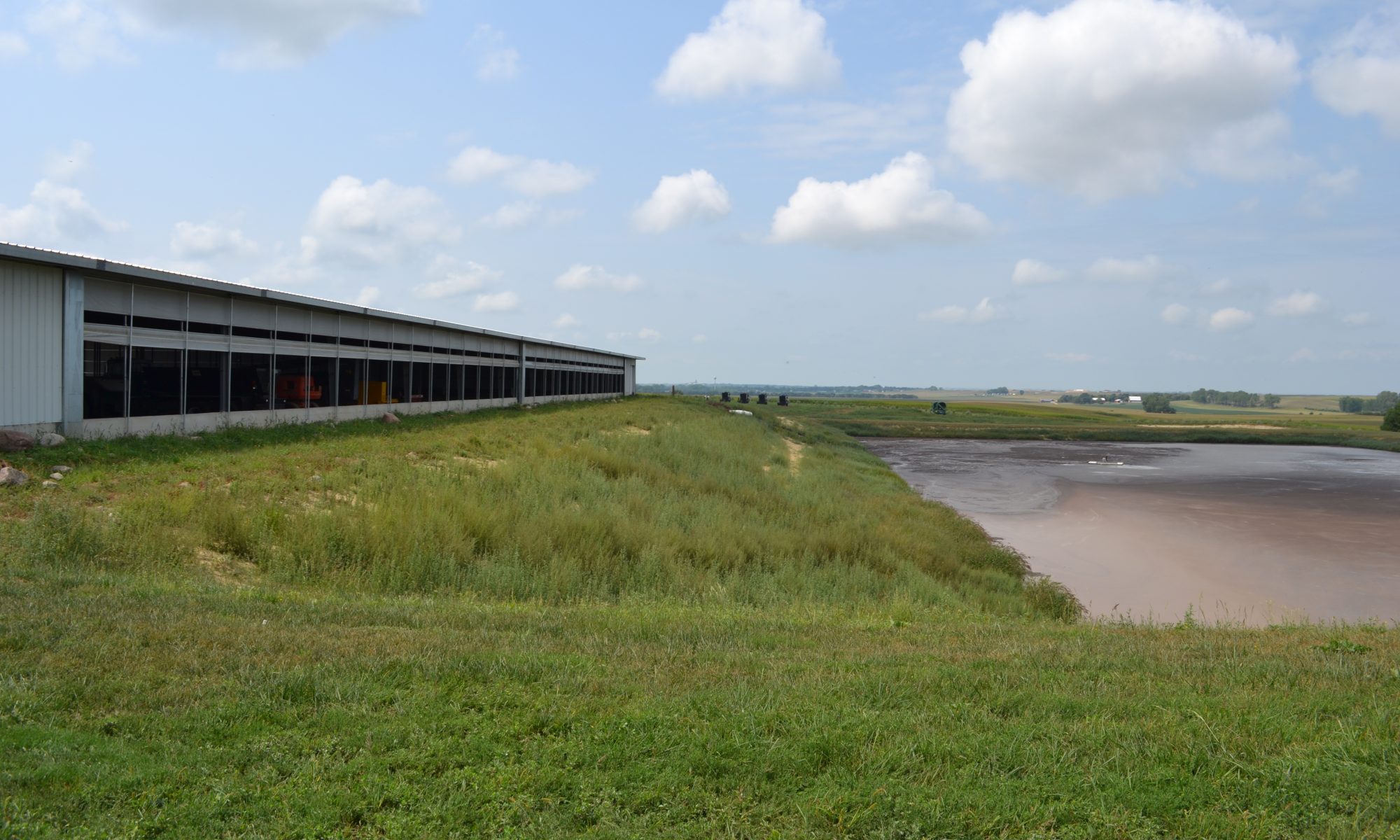


Siting Animal Production Facilities and Evaluating Odor Control Options Using the Odor Footprint Tool

Reprinted, with permission, from the proceedings of: Mitigating Air Emissions From Animal Feeding Operations Conference.

This Technology is Applicable To:

Species: Poultry, Dairy, Beef, Swine
Use Area: Animal Housing, Manure Storage
Technology Category: Facility Siting
Air Mitigated Pollutants: Odor

System Summary

The Odor Footprint Tool is a worksheet/spreadsheet that provides objective, science-based information on the risk-based impact of odors generated by livestock facilities. The user enters information about the livestock facilities for a given site, the site location (for selection of regional weather data), use of supplemental odor control, and any special terrain around the site. After using the Odor Footprint Tool, the user obtains minimum setback distances in four directions matching up with targets for avoiding odor annoyance. The Odor Footprint Tool can help assess the reduction in the size of a facility’s odor footprint due to use of proven odor control technology.

By using the Odor Footprint Tool, producers and their advisors can mitigate neighbor impacts of odor and air-borne pollutants through improved siting of facilities. They can also use the Odor Footprint Tool to assess the benefit of odor control technologies in terms of reduced area of odor impact, which encourages the utilization of effective control technologies.

Applicability

  • Assesses frequency of odor annoyance from housed swine, cattle and poultry production facilities
  • Considers animal housing facilities and manure storage facilities
  • Assesses reduction in odor footprint due to using proven odor control technology
  • Used on a regional basis within a state
  • Recommended for use as a planning and screening tool

Limitations

  • Not ready for use with open lots, treatment lagoons, and other large area sources
  • Not for assessing odor annoyance during application of manure
  • Requires its own set of emission values
  • Dispersion modeling is required upfront for confident use in a new region having differing weather patterns.
  • Simplified footprints may seem over-simplified or lack desired level of precision

Cost

There is no direct cost for using the publicly available versions of the Odor Footprint Tool to obtain directional setback distances or for conferring with an Extension educator. When producers defer use to an advisor/consultant, it is reasonable to expect to pay for consultant time associated with using the tool, getting their technical response and recommendations, creating project-specific visuals, and presenting material to permitting authorities, local zoning commissions, lenders, etc.

The primary costs associated with the Odor Footprint Tool are upfront costs of calibrating and validating the dispersion model and performing dispersion modeling using weather data for a specific area. Grant funds have been utilized within Nebraska and South Dakota for this purpose.

Authors

Rick Stowell, Chris Henry, Crystal Powers, and Dennis Schulte
University of Nebraska-Lincoln
Point of Contact:
Rick Stowell, rstowell2@unl.edu

The information provided here was developed for the conference Mitigating Air Emissions From Animal Feeding Operations Conference held in May 2008. To obtain updates, readers are encouraged to contact the author.

Reducing H2S, NH3, PM, & Odor Emissions from Deep-pit Pig Finishing Facilities by Managing Pit Ventilation

Reprinted, with permission, from the proceedings of: Mitigating Air Emissions From Animal Feeding Operations Conference.

The proceedings, “Mitigating Air Emissions from Animal Feeding Operations”, with expanded versions of these summaries can be purchased through the Midwest Plan Service.

This Technology is Applicable To:

Species: Swine (maybe Dairy and Poultry)
Use Area: Animal Housing
Technology Category: Management
Air Mitigated Pollutants: Odor, Hydrogen Sulfide, Ammonia, Particulates (PM10)

System Summary

A recent study determined that a large majority (75 to 80 %) of the total NH3 and H2S emissions from a 2000-head tunnel-ventilated deep-pit pig-finishing barn for 45 days during August and September 2004 were emitted from the pit exhaust stream even though only 20 to 30 % of the total barn’s ventilation air was being provided by pit fans. This information allows producers with deep-pit facilities to strategically utilize catch and treat emission control technologies, such as biofilters, ONLY on pit fans airstreams that would result in large reductions (>50%) in the emissions of hazardous gases, odor, and particulate matter by treating only a small portion of the total ventilation air (figure 1). Another follow up study found that emissions of certain pollutants, may be reduced slightly (10 to 20%) by simply eliminating pit fans altogether for a deep-pitted pig building.

The phenomenal of a majority of the barn’s airborne pollutants being emitted by pit fans, may also be true for other swine production phases or for even other species (dairy and poultry) housed in deep pit facilities. This would mean that emission reductions of >50 % for certain pollutants are potentially possible when emission control technologies like biofilters are strategically placed on large emitting pit fan sources in deep-pit buildings. If only small reductions (<20%) of certain pollutants are needed, this maybe accomplished by the elimination of pit fans altogether.

Applicability and Mitigating Mechanism

  • Pit Fan(s) airstreams contain a majority of the critical airborne pollutants (NH3, H2S, PM10, odor) from deep-pitted pig buildings
  • If biofilters are strategically used on pit exhaust air, sizable (>50%) emission reductions of some pollutants are possible for either existing or new deep-pit facilities

Limitations

  • Information only available presently for deep-pit pig finishing barns but anticipated similar results for other swine plus dairy and poultry housed in deep-pit buildings
  • Valid for NH3, H2S, odor, and certain PM fractions, not known if greenhouse gases will also be concentrated in the pit fan exhaust air of deep-pit facilities

Cost

There is no additional cost of this “technology” since a well-designed and operating ventilation system is required in any animal facility and especially in a deep-pitted pig building. There actually may be a cost saving if producers decided to install no or only a limited number of pit fans instead of the standard number for the livestock industry which is approximately 20% of the total barn’s ventilation system. A cost savings is often realized since the installation of pit fans is typically more expensive than wall fans plus pit fans have higher maintenance requirements and are more frequently in need of replacement.

Authors

Larry D. Jacobson1, Brian P. Hetchler1,David R. Schmidt11Bioproducts & Biosystems Engineering, University of Minnesota
Point of Contact:
Larry D. Jacobson, jacob007@umn.edu

The information provided here was developed for the conference Mitigating Air Emissions From Animal Feeding Operations Conference held in May 2008. To obtain updates, readers are encouraged to contact the author.

Costs of Solid Manure Application and Transport

Poultry litter and beef feedlot manure are the most common types of “solid” manure. Separated solids from dairies can also be a source of solid manure. Solid manures must be scraped off the floor of the pen or house where the animals were raised. Scraping and loading onto trucks usually is done with a front end loader. If the manure is not land applied at the time the pens are cleaned, the manure can be stockpiled until needed. Poultry litter, in particular, when stockpiled is stored in covered sheds. The cost of the storage shed is an additional cost to manure loading.

Transport Costs of Solid Manure

As previously mentioned, solid manures are the least expensive to transport because most of the bulk transported is dry organic matter containing fertilizer nutrients (N, P and K). Water has little value in manure and adds a lot of weight that costs money to transport. Often, the manure is loaded into transport trucks that haul it to the receiving field, where it is unloaded and then loaded into an application truck.

Land application of solid manure. CC 2.5 Charles Fulhage or Joe Harner

Land Application of Solid Manure

Land application of dry manures is done with a flail type spreader. The manure, as it comes out of the truck-mounted or tractor-pulled spreader box, is flailed out in small pieces onto the surface of the soil. The spreader box is usually a specialized piece of equipment that can be expensive unless it is used to spread a lot of manure on many acres. If the manure needs to be incorporated into the soil, the cost of disking the manure into the soil could also be considered a cost of manure management.

Transportation Cost Assistance

To encourage appropriate use of the nutrients in manure, several government programs subsidize manure management costs. These programs can help reduce transportation costs, increasing manure value as it is more fully utilized as a soil amendment/fertilizer where it is most needed.

Examples of assistance include:

  • subsidy programs in Oklahoma and Arkansas that assist in moving poultry litter from nutrient sensitive watersheds to nutrient deficient areas;
  • loan guarantees to producers purchasing appropriate manure transportation equipment in Missouri;
  • USDA Environmental Quality Incentives Program (EQIP) that cost shares on certain manure investments depending on the priorities of each individual state.

Potential applicants for assistance programs could contact their local USDA Natural Resources Conservation Service office and state Departments of Agriculture or Environental Quality.

Authors: Ray Massey, University of Missouri and Josh Payne, Oklahoma State University

Page reviewers: Alan Lauver, NRCS and Chandra Theegal, Lousiana State University

Equipment and facilities for managing manure on small farms

The number of small farms is increasing in much of the country, ensuring up to date information is available is important to protect water and environmental quality. This webinar focuses on some of the farm and manure management needs of smaller farms. This presentation was originally broadcast on April 20, 2018. More… Continue reading “Equipment and facilities for managing manure on small farms”

Avian Influenza Mortality Management Options, Composting Procedures and Lessons Learned

This presentation outlines mortality management options during an animal disease outbreak and highlight the composting methodology implemented on poultry operations during the HPAI outbreak, as well as the successes, challenges and lessons learned. This presentation was originally broadcast on February 17, 2017. More… Continue reading “Avian Influenza Mortality Management Options, Composting Procedures and Lessons Learned”

Thermal Manure-to-Energy Systems for Farms: Technical and Environmental Feasibility

Results of performance evaluations, including technical and environmental feasibility are presented, along with results from field trials where ash and biochars were compared side-by-side in row crop and vegetable production with commercial fertilizer and untreated poultry litter.This presentation was originally broadcast on September 18, 2015. More… Continue reading “Thermal Manure-to-Energy Systems for Farms: Technical and Environmental Feasibility”

Linking Feed Management to Whole Farm Nutrient Management

Nutrients in feed is the primary source of Nitrogen, Phosphorus, and Potassium that is imported to livestock and poultry farms. This webcast highlights a decision aid tool that follows the nutrients in feed all the way to the land application of manure for crop production. This presentation was originally broadcast on October 17, 2014. More… Continue reading “Linking Feed Management to Whole Farm Nutrient Management”