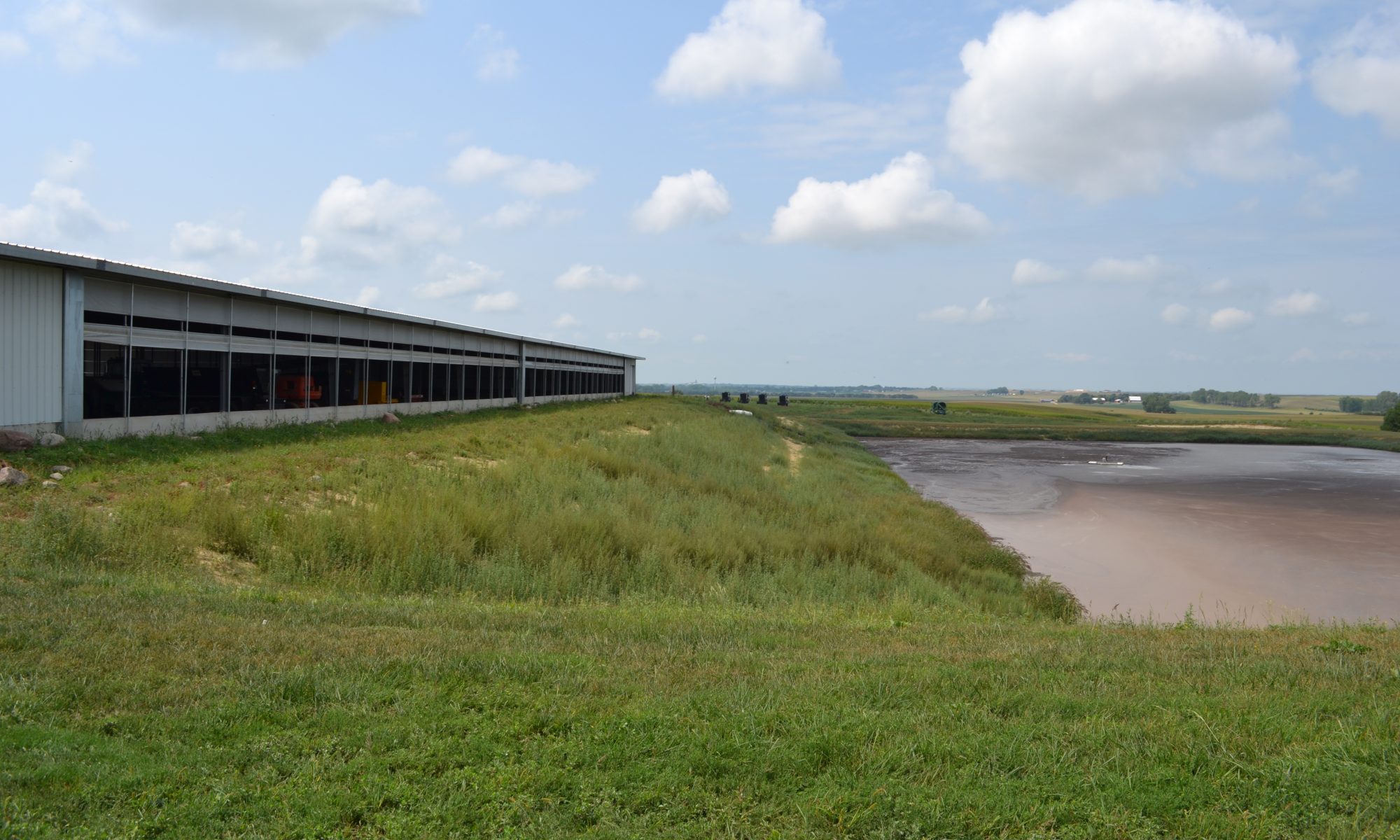


Effects of Aluminum Sulfate and Aluminum Chloride Applications to Manure on Ammonia Emission from a High-Rise Layer Barn

Reprinted, with permission, from the proceedings of: Mitigating Air Emissions From Animal Feeding Operations Conference.

The proceedings, “Mitigating Air Emissions from Animal Feeding Operations”, with expanded versions of these summaries can be purchased through the Midwest Plan Service.

This Technology is Applicable To:

Species: Poultry (Layer)
Use Area: Animal Housing
Technology Category: Chemical Amendment
Air Mitigated Pollutants: Ammonia

System Summary

The effectiveness of aluminum sulfate (alum, Al2(SO4)3) as a litter amendment in poultry houses has been recognized in several studies. Emission rates of ammonia (NH3) were measured at two 169,000-hen high-rise layer barns in Ohio, for six months. The tests were conducted to evaluate baseline and mitigated emission rates. An alum and aluminum chloride (AlCl3) spraying system was installed in the treated Barn 2. Concentrations of NH3 were measured at the barn exhaust fans and in incoming air, using real-time NH3 analyzers. Temperatures, relative humidity, barn static pressure, and fan operation were also measured.

The average daily mean untreated net NH3 emission rate was 480 g/d-AU (1.35 g/d-hen), where AU is an animal unit or 500 kg (1100 lb) of bird weight. The alum and AlCl3 applications reduced NH3 emission by 23% based on the overall cross-barn comparison of paired emission differences between barns. The NH3 mitigation efficiency of the Al2(SO4)3 application was compromised by clogged nozzles, manure turning, and introduction of a new flock of hens. Higher reductions of 33, 23 and 40% were achieved during later test periods. The application of AlCl3 in the last test was expected to further reduce NH3 emission, but the reduction was only 27%. The lower NH3 emission reduction efficiency of AlCl3 was probably due to higher moisture content of manure in Barn 2.


Applicability and Mitigating Mechanism

  • Aluminum sulfate and aluminum chloride can lower manure pH and reduce ammonia emission
  • A 3000-gal tank stored the chemicals, and spray tubes and sprinkling nozzles were installed along the barn length
  • Solutions were automatically sprayed every hour, for a total of 24 times per day


Limitations

  • The nozzles were easily clogged when spraying aluminum sulfate
  • The additional chemical solution increased manure moisture content, especially in cold weather, thus reducing its effectiveness
  • The spraying system requires training to operate and maintain
  • The chemicals were acidic and corrosive
  • Manure on second floor was untreated.

Cost

The costs of the alum and AlCl3 were $0.13/L and $0.14/L, respectively, without delivery charges. At each delivery, 5678 L (1500 gal) of alum or AlCl3 was first added into the holding tank, and an equal volume of water was added to produce a 50% solution. The field records showed that five deliveries worth $3700 of alum were used in 85 days, or $44 per barn per day. The automatic spray controller cost about $3000, and the doubled-wall holding tank was $6500. A single wall tank would be less expensive. The labor to maintain the controller, air and water pumps is estimated at 3 hours per week per barn. The air pump provided the pressure for spraying, and the water pump filled the spray pipe with the solution.

Authors

Teng Teeh Lim1, Chaoyuan Wang2, Ji-Qin Ni1, Albert J. Heber1, and Lingying Zhao31Purdue University, 2 China Agricultural University, 3
Ohio State University Point of Contact:
Teng Teeh Lim, limt@purdue.edu

The information provided here was developed for the conference Mitigating Air Emissions From Animal Feeding Operations Conference held in May 2008. To obtain updates, readers are encouraged to contact the author.

Microbial Additives to Reduce Ammonia Emission from Poultry Houses

Reprinted, with permission, from the proceedings of: Mitigating Air Emissions From Animal Feeding Operations Conference.

The proceedings, “Mitigating Air Emissions from Animal Feeding Operations”, with expanded versions of these summaries can be purchased through the Midwest Plan Service.

This Technology is Applicable To:

Species: Poultry
Use Area: Animal Housing
Technology Category: Ration Manipulation
Air Mitigated Pollutants: Ammonia

System Summary

Use of Bacterial products (Bacillus based) such as Micro Treat P and Provalen has demonstrated to effectively reduce litter ammonia emissions in broiler, layer and turkey production systems. It has been known that gram negative bacteria in the litter and fecal matter break down the nitrogen and convert to ammonia as result of their growth and multiplication. It is also been known that certain bacteria have the property to help in reduce gram negative bacteria in the litter and droppings there by retaining nitrogen in the litter and fecal matter. Micro Treat P is a proprietary product designed and produced by Agtech Products, Inc. This is added to the poultry litter. Provalen is a bacillus based feed additive designed for layers.

Applicability and Mitigating Mechanism

  • Gram negative bacteria are highly prevalent in poultry litter and waste.
  • These Gram negative bacteria convert uric acid in the poultry waste to make harmful ammonia.
  • Application of Micro Treat P and Provalen lowers the gram negative counts in the litter and poultry waste.
  • The reduction in Gram Negative bacterial population helps in nitrogen retention and reduced ammonia production.

Limitations

  • It is a long term ammonia reduction tool.
  • The mode of action of microbial litter amendments are cumulative in nature and do not accomplish a quick ammonia reduction like chemicals.

Cost

MicroTreat P comes foil packs and is concentrated for convenient use. The application rate is based on type of poultry and fecal material produced. Typically the treatment costs are as follows: Broilers $0.005 per bird, Turkeys $0.055 (40 pound tom) and $0.028 (16 pound hen). The cost to treat layers feeds with Provalen is approximately $2.00/ ton.

Authors

Daniel Karunakaran
Agtech Products, INC. Waukesha, WI
Point of Contact:
Dr. Daniel Karunakaran, dkarunakaran@agtechproducts.com

The information provided here was developed for the conference Mitigating Air Emissions From Animal Feeding Operations Conference held in May 2008. To obtain updates, readers are encouraged to contact the author.

Using Klasp™ to Reduce Poultry Housing Ammonia Emissions

Reprinted, with permission, from the proceedings of: Mitigating Air Emissions From Animal Feeding Operations Conference.

The proceedings, “Mitigating Air Emissions from Animal Feeding Operations”, with expanded versions of these summaries can be purchased through the Midwest Plan Service.

This Technology is Applicable To:

Species: Poultry (Broiler and Turkey)
Use Area: Animal Housing
Technology Category: Chemical Amendment
Air Mitigated Pollutants: Ammonia

System Summary

Klasp™ has been shown to be an effective litter amendment for minimizing ammonia concentrations, decreasing litter moisture, and sequestering nitrogen and phosphorous. Klasp™ efficiently lowers litter pH while providing a drier house environment. Klasp™ is effective in reducing and holding in-house ammonia levels below 25ppm during the first 14 days of grow-out leading to providing an improved bird environment and improved bird performance.

Application rates of Klasp™ are dependent on management practices and needs. Typical rates will range from 34 to 56 kilograms per 93 m2 (75-125 lb/1000 ft2). The length of ammonia emission control increases with increasing application rate (Ritz et. al, 2007). Heat is not required to activate Klasp™ prior to bird placement. This mode of activation provides producers application flexibility and improved time management by allowing the product to be applied up to 4 days prior to bird placement.

Applicability and Mitigating Mechanism

  • NH3 volatilization from litter is dependent on pH, moisture content, air velocity, NH4 concentration, and temperature.
  • Klasp™ applications reduce litter pH and lowers NH3 emission
  • Litter pH affects NH3 volatilization
  • Klasp™ may be applied to the litter before bird placement

Limitations

  • Moisture is needed to activate Klasp™, as a result, extremely dry houses may influence performance
  • Applications rates will depend on current management practices and needs, along with seasonal temperatures
  • Application costs are subject to the proximity of the producer to the chemical distributor

Cost

Cost is dependent on several factors. The producer’s proximity to the chemical distributor, application rate, and use cycle of KlaspTM will contribute to the final per house cost.

Authors

Lance Reeder and Victor Johnson
Kemira
Point of Contact:
Lance Reeder, lance.reeder@kemira.com

The information provided here was developed for the conference Mitigating Air Emissions From Animal Feeding Operations Conference held in May 2008. To obtain updates, readers are encouraged to contact the author.

Use of Sodium Bisulfate to Reduce Ammonia Emissions from Poultry and Livestock Housing

Reprinted, with permission, from the proceedings of: Mitigating Air Emissions From Animal Feeding Operations Conference.

The proceedings, “Mitigating Air Emissions from Animal Feeding Operations”, with expanded versions of these summaries can be purchased through the Midwest Plan Service.

This Technology is Applicable To:

Species: Poultry (Broiler, Layer, and Turkey), Beef, horses
Use Area: Animal Housing
Technology Category: Chemical Amendment
Air Mitigated Pollutants: Ammonia, Volatile Organic Compounds (VOCs)

System Summary

The application of Sodium bisulfate (SBS) has been shown to effectively reduce ammonia emissions from poultry housing, horse stalls, and dairy facilities. In addition, VOC emissions from fresh cattle manure are also greatly reduced (Marsh Johnson, et al. 2006, Ullman, et al., 2004; Blake and Hess, 2001; Sweeney, et al., 1996; Harper, 2002, Sun et al, 2008). Currently, 40-50% of all broilers produced in the United States are raised on SBS treated litter (PLT® litter acidifier, Jones-Hamilton Co., Walbridge, OH) for the purpose of controlling interior ammonia levels below 20 PPM and reducing litter bacterial levels for bird welfare and performance reasons. In addition to reducing ammonia emissions by 60% from fresh dairy manure, ethanol and methanol emissions were also reduced 61% and 58%, respectively (Sun, et al. 2008). Sodium bisulfate is broadcast over the surface of the bedding material and can be applied in the presence of poultry and livestock.

Sodium bisulfate is a dry, granular acid salt. Current application rates are dependent on litter age, animal density, and other factors and range from 0.32-1.95 kg/m2 (50-300 lbs/1000 sqft) of animal housing space. Decreasing interior ammonia concentrations in poultry housing allow for a reduced ventilation rate leading to substantial fuel savings of up to 43% with sodium bisulfate application (Terzich, 1997). In addition, sodium bisulfate usage improves bird performance, reduces pathogens on poultry carcasses, and decreases poultry respiratory lesions and ascites (Pope and Cherry, 2000; Terzich et al, 1998 a & b).

Applicability and Mitigating Mechanism

  • SBS reduces litter and bedding pH reducing ammonia flux
  • SBS reacts with ammonia to form ammonium sulfate preventing release of ammonia as pH increases over time
  • The combination of sodium and hydrogen reduce manure bacterial populations thereby reducing VOC emissions and pathogens
  • SBS can be safely applied in the presence of animals or prior to animal placement

Limitations

  • SBS application rates need to be increased as ammonia demand in the litter increases

Cost

Sodium bisulfate costs $0.50/kg ($0.23/lb) and the use of a commercial applicator is approximately $40-45 per house. SBS is safe enough to be applied by the farmer or poultry grower. No additional house preparation is necessary for application. Fuel savings in the first 2-3 days recoup the cost of SBS and its application. Improvements in feed conversion, weight, livability, and paw quality all provide substantial additional return on investment.

Authors

Trisha Marsh Johnson1, Bernard Murphy21Veterinary & Environmental Technical Solutions, PC, 2 Jones-Hamilton Co.
Point of Contact:
Dr. Bernard Murphy, bmurphy@jones-hamilton.com

The information provided here was developed for the conference Mitigating Air Emissions From Animal Feeding Operations Conference held in May 2008. To obtain updates, readers are encouraged to contact the author.

Using Liquid Aluminum Sulfate to Reduce Poultry Housing Ammonia Emissions

Reprinted, with permission, from the proceedings of: Mitigating Air Emissions From Animal Feeding Operations Conference.

The proceedings, “Mitigating Air Emissions from Animal Feeding Operations”, with expanded versions of these summaries can be purchased through the Midwest Plan Service.

This Technology is Applicable To:

Species: Poultry (Broiler and Turkey)
Use Area: Animal Housing
Technology Category: Amendment (Chemical)
Air Mitigated Pollutants: Ammonia

System Summary

Application of liquid aluminum sulfate to poultry litter has been demonstrated to effectively reduce litter ammonia emissions in broiler and turkey production systems. Liquid alum should be applied prior to bird placement in the house. The length of ammonia emission control ranges from 2.5 to 3.5 weeks following application and increases with increasing application rate (Armstrong, et. al, 2003). In addition to reducing overall house ammonia emissions, liquid alum can be used to hold in-house ammonia levels below 25 ppm during the first two weeks of a grow-out, which is considered to have a positive effect on bird performance

Selection of a liquid alum application rate is dependent upon the amount of and length of ammonia control desired. Tested liquid alum application rates (48.5% alum Al Clear product) of 0.82 and 1.64 L/m2 (0.02 and 0.04 gal/ft2), were considered low and high rates, respectively. When tested in poultry broiler production housing, the low rate suppressed in-house ammonia levels for 2.5 weeks, and the high rate suppressed ammonia levels for 3.5 weeks. In addition to reducing in house ammonia levels, there is some evidence that using liquid alum will also reduce mortalities through improved bird health and reduce propane use during cooler months because of reduced ventilation requirements.

Applicability and Mitigating Mechanism

  • NH3 volatilization from litter is dependent on pH, moisture content, in-house air velocity, NH4 concentration, and temperature
  • Litter pH is an important factor for controlling NH3 volatilization
  • Application of liquid alum reduces litter pH and suppresses NH3 emission
  • Liquid alum is applied to the litter before birds are in place

Limitations

  • Liquid alum application looses its effectiveness ~ three weeks after initial application
  • Since liquid alum begins working immediately, and birds are typically placed 1 week after application, a two week period of effectiveness can be expected once birds are placed.
  • The material has a low pH and can be corrosive to handle
  • Liquid alum is recommended to be applied by a commercial applicator, since transport is regulated.

Cost

The delivered cost of liquid alum is dependent upon the proximity of the production facility to a liquid alum distributor. Distributor cost is reflective of transport and chemical costs. For the costs presented here, the production facility was 370 km (230 miles) from the distributer and the delivered cost for liquid alum was 0.16 cents/L (0.60 cents/gal). The costs associated with liquid alum as an amendment to mitigate ammonia is the cost of the material and transport plus the application fee. In this case, the application fee was $40/house. Preparation for liquid alum placement in the house requires the same steps that are taken in preparing the production house for the next grow out, so no additional house preparation costs are incurred. The cost per 1,824 m2 (20,000 ft2) production house is $262 for an application rate of 0.82 L/m2 (0.02 gal/ft2) and $504 for an application rate of 1.64 L/m2 (0.04 gal/ft2); this is equivalent to $0.009 and $0.017 per bird produced. In this case, the proximity of the production facility to the distributor was favorable, and the cost of applying liquid alum was less than the cost of applying the equivalent amount of dry alum.

Authors

Robert Burns1, Philip Moore2, Lara Moody11Iowa State University, 2 USDA Agricultural Research Service
Point of Contact:
Robert Burns, rburns@iastate.edu

The information provided here was developed for the conference Mitigating Air Emissions From Animal Feeding Operations Conference held in May 2008. To obtain updates, readers are encouraged to contact the author.

Technologies for Mitigating Ammonia Emissions from Animal Agriculture

Reprinted, with permission, from the proceedings of: Mitigating Air Emissions From Animal Feeding Operations Conference.

Land Application

Treatment of Air

Treatment of Manure or Litter

Diet Modification

Siting and General Management Strategies

Technologies for Mitigating Air Emissions in Poultry Production

Reprinted, with permission, from the proceedings of: Mitigating Air Emissions From Animal Feeding Operations Conference.

The proceedings, “Mitigating Air Emissions from Animal Feeding Operations”, with expanded versions of these summaries can be purchased through the Midwest Plan Service.

Air Mitigation Technologies for Poultry Production

The Use of Vegetative Environmental Buffers For Livestock and Poultry Odor Mitigation

Reprinted, with permission, from the proceedings of: Mitigating Air Emissions From Animal Feeding Operations Conference.

The proceedings, “Mitigating Air Emissions from Animal Feeding Operations”, with expanded versions of these summaries can be purchased through the Midwest Plan Service.

This Technology is Applicable To:

Species: Poultry, Dairy, Beef, Swine
Use Area: Animal Housing and Manure Storage
Technology Category: Vegetative Buffers
Air Mitigated Pollutants: Particulate Matter, Odor, Ammonia

System Summary

Vegetative Environmental Buffers (VEBs) – linear arrangements of trees and shrubs planted near and around livestock/poultry production sites – have been shown to incrementally mitigate odors, particulates, and ammonia through a complex of dynamics. Among the most important dynamics are: 1) enhancement of vertical atmospheric mixing through forced mechanical turbulence – leading to enhanced dilution/dispersion of odor; 2) odor filtration through particulate interception and retention – odor largely travels by way of particulates; capturing particulates also captures odors; 3) odor/particulate fallout due to gravitational forces enhanced by reduced wind speeds; 4) adsorption and absorption of ammonia onto and into the plant – this is due to a chemical affinity that ammonia has to the waxy coating on tree leaves; 5) softening socio-psychological responses to odor due to improved site aesthetics and creating “out of sight, out of mind” dynamics; and 6) improved producer/community relations by using highly visible odor management technology.

Applicability and Mitigating Mechanism

  • As air moves across vegetative surfaces, leaves and other aerial plant surfaces can remove odors, dust, gas, and microbial constituents of airstreams.
  • VEBs can mitigate odors/ particulates from all livestock/poultry species;
  • VEBs are size neutral technology and can be used to mitigate odors/particulates from all sources of odor: buildings, manure storage, and land application.
  • Trees/shrubs are among the most efficient natural filtering structures in a landscape.

Limitations

  • Mitigation effectiveness is highly site specific and will vary considerably from farm to farm.
  • VEBs often require considerable land area and may take up to five years to become physically effective.
  • Care in VEB design must be taken to avoid causing snow deposition, ventilation, and on-farm visibility problems.
  • At best, odor/particulate mitigation will be “incremental” and therefore should be always used with other odor management strategies.

Cost

Costs for VEB systems are highly variable and are site/design specific – but for midsized producers (and larger) VEBs likely amount to just a few cents per animal produced. There are three main categories of expenses associated with VEBs: 1) Site prep costs, 2) tree establishment costs, and 3) long term maintenance costs. It should be noted that the majority (usually in the range of 40-70%) of the total cost is “upfront” and is tied to the cost of the initial planting stock (e.g. older, larger nursery stock can be considerably more expensive than bare-root seedlings but such an investment may “buy time” in VEB establishment). Long term maintenance costs vary depending upon the overall health of the VEB. It should be recognized that there are expenditures that occur regularly throughout the life of a VEB and maintenance is an annual process, however as a VEB system matures the annual maintenance requirements will likely decrease over time.

Authors

John C. Tyndall11Department of Natural Resource Ecology and Management
Point of Contact:
John C. Tyndall, jtyndall@iastate.edu

The information provided here was developed for the conference Mitigating Air Emissions From Animal Feeding Operations Conference held in May 2008. To obtain updates, readers are encouraged to contact the author.

Pennsylvania’s Odor Siting Index

Reprinted, with permission, from the proceedings of: Mitigating Air Emissions From Animal Feeding Operations Conference.

This Technology is Applicable To:

Species: Swine, Beef, Poultry, Dairy
Use Area: Animal Housing and Manure Storage
Technology Category: Facility Siting and Management
Air Mitigated Pollutants: Odors

System Summary

The Pennsylvania Siting Index was developed in response to specific state legislation (PA Act 38 of 2005) in an effort to objectively evaluate locations for new or expanding regulated animal operations, then develop an Odor Management Plan to reduce the potential for community conflict from building and manure storage odors. The goal is to construct livestock operations where community odor conflict potential is minimized. Data from the site and site map are entered into the index and the resulting score indicates the complexity of Best Management Practices (BMPs) that must be adopted for a producer to develop the site. Scores of less than 50 index points do not require BMPs. Scores from 50 to 99.9 index points require “Level 1” BMPs, which are generally standard, industry-accepted practices. Scores greater than 100 points require more costly and complicated “Level 2” BMPs. The index cannot be used to prevent an individual from constructing an operation, nor is it used to mitigate specific air emissions.

Applicability and Mitigating Mechanism

  • Required for new and expanding regulated animal operations in Pennsylvania.
  • Objectively scores sites on a numerical scale.
  • Encourages producers to locate animal operations on sites with a low risk of community odor conflict.
  • Requires odor-reduction Best Management Practices if the index score is high.
  • Requires approved Odor Management Plan and annual operation inspection.

Limitations

  • The index does not measure odors or gasses, nor assess effectiveness of BMPs.
  • Weighting of index scores is based on limited data.
  • Producers may not be required to implement BMPs when the number of surrounding homes is minimal, even if those homes are relatively close to the animal facility.
  • The index does not account for future development around an animal operation.
  • Potential for inversion odor conflict is not included in the index.

Cost

The Pennsylvania State Conservation Commission estimates the cost to producers will be approximately $1120 for an index and associated odor management plan. BMP installation and maintenance would vary, depending on BMP complexity. If producers choose a site with an index score of <50 points, BMPs would not be required thus erasing all BMP costs.

Authors

Robert Mikesell1, Karl Dymond2, 1Penn State Department of Dairy and Animal Science, 2 Pennsylvania State Conservation Commission
Point of Contact:
Robert Mikesell, rem9@psu.edu

The information provided here was developed for the conference Mitigating Air Emissions From Animal Feeding Operations Conference held in May 2008. To obtain updates, readers are encouraged to contact the author.

Siting of Livestock & Poultry Facilities Using MNSET

Reprinted, with permission, from the proceedings of: Mitigating Air Emissions From Animal Feeding Operations Conference.

The proceedings, “Mitigating Air Emissions from Animal Feeding Operations”, with expanded versions of these summaries can be purchased through the Midwest Plan Service.

This Technology is Applicable To:

Species: Poultry, Dairy, Beef, Swine
Use Area: Animal Housing, Manure Storage
Technology Category: Facility Siting
Air Mitigated Pollutants: Odor, Hydrogen Sulfide, Ammonia

System Summary

MNSET predicts three separate air quality impacts. The first prediction is for odor impacts at any given distance downwind from the facilities. The second prediction is for the frequency of exceeding the MN state standard for hydrogen sulfide (30 ppb / 30-minute average not to be exceeded twice in a five day period). Although this may not be applicable for other states it does show relative impacts of hydrogen sulfide. Additionally, MNSET estimates both daily and annual pounds of hydrogen sulfide and ammonia emitted from the modeled facility. Remember however that the outputs of the models are only as valid as the inputs. A literature review was done to develop the flux values used in the model.

MNSET can be used to evaluate the impact of existing sites and quantify reductions of these impacts using various treatment technologies. Unfortunately, this requires reliable quantification of the emission reductions from the mitigation technologies.

Applicability and Mitigating Mechanism

  • Tool for predicting air quality impacts for odor, hydrogen sulfide and ammonia
  • Allows for adding mitigation to reduce these impacts
  • Free downloadable spreadsheet
  • User can add new technologies

Limitations

  • Based on average flux values
  • Conservative predictions
  • Based on Minnesota weather conditions and regulations

Cost

This software can be downloaded free at University of Minnesota Manure Management. The use of MNSET to evaluate the downwind impacts of any mitigation technologies is very valuable both in new construction and in solving existing air quality problems.

Authors

David Schmidt and Larry Jacobson, University of Minnesota
Point of Contact:
David Schmidt, schmi071@umn.edu

The information provided here was developed for the conference Mitigating Air Emissions From Animal Feeding Operations Conference held in May 2008. To obtain updates, readers are encouraged to contact the author.