
Plant Nutrient and Carbon Content of Equine Manure as Influenced by Stall Management and Implications for Nutrient Management


Purpose 

South Carolina’s equine industry is small compared to states like Texas (395,816 horses), Oklahoma (158,918 horses), and Kentucky (141,842 horses, USDA, 2013). However, the South Carolina equine industry has increased over the last twelve years.

The increase in interest and participation in horse ownership centers around several activities including trail riding, polo, fox hunting, Western and English competitions, shows, and training facilities of all kinds. These activities are facilitated by the hundreds of miles of riding trails available on public lands, the presence of a steeplechase track near Camden, SC, numerous polo fields near Aiken, SC, and large arenas for shows at Clemson University, and near Landrum, SC.

The increase in horse population also increased the amount of horse manure to be managed in a responsible manner. It has been estimated that about 30 kg (66 lb) of manure and soiled bedding is removed from a typical horse stall each day (Wheeler, 2006). Every 1000 kg of bedded horse manure contains about 6 kg of total-N, 2.5 kg of P2O5, and 4.5 kg of K2O (Wheeler and Zajaczkowski, 2001). Horse manure also contains large amounts of carbon, organic matter, and many valuable minor plant nutrients, such as Ca, Mg, S, Zn, Cu, Mn, and Fe. However, little data is available in the literature concerning concentrations of minor plant nutrients in stall manure (Lawrence et al., 2003).

The large amount of carbon contained in horse manure has been shown to greatly reduce the availability of nitrogen following land application of horse manure. Several sources and studies have indicated that the large amounts of carbon can induce nitrogen deficiency due to immobilization of soluble nitrogen (e.g. James, 2003, Doesken and Davis, 2007). As a result, horse manure is typically not a good source of nitrogen as compared to poultry litter.

The goal of this project was to obtain equine manure composition data that can be used for the development of manure management plans. Given the wide variability in the daily use of stalls, the amount of bedding used in stalls, and other stall management factors it was hypothesized that stall management would have a significant impact on the composition of equine manure, and may have an impact on recommended manure utilization practices. The objectives to meet this goal were to: (1) collect as-removed bedded stall samples on six horse farms during routine stall cleaning, (2) obtain bedding-free manure samples from at least three farms, (3) classify each barn by stall management, and stall use, (4) determine if stall management had a significant impact on the solids and plant nutrient content of equine manure, (5) develop manure management recommendations and a table of characteristics to be used for manure management planning for equine facilities.

What did we do? 

Six horse farms were selected that included facilities that ranged from small, pleasure horse barns to farms with multiple barns that provided intensively managed housing for race, and show horses. Each horse farm was visited once to obtain samples of bedded stall manure. Samples were collected as manure and fouled bedding was removed from the stalls according to normal daily stall management practices. During the site visit, the owner of the facility was asked questions about bedding practices, manure removal frequency, and stall use frequency. Based on these interviews and observations during the site visit, the farms were classified by stall use and bedding management categories as shown in Table 1.

Table 1. Description of the six horse farms and manure samples collected

Table 1.

On Farm 3 (see Table 1), bedded manure that was removed daily from stalls was stored in large, uncovered, windrows for extended periods of time prior to application to pastures. The owner called the piles compost piles. However, it was evident that very little heating was taking place. Samples were taken from several locations and depths in an old windrow of unknown age. These samples were well-mixed to provide a representative sample for analysis. The composition of these samples was to be compared with bedded manure as-removed from the stalls. While visiting Farms 2, 3, and 6 samples of horse manure without bedding were obtained from stalls to provide a comparison to heavily bedded horse manure.

Manure samples were collected from the stalls, or the uncovered windrow, using shovels and a wheel barrow. The manure was mixed well in the wheel barrow using a shovel and a pitch fork. Three, 2 to 3 L samples of the manure from each barn were placed in sealed, plastic containers, and were transported on ice to Clemson University for analysis at the Agricultural Service Laboratory. Three replicate analyses were performed for each of the 6 horse barns (Farms 1-6), bedding-free manure (one sample each from Farm 2, 3, and 6), and the uncovered pile (Farm 3). The plant nutrients concentrations measured were: total nitrogen (Total-N), total ammoniacal nitrogen (TAN = NH4+-N + NH3-N), nitrate-N, total P (expressed as P2O5), total K (expressed as K2O), calcium, magnesium, sulfur, zinc, copper, manganese, iron, and sodium. The organic-N content was calculated as: Organic-N = Total-N – TAN – nitrate-N. Other characteristics measured included: moisture content, total carbon content, organic matter content (O.M.), pH, and electrical conductivity (EC). Standard laboratory procedures were used for all analyses and details are provided by Moore (2014).

What have we learned? 

Statistical analysis of the organic matter, Total-N, P2O5, K2O, and several minor plant nutrient concentrations (dry basis) indicated that the composition of manure collected from each of the barns, and the covered pile were significantly different in one or more characteristics. These results point out that data collected from individual facilities are needed to account for farm-to-farm differences in feed composition, use of mineral supplements, stall management, and stall use. A summary of the data is provided in Table 2.
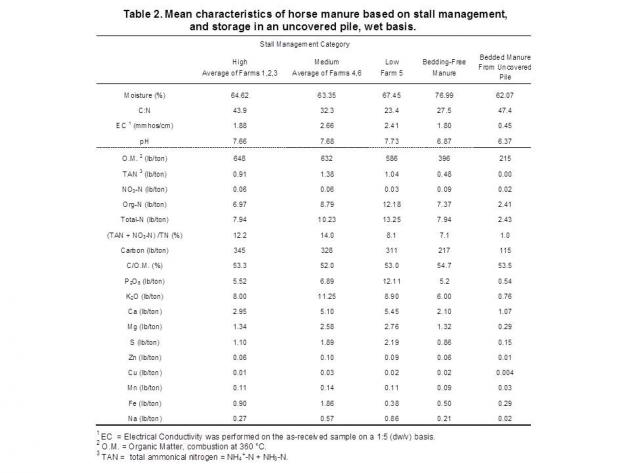
Table 2. Mean characteristics of horse manure based on stall management, and storage in an uncovered pile, wet basis

Table 2.

Storage of manure in an uncovered pile resulted in very little active composting as indicated by an insignificant reduction in organic-N, and only a small reduction in carbon (3%). Uncovered storage also resulted in reductions in major and minor plant nutrient concentrations ranging from 33% (Mn) to 74% (K2O). Therefore, nutrient content data obtained from bedded manure as-removed from a stall was shown to be inadequate to determine agronomic applications rates for manure removed from storage. In practice, separate data sets would be needed for management of as-removed horse manure, and manure removed from storage for development and implementation of a manure management plan.

In general, as the quality of stall management increased the amount of bedding provided per stall per day increased resulting in an increase in C:N. The C:N ranged from 23 to 48 for the barns sampled on the six farms. A correlation analysis was conducted to determine if the dry matter concentrations of organic matter, and plant nutrients were significantly correlated with C:N. The only measured characteristic that had a significant positive correlation with respect to C:N was the organic matter content. This was not surprising since bedding was the source of additional organic matter. The plant nutrients that had significant negative correlations with respect to C:N were: organic-N, total-N, P2O5, Ca, Mg, Zn, and Cu. It was apparent that one of the effects of additional bedding use was to dilute major and minor plant nutrient concentrations.

Electrical conductivity is often used as a general measure of the salt content in manure, compost, and other soil amendments. The eight different treatments included in this study had EC values ranging from 0.45 to 3.46 mmhos/cm. A correlation analysis was used to determine which of the conductive elements included in the analysis (Cu, Ca, Mg, Na, Zn, K2O, Fe, Mn) were significantly related to EC. It was determined that the only plant nutrient that was a significant predictor of elevated EC values was K2O content (dry-basis) with a correlation coefficient of 0.9727 and a coefficient of determination of 0.9462. Consequently, the high EC values observed were directly correlated to high levels of potassium and not harmful salts. These results demonstrate that EC alone cannot be used to determine if plant toxicity is likely, but sufficient analyses should be performed to determine if the elevated EC is from valuable nutrients or salts as suggested previously by others (e.g. Compost for Soils, 2011).

All of the horse manure samples collected on the six farms studied contained large amounts of carbon as indicated by C:N ratios ranging from 23 to 48. As a result, horse manure was not accessed to be a good source of nitrogen as compared to poultry litter. It may be best to compost horse manure to stabilize bioavailable carbon and nitrogen prior to use. After composting, the material should be applied based on agronomic rates for P2O5, or K2O while accounting for the organic nitrogen that will be slowly released.

Another alternative may be to apply horse manure based on agronomic rates for P2O5 or K2O while adding additional nitrogen to offset induced nitrogen deficiency. If un-composted manure is spread on cropland or pasture a portion of the mineralized-N will be converted to organic-N and would be expected to release slowly later in the year, and a portion may be carried over into subsequent growing seasons. Estimation of available carry-over nitrogen is difficult due to uncertainties related to soil pH, moisture, temperature, rainfall, and microbial activity. However, the best method of estimation appears to be a series of organic-N availability factors provided by Wheeler (2006).

A complete report on this study is provided by Chastain and Moore (2014).

Future Plans    

The results from this study will be used to develop extension classes and literature for owners of equine facilities. These data will also provide valuable information for nutrient management planning.

Authors       

John P. Chastain, Ph.D., Professor and Extension Agricultural Engineer, Clemson University jchstn@clemson.edu

Kathy P. Moore, Ph.D., Director, Agricultural Service Laboratory, Clemson University

Additional information 

References Cited

Chastain, J.P. & K.P. Moore. 2014. Plant Nutrient and Carbon Content of Equine Manure as Influenced by Stall Management in South Carolina. ASABE. Paper No. 1908331. ASABE, 2950 Niles Rd., St. Joseph, MI 49085-9659.

Compost for Soils. (2011). Compost Characteristics. Factsheet published by Compost for Soils, A Division of the Austrailian Organics Recycling Association. Retrieved from: http://compostforsoils.com.au/images/pdf/practical%20compost%20use/compo….

Doesken, K. C., & Davis, J. G. (2007). Determining plant available nitrogen from manure and compost topdressed on an irrigated pasture. In Proc. International Symposium on Air Quality and Waste Management for Agriculture. ASABE Publication Number 701P0907cd. St. Joseph, Mich.: ASABE.

James, R.E. (2003). Horse Manure Management: The Nitrogen Enhancement System. AGF-212-03. Ohio State University Extension, The Ohio State University, Columbus, OH.  Retrieved from: http://ohioline.osu.edu/agf-fact/0212.html.

Moore, K.P. (2014). Compost Analysis Procedures. Clemson, SC: Agricultural Service Laboratory, Clemson University. Available  at: Available at: http://www.clemson.edu/agsrvlb/procedures2/compost.htm.

Wheeler, E.F, and J.S. Zajaczkowski. (2001). Horse Stable Manure Management (G-97). Penn State University Extension. Available at: http://panutrientmgmt.cas.psu.edu/pdf/G97.pdf.

Wheeler, E. F. (2006). Manure Management, In Horse Stable and Riding Arena Design, (pp 91-93). Ames, Iowa: Blackwell Publishing.

Acknowledgements      

Support for this work was provided by the Confined Animal Manure Management Program of Clemson Extension, Clemson University, Clemson, SC.

The authors are solely responsible for the content of these proceedings. The technical information does not necessarily reflect the official position of the sponsoring agencies or institutions represented by planning committee members, and inclusion and distribution herein does not constitute an endorsement of views expressed by the same. Printed materials included herein are not refereed publications. Citations should appear as follows. EXAMPLE: Authors. 2015. Title of presentation. Waste to Worth: Spreading Science and Solutions. Seattle, WA. March 31-April 3, 2015. URL of this page. Accessed on: today’s date.
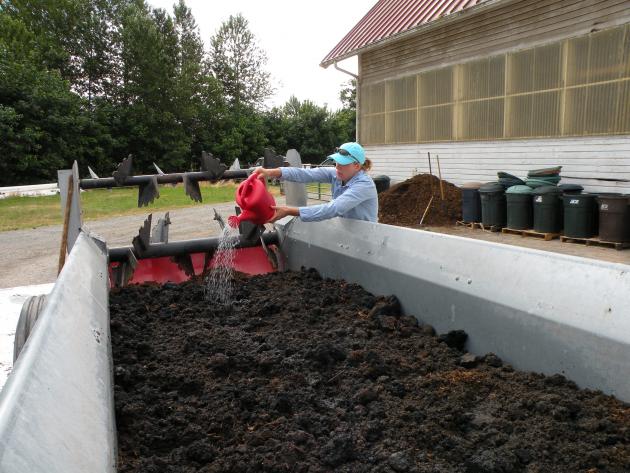


Antibiotic Losses during Thermophilic Composting

Purpose

Residual antibiotics in land-applied manure and biosolids present a potential threat to public and ecological health, so it is important to determine antibiotic removal efficiencies for manure and biosolids waste management practices and to identify conditions that enhance antibiotic degradation.

What we did

Loss of the antibiotics florfenicol, sulfadimethoxine, sulfamethazine, and tylosin was studied during pilot-scale static pile thermophilic composting and the effects of temperature and feedstock particles on antibiotic removal rates were tested. The antibiotics were spiked into dairy manure solids and wastewater biosolids, and treatments included aerated and non-aerated manure and biosolids/wood-product (1:3 v/v) composting.

Figure 1. Applying antibiotic solution to biosolids

Figure 1. Applying antibiotic solution to biosolids

What have we learned

Results showed no significant differences between aerated and non-aerated treatments; on average ≥85%, ≥93%, and ≥95% antibiotic reduction was observed after 7, 14, and 21 d of composting. Greater antibiotic reduction was observed in manure compost compared to biosolids compost for florfenicol (7, 14, 21, 28 d) and tylosin (7, 14, 28 d); however, there was no significant difference for sulfadimethoxine and sulfamethazine. Peak temperatures were 66-73°C, and ≥55°C was maintained for 6-7 d in the biosolids compost and 17-20 d in the manure compost.

Bench-scale experiments conducted at 25, 55, and 60°C showed that lower temperature decreased removal of the sulfonamides and tylosin in both feedstocks and florfenicol in the biosolids. The presence of compost particles increased antibiotic loss, with time to 50% dissipation ≤ 2 d in the presence of solids (60°C), compared to no degradation in their absence. These results indicate that thermophilic composting effectively reduces residual antibiotics in manure and biosolids.

Figure 2. Mixing biosolids and wood shavings

Figure 2. Mixing biosolids and wood shavings

Figure 3. Mixing biosolids and wood shavings

Figure 3. Mixing biosolids and wood shavings.


Authors

A. Bary*, S.M. Mitchell*, J.L. Ullman**, C.G. Cogger*, A.L. Teel*, R.J. Watts*

Washington State University*, University of Florida**.

Andy Bary, bary@wsu.edu


The authors are solely responsible for the content of these proceedings. The technical information does not necessarily reflect the official position of the sponsoring agencies or institutions represented by planning committee members, and inclusion and distribution herein does not constitute an endorsement of views expressed by the same. Printed materials included herein are not refereed publications. Citations should appear as follows. EXAMPLE: Authors. 2015. Title of presentation. Waste to Worth: Spreading Science and Solutions. Seattle, WA. March 31-April 3, 2015. URL of this page. Accessed on: today’s date.
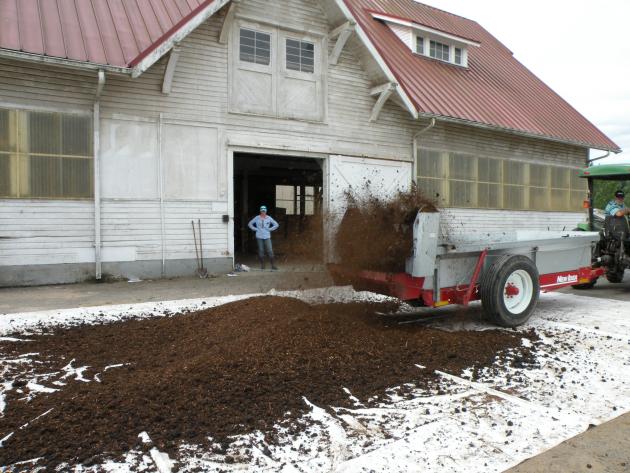
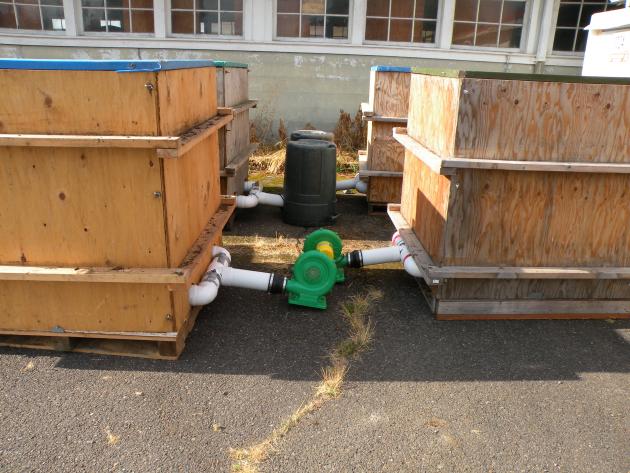
Figure 4. Compost bins

Figure 4. Compost bins

Wood Chip Pad Winter Feeding Area as a New Livestock Manure Management System

Purpose

Over-wintering beef cattle on pastures in the Eastern half of the USA has been shown to increase runoff, sediment loss and nutrient transport. Traditional barn lot winter feeding areas, or ‘sacrifice’ areas, for beef cattle can be a significant source of nutrient and sediment pollution. Sustainable and affordable approaches are needed that effectively control manure nutrients during the winter feeding period, while ensuring a healthy and comfortable animal environment. The use of woodchips as a surface material for areas used to hold cattle during wet periods is practiced on a limited basis in Ireland, Scotland, and New Zealand. The application of this simple technology in the cool Eastern part of the US that has a humid climate, has potential to improve animal comfort and health, protect winter pastures, and reduce the environmental impact of winter feeding and loafing areas.

Figure 2. Woodchip Pad Profile

What did we do?

Beef cattle producers in United Kingdom, Ireland and New Zealand have shown a positive conservation effect using out wintering pads constructed with wood chips, allowing the pastures to be destocked. Out Wintering Pads (OWPs) are outside loafing areas for cattle. OWPs are typically constructed adjacent to a concrete feeding area and a watering facility. The OWP design allows for 150 square feet per cow. The chip size is critical for proper functioning of the manure storage system. Use of fist to palm sized chips are recommended to allow dung to filter into the pad. Smaller chips can be used but will need to be renewed sooner. Manure is worked down below the surface of the pad by the cattle’s hoof action. Initial depth of chips needs to be no less than 12 -15 inches deep. The site must be prepared with a drainage system using drain pipes every 10 feet to prevent moisture accumulation within the OWP (Figure 2). This effluent must be managed with a storm water retention pond and vegetated filter strip.

Figure 1. Initial woodchip pad developed in West VirginiaWhat have we learned?

Two woodchip-surfaced heavy use areas have been installed and monitored in West Virginia. The first was installed on a private farm with a cow/calf enterprise in Northern WV during 2011 (Figure 1).

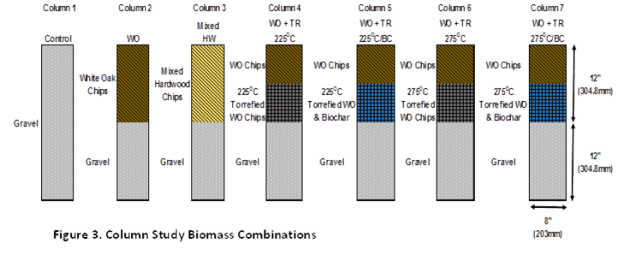
The design criteria were adopted from a guidance document developed by the Irish Department of Agriculture and Food. This wood chip pad was placed adjacent to a USDA NRCS roofed winterfeeding area and roofed manure storage. Woodchip quality was determined and temperature and precipitation monitoring occurred for a 23 month period including two winter stocking periods. Effluent water quality grab samples were taken during that monitoring period. A second chip pad was constructed in WV on the West Virginia University (WVU) Animal Science Experiment Station Farm during 2014. This area consists of two loafing paddocks, one constructed with single species white oak wood chips and the other with mixed hardwood chips made up primarily of mixed yellow-poplar and oak. Bench scale columns with various configurations of thermally treated wood chips were evaluated in 2014.

Column Study Setup

  • PVC pipe (8-inches in diameter) columns
  • Runoff water was collected from the waste water storage tank at WVU’s Animal Science Farm
  • Gravel placed in each of the columns to a height of 12 inches (304.8mm) and then each column was packed with 12 inches (304.8mm)  of varying media (Figure 3)

Figure 3. Column study biomass combinations

  • Three rain events (1cm, 2cm, and 3cm) (with 96 hours between events) were passed through the columns
  • Each of the columns were then cleaned and re-packed and subjected to waste water to a depth of 18 inches (459 mm) for 48 hours
  • Pre- and post-water samples were collected to test for phosphorous (P), ammonia, and Total Kjeldahl nitrogen (TKN) 

Biomass Media Performance – Rain Events

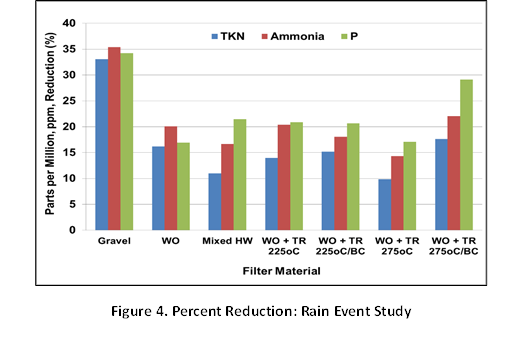
  • Mixed hardwood chips had superior P concentration reduction compared to white oak chips, but lower Total TKN reduction (Figure 4)
  • Gravel outperformed the biomass media filters (Figure 4)
  • Of the biomass media, the WO + TR 275OC/BC media showed the highest % reduction of P, TKN, and Ammonia (Figure 4)

Biomass Media Performance – 48 Hour Hold

  • White oak chips had better TKN reduction than mixed hardwood chips, but lower P reduction  (Figure 5)
  • Mixtures containing biochar resulted in greater pollutant reductions than torrified treatments without biochar (Figure 5)
  • The WO + TR 275C/BC media showed the highest % reduction of TKN and Ammonia, but not the highest P % reduction (Figure 5)

Figure 4. Percent Reduction: Rain Event Study

Figure 5. Percent Reduction: 48 Hour Hold Study.

The biomass mixes that have demonstrated the best performance are being added as treatments in small cell areas on the WVU woodchip heavy use area. The treatment cells are being monitored for runoff flow amounts and water quality.

Future Plans  

Further research is needed to determine optimum chip species and chip size for moisture retention and nutrient capture capabilities. Development of complimentary systems to treat the effluent produced from periods of runoff are needed as vegetated treatment areas may not function well during the winter when WV soils are typically saturated and runoff occurs instead of infiltration.

Authors     

Tom Basden, Extension Specialist, West Virginia University tom.basden@mail.wvu.edu

Joshua Faulkner, UVM and David DaVallance, WVU

Additional information             

Tom Basden 1060 Agricultural Sciences Building Morgantown WV 26506

The authors are solely responsible for the content of these proceedings. The technical information does not necessarily reflect the official position of the sponsoring agencies or institutions represented by planning committee members, and inclusion and distribution herein does not constitute an endorsement of views expressed by the same. Printed materials included herein are not refereed publications. Citations should appear as follows. EXAMPLE: Authors. 2015. Title of presentation. Waste to Worth: Spreading Science and Solutions. Seattle, WA. March 31-April 3, 2015. URL of this page. Accessed on: today’s date.
Modeling water movement in beef cattle bedded manure pack


Why Examine Moisture Content of a Manure Pack?

Bedded manure is a valuable fertilizer source because it contains essential macronutrients (nitrogen (N), phosphorus (P), and potassium (K)) for crop production. Previous research with beef cattle bedded manure packs demonstrated that water-soluble macronutrients accumulated toward the bottom of the packs with water movement. Thus, predicting water movement in bedded manure helps to estimate nutrient composition throughout the bedded pack. This work presents a development of a process-based model of vertical water movement that considers percolation and diffusion as the main processes of water and vapor movements in bedded manure packs. Evaporation from the top zone to the atmosphere was considered a process of convective mass transfer. The model predicts the change in moisture content of the different zones in the bedded manure and assists in estimating nutrient composition.

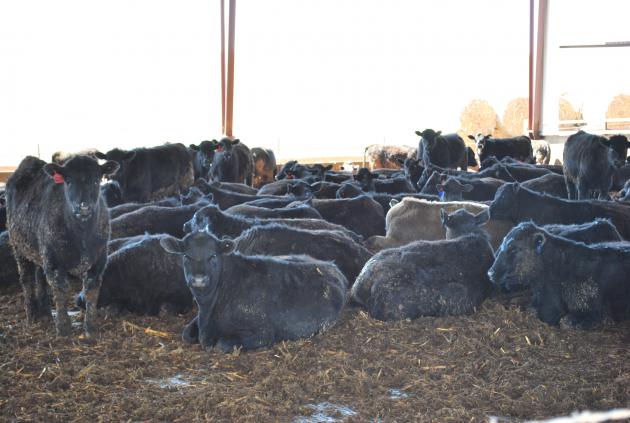
cattle loafing on a bed pack in their barnWhy Study Moisture Movement In a Bedded Pack?

Beef cattle producers that raise cattle in complete confinement, such as mono-slope or hoop barns, may apply bedding material to manage moisture and improve the environment for the animals. Some producers let the manure and bedding accumulate to form a bedded manure pack, which is compacted by cattle activity. The bedded manure contains valuable nitrogen (N), phosphorus (P), and potassium (K) that are essential for crop production and soil sustainability. Depending on temperature, bedding material, and storage time of the bedded pack, the concentration of water-soluble N, P and K compounds may increase in the bottom of the bedded pack where water accumulates. Thus, understanding and predicting water movements within the bedded manure is important to estimate fertilizer N-P-K content and distribution in the bedded manure.

What did we do?

The processes considered in this process-based model include evaporation, percolation, diffusion of water vapor and diffusion of liquid water for vertical water movement. The model by Seng et al. (2012) for static compost piles and a modified version of the Integrated Farm System Model (not yet released) by Rotz et al. (2014) for bedded manure were reviewed and compared. Ultimately, the model needs to be adaptable to estimate the water content of the pack over time for different environmental conditions, bedding materials, and storage times at varying depths within the bedded pack. Data for model calibration and validation were gained through laboratory-scale experiments by Ayadi et al. (in review).

What have we learned?

Percolation and liquid water diffusion are considered the main processes for vertical water movement between layers in the bedded manure. Evaporation occurs from the surface of the top zone of the bedded pack. The rates of percolation and liquid water diffusion are depth-specific and their rates therefore vary. The modified version of the Integrated Farm System Model (IFSM) is more adaptable to data gained through laboratory-scale experiments. Overall, IFSM is more applicable to producer-available data and thus more applicable to predict water movement for bedded manure packs in real-life conditions.

Future Plans

After predicting water movements in the bedded manure, the model will be used to estimate N, P and K movement through the different zones of the bedded manure pack as well as gaseous emission (ammonia and nitrous oxide) from the bedded pack surface. The final overall model will be a calculator that estimates fertilizer N-P-K content and value and ammonia and nitrous oxide emissions of the bedded manure packs from confined beef cattle facilities with respect to temperature, bedding material, storage time and depth of the bedded pack.

Authors

Erin Cortus, Ph. D., Assistant Professor, South Dakota State University, Brookings, SD

Ferouz Ayadi, M.S., Graduate Student, South Dakota State University, Brookings, SD; Mindy Spiehs, Ph. D., Animal Scientist, USDA‐ARS Meat Animal Research Center, Clay Center, NE

Additional information

References

Ayadi, F. Y., M. J. Spiehs, E. L. Cortus, and D. N. Miller. In review. Physical, chemical and biological properties of different depths and ages of simulated beef bedded manure packs. Transactions of the ASABE.

Rotz, C.A., Corson, M.S., Chianese, D.S., Montes, F., Hafner, S.D., Bonifacio, H.F., Coiner, C.U., 2013a.

The Integrated Farm System Model Reference Manual, Version 4.1. USDA-Agricultural Research Service. Avaialble at: http://www.ars.usda.gov/sp2UserFiles/Place/80700500/Reference%20Manual.pdf

Seng, B., H. Kaneko, K. Hirayama, and K. Katayama-Hirayama. 2012. Development of water movement model as a module of moisture content simulation in static pile composting. Environmental Technology 33(15):1685-1694.

Acknowledgements

The support and assistance of Henry F. Bonifacio with the simulation of water movements in the bedded pack manure is very much appreciated. This project and all associated reports and support materials were supported by the Sustainable Agriculture Research and Education (SARE) program, which is funded by the U.S. Department of Agriculture- National Institute of Food and Agriculture (USDA-NIFA). Any opinions, findings, conclusions or recommendations expressed within do not necessarily reflect the view of the SARE program or the U.S. Department of Agriculture. USDA is an equal opportunity provider and employer. The mention of trade names or commercial products in this publication is solely for the purpose of providing specific information and does not imply recommendation or endorsement by the USDA.

The authors are solely responsible for the content of these proceedings. The technical information does not necessarily reflect the official position of the sponsoring agencies or institutions represented by planning committee members, and inclusion and distribution herein does not constitute an endorsement of views expressed by the same. Printed materials included herein are not refereed publications. Citations should appear as follows. EXAMPLE: Authors. 2015. Title of presentation. Waste to Worth: Spreading Science and Solutions. Seattle, WA. March 31-April 3, 2015. URL of this page. Accessed on: today’s date.

Particulate matter from open lot dairies and cattle feeding: recent developments

The research community is making good progress in understanding the mechanical, biochemical, and atmospheric processes that are responsible for airborne emissions of particulate matter (PM, or dust) from open-lot livestock production, especially dairies and cattle feedyards.  Recent studies in Texas, Kansas, Nebraska, Colorado, California, and Australia have expanded the available data on both emission rates and abatement measures. Although the uncertainties associated with our estimates of fugitive emissions are still unacceptably high, we have learned from our recent experience with ammonia that using a wide variety of credible measurement techniques, rather than focusing on one so-called “standard” technique, may be the better way to improve confidence in our estimates.  Whereas the most promising control measures for gaseous emissions continue to be dietary strategies  with management of corral-surface moisture a close second for particulate matter, corral-surface management and moisture management play comparable roles, depending on the mechanical strength of soils and the availability of water, respectively.  The cost per unit reduction of emitted mass attributable to these abatement measures varies as widely as the emissions estimates themselves, so we need to intensify our emphasis on process-based emissions research to (a) reduce the variances in our emissions estimates and (b) mitigate the contingency of prior, empirically based estimates.  As a general rule, although cattle feedyard emission factors may be thought a reasonable starting point for estimating emissions from open-lot dairies, such estimates should be viewed with suspicion.

Purpose          

Document the state of the art of particulate-matter (PM) emissions from open-lot livestock facilities, including emission fluxes and abatement measures.

What did we do?

We conducted (a) field research at commercial, open-lot livestock facilities in the southern High Plains and (b) an up-to-date review of the latest literature concerning primary particulate matter emission fluxes and the abatement measures appropriate to the source type. Field research included time-resolved concentration measurements upwind and downwind of the livestock facilities during the hottest, driest times of the year (in the case of dairy emissions) and throughout the year (in the case of beef feedyards); and a 5-month evaluation of stocking density manipulation using electric cross-fences that preserve optimum bunk space for beef cattle on feed. The literature review surveyed research findings from anywhere in the world that were published in refereed journals as recently as March 2015 concerning the same topics.

What have we learned?

Increasing the stocking density of fed beef cattle as compared to the industry-wide average during hot, dry weather suppresses dust emissions to a measurable and reasonably consistent degree. Concentrations of PM measured downwind of open-lot dairies vary throughout the day, though to a lesser degree and at lower overall concentrations than those measured downwind of nearby beef cattle feedyards, likely reflecting (a) the comparatively lower intensity of the dairy animal’s physical activity and (b) the greater diurnal uniformity of animal-activity patterns in dairies as compared to those in cattle feedyards. Stocking density manipulation does not appear likely to influence dairy dust emissions to the same degree as it influences feedyard dust emissions. Our confidence in emission-flux estimates from these open-lot systems suffers from a lack of methodological diversity; that confidence would be greatly bolstered by the deployment of measurement techniques that differ from the standard inverse-dispersion-modeling paradigm. The integrated horizontal flux (IHF) approach to emissions estimation, which we are now testing at a cattle feedyard in the Texas Panhandle, will provide some corroborating evidence that will allow us to narrow the range of PM flux estimates in the research literature, a range that now spans more than an order of magnitude when expressed on a per-animal-unit basis.

Future Plans

We will continue long-term, ground-level monitoring of time-resolved PM concentrations at a commercial cattle feedyard in the Texas Panhandle; continue our ongoing tests of the IHF flux-estimation technique; and evaluate eye-safe lidar as a path-averaging monitoring technology for the intermediate path lengths (50-300m) that will permit experimental discrimination of concentration data downwind of adjacent pen areas featuring different dust-abatement measures.

Authors    

Brent Auvermann, Professor, Texas A&M AgriLife Extension Service b-auvermann@tamu.edu

K. Jack Bush and Kevin R. Heflin, Research Associates, Texas A&M AgriLife Research

Additional information              

6500 Amarillo Blvd. West, Amarillo, TX 79106-1796, (806)670-8081 (cell)

Acknowledgements      

USDA-NIFA Contract Nos. 2010-34466-20739 and 2009-55112-05235; Texas A&M AgriLife Research; JBS Five Rivers Cattle Feeding; Texas Air Research Center; Texas Cattle Feeders Association

The authors are solely responsible for the content of these proceedings. The technical information does not necessarily reflect the official position of the sponsoring agencies or institutions represented by planning committee members, and inclusion and distribution herein does not constitute an endorsement of views expressed by the same. Printed materials included herein are not refereed publications. Citations should appear as follows. EXAMPLE: Authors. 2015. Title of presentation. Waste to Worth: Spreading Science and Solutions. Seattle, WA. March 31-April 3, 2015. URL of this page. Accessed on: today’s date.

Markets for Composted Agricultural Waste

Why Consider Composting Manure?

Enforcement of nutrient management regulation has forced Maryland farms and agricultural facilities to adopt new waste management practices. Few options exist that are financially sustainable. Regulatory agencies witnessed the unexpected consequence of closing small and mid-sized farms who could not afford to institute new waste management technologies. To counter that consequence, Maryland Department of Agriculture offered grants to subsidize the development of innovative technology and business practices. These new systems and business models had to offer both financial and environmental sustainability.

What Did We Do?

The first step in this project (supported by the Maryland Department of Agriculture, 2014) was to identify the biological make up and characteristics of the stable waste both before and after processing. We measured nutrient content and form (N, P, K), porosity, moisture absorption and C: N ratio. By understanding what the material consisted of pre-processing, we were able to determine what effects different controls during processing would have on the end product. As an example, when using stable waste for bedding re-use the material is run through the composting system as quickly as possible. A shorter composting period with auger mixing technology allowed the biological activity to breakdown the manure balls, support the transformation of the waste nutrients and yet protect the integrity of the shavings for second use. Related: Managing Manure on Horse Farms

Next, the local markets were studied:

    • Soil types and needs: compost to add porosity, water retention, nutrients to soil
    • Weather patterns and created needs: compost added for water retention, binding material to diminish run off
    • Population centers for urban market: compost for landscape needs, potting medium
    • Rural character for on farm market: compost for nutrient replacement, bedding re-use
    • Cost of operations on local farms: cost of bedding, cost of disposal, cost of landscape material, cost of synthetic or imported fertilizer
    • Wholesale market needs: compost for distribution centers (Scotts products), soil specialty companies, land reclamation sites, Department of Transportation needs, green house growers

Identifiable, viable market channels to move the processed stable waste were necessary components of a business model.  Uses for the processed waste were identified both on site and off site.

On site uses were identified as:

    • Land application: field enhancement
    • Bedding re-use
    • Landscape use
    • Improved footing arenas
    • Land reclamation
    • Pelletized for heat systems
Off site uses were identified as:

    • Soil amendment
    • Land reclamation
    • Potting Medium
    • Food Waste Bulking agent
    • Whole sale distribution centers
    • Soil Specialty companies

What Did We Learn?

Data was gathered and studied from equine facilities with existing composting operations to illustrate what the benefits and challenges can be. IOS Ranch on Bainbridge Island Washington is a sustainably designed 7.5 acre property that supports 20-25 stalled horses. The design concentrates the structures, indoor arena, stall, office and supporting buildings, so there could be surrounding pasture turn out and an outdoor arena. The facility was paying high waste disposal fees. Their decision to bring composting technology to the farm was an effort to eliminate disposal fees and diminish their bedding cost through bedding re-use. However, once the system was installed a local landscaper visited the site and saw value in the compost. The material is now sold for $30/yard wholesale and $45/yard retail to local landscapers and gardeners. With the price of shavings for bedding delivered at $7.50/yard the business decision to sell the compost was an obvious one. The property was formerly a gravel pit with large areas of exposed pit run. Once realizing the value of the compost for land application, the owner spread on the exposed areas greatly improving grass performance in the turnout fields. This farm was saving $100-$140/day producing compost because of the reduced disposal fees plus profits from marketing, allowing for a breakeven on investment in 3 years.

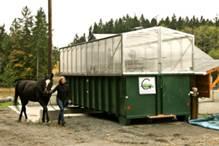
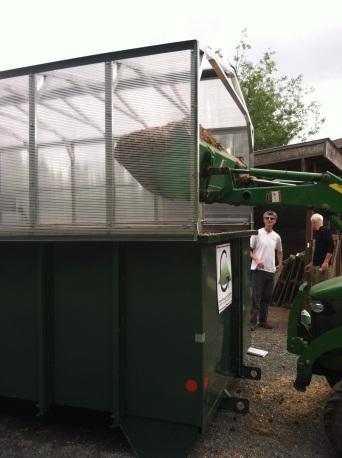
manure composting operation on horse farm manure composting operation on horse farm manure composting operation on horse farm

Joint Base Myer Henderson Hall hosted a pilot project for composting of food waste on remote contingency bases. On this base the Army’s Caisson horses are housed in a 50+ stall barn. After the pilot was completed the in vessel composting system will revert to the base for processing the stable waste. The base has the choice of bedding re-use or using the compost for landscape needs on base and/or in the adjacent Arlington National Cemetery. Outside contractors were supplying the base with compost at nearly $400,000 per year. The project could pay for itself in the first year. Thorough lab analysis showed the compost to be consistently of high quality, pathogen free, and weed seed free.

army base horse manure composting photos

Currently two sites in Maryland are being studied; one an equine rescue facility housing 50-80 horses, and the other a dairy with 240 head. The use of composted stable waste as a peat moss replacement will bring value to the equine and dairy farms and to the large, local greenhouse industry. Currently 80% of the peat moss used in Maryland is imported from Canada. The farms selected are large enough that they can produce enough material for bedding re-use (savings of nearly 20% of operating budget) and/or sell the material to wholesale buyers. The composting material from both sites show the favorable attributes of peat moss, porosity and moisture retention. Blending can alter the nutrient levels to what the market needs by using the more nutrient rich dairy waste. The collection of compost and blending can be done on on site or at an off site location in cooperation with other local farms, this may help meet larger volume needs of wholesale buyers.

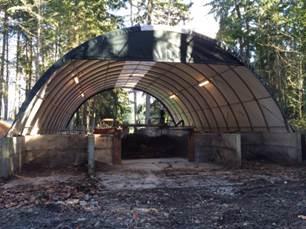
horse manure composting operation in Maryland horse manure composting operation in Maryland horse manure composting operation in Maryland

Future Plans

The Maryland projects are both two years in duration with continual data gathering and recording. The next step is the location and operation of a collection yard for multiple local farms to send their processed stable waste. Such a yard allows for mixing to meet differing market needs and the creation of large quantities of homogenous product for local greenhouse growers.

Authors

Mollie Bogardus, owner, Aveterra and representative of Green Mountain Technologies, Inc. mollie@compostingtechnology.com

Additional Information

http://news.maryland.gov/mda/press-release/2014/08/15/mda-awards-1-million-for-innovative-manure-management-technologies-demonstration-projects-in-howard-frederick-and-worcester-counties-recognized/

Acknowledgements

Dr. Pat Millner, USDA Beltsville, Research Microbiologist is lead researcher and mentor on these projects in Maryland.

The authors are solely responsible for the content of these proceedings. The technical information does not necessarily reflect the official position of the sponsoring agencies or institutions represented by planning committee members, and inclusion and distribution herein does not constitute an endorsement of views expressed by the same. Printed materials included herein are not refereed publications. Citations should appear as follows. EXAMPLE: Authors. 2015. Title of presentation. Waste to Worth: Spreading Science and Solutions. Seattle, WA. March 31-April 3, 2015. URL of this page. Accessed on: today’s date.

Effect of Temperature on Methane Production from Field-Scale Anaerobic Digesters Treating Dairy Manure

Why Study Temperature and Anaerobic Digestions?

Anaerobic digestion is a process that results in the production of biogas that can be used a renewable source of electricity on-farm or sold to the distribution grid. Temperature is a critical parameter for anaerobic digestion since it influences both system heat requirements and methane production. Although anaerobic digestion can take place under psychrophilic (15-25°C), mesophilic (35-40°C), and thermophilic (50-60°C) conditions, temperatures of 35-37°C are typically recommended for methane production from animal manure. However, digesters require significant amount of heat energy to maintain temperatures at these levels. There is limited information about methane production from dairy digesters at temperatures less than 35°C and results in the literature are presented from laboratory-scale rather than field-scale systems.

The objective of this study was to evaluate the effect of two relatively low digestion temperatures (22 and 28°C) on methane production using replicate continuously-fed, field-scale dairy manure digesters at two organic loading rates. The results were compared with those from identical digesters operated at 35°C.

field scale anaerobic digesters

Field scale (FS) anaerobic digesters

What did we do?

Anaerobic digestion experiments were carried out using six modified Taiwanese-model field-scale (FS) on-site digesters (Fig. 1) at the USDA Beltsville Agricultural Research Center (BARC). Each FS digester has a total capacity of 3 m3 and was operated at a liquid capacity of 67% (2 m3 working volume) with 33% headspace for biogas collection. The FS digesters are plug-flow reactors and operated without mixing. First, duplicate field-scale (FS) anaerobic digesters were maintained at one of three set temperatures (22 ± 2, 28 ± 2 and 35 ± 2°C) and fed with solids-separated manure for 80 days (period 1). The digesters were subsequently operated under the same temperature regime (22 ± 2, 28 ± 2 and 35 ± 2°C) but were fed at a higher organic loading rate (OLR) using solids-separated manure amended with manure solids for 56 days (period 2). The hydraulic retention time (HRT) was 17 days for all digesters throughout the study. Digesters were fed once daily five days a week with 160 L d-1 of separated manure for period 1, and 148 L d-1 of separated manure amended with 16 kg d-1 (wet weight) manure solids (roughly 12 L in volume) for the period 2.

What have we learned?

Our results suggest that anaerobic digesters treating dairy manure at lower temperatures can be nearly as effective as digesters operated at 35°C, even with a relatively short 17-day retention time. Methane production from digesters operated at 28°C was about 90% of that from digesters operated at 35°C but the differences were not statistically significant. Digesters operated at 22°C produced about 70% as much methane as digesters operated at 35°C without affecting digester stability. Small farm digester systems that may not have access to waste heat from electrical generation, could efficiently operate at these lower temperatures to produce methane and reduce greenhouse gas emissions and odors. Larger digester systems could also choose to operate at these lower temperatures if reducing digester heating would allow for more valuable uses of their heat energy such as drying solids or treating liquids to remove nutrients.

Future Plans 

We are currently investigating the fate and effect of antibiotics and feed additives during the anaerobic digestion of manure.

Authors     

Osman Arikan, Assoc. Prof., Istanbul Technical Univ., Dept. of Environmental Eng., Istanbul, Turkey. Visiting Scientist, USDA-ARS, BARC, Beltsville, MD, Visiting Assoc. Prof., University of Maryland, Dept. of Environmental Science&Tech., College Park, MD. arikan@itu.edu.tr

Walter Mulbry, Research Microbiologist, USDA-ARS, Beltsville Agricultural Research Center, Beltsville, MD. Stephanie Lansing, Assistant Professor, University of Maryland, Department of Environmental Science and Technology, College Park, MD.

Additional information

Data is to be published.

Acknowledgements

The authors gratefully acknowledge Jose Colina and Lorianny Rivera for assistance in operating the digesters and Anna Kulow for analyzing biogas and effluent samples.

The authors are solely responsible for the content of these proceedings. The technical information does not necessarily reflect the official position of the sponsoring agencies or institutions represented by planning committee members, and inclusion and distribution herein does not constitute an endorsement of views expressed by the same. Printed materials included herein are not refereed publications. Citations should appear as follows. EXAMPLE: Authors. 2015. Title of presentation. Waste to Worth: Spreading Science and Solutions. Seattle, WA. March 31-April 3, 2015. URL of this page. Accessed on: today’s date.

Life Cycle Greenhouse Gas Emissions of Dairy and Bioenergy Systems


Why Study Greenhouse Gas Emissions from Dairy Systems?

Animal agriculture presents multiple challenges for sustainability and the dairy sector alone contributes 30% of agricultural greenhouse gas (GHG) emissions. Bioenergy systems have been implemented to reduce GHG emissions and contribute to energy independence goals, but the production of bioenergy must be done with caution to avoid the generation of additional emissions during feedstock production and harvesting. This research used life cycle assessment (LCA) techniques to evaluate the integration of dairy and bio-energy systems to address global warming. The first place for integration is the dairy feed preparation level, where potential co-products of the biofuel industry (e.g. dry distillers grains with solubles and soybean meal) can be included in the dairy ration. A lifecycle approach should be considered to evaluate changes in GHG emissions related to the production of these added dairy feeds. This is important because the embedded emissions and energy resources related to upstream processes (e.g. manufacturing of seeds, fertilizers, pesticides, and fuels) and downstream processes (e.g. transportation and harvesting) can result in added greenhouse gases. The second point where dairy and bioenergy systems can be integrated happens at the waste management level, where manure is digested in an anaerobic digestion (AD) system to produce renewable energy. Different cow feeding scenarios, management practices, and anaerobic digestion pathways are modeled to identify practices that minimize GHG emissions at the dairy farm.

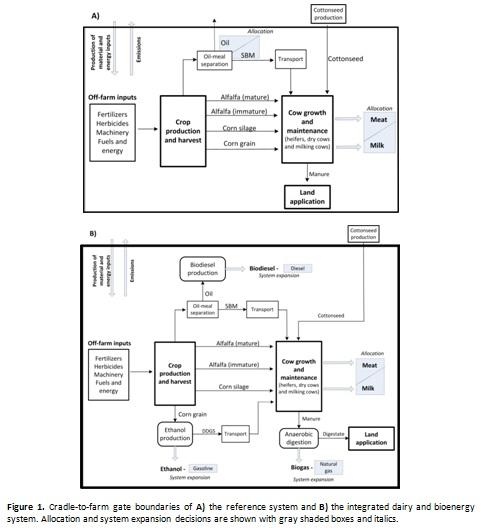
Figure 1. Cradle-to-farm gate boundaries

Figure 1. Cradle-to-farm gate boundaries

What did we do?

The effect of integrating bioenergy and dairy systems on GHG emissions was evaluated. First, a reference milk-producing system representative of Wisconsin (WI) was modeled using a partial LCA approach from cradle-to-farm gate. To integrate bioenergy products to the modeled farm, the boundaries of the system were defined and included corn and soybean production for ethanol and biodiesel, respectively. This was necessary in the analysis since co-products dry distillers grains with solubles (DDGS) and soybean meal (SBM) are part of the dairy diet in numerous farms of WI. In addition, the production of biogas through anaerobic digestion (AD) from the collected manure was evaluated as a second opportunity to integrate bioenergy systems with dairy systems. Given that this integrated system is multi-functional (producing milk, meat, ethanol, biodiesel and biogas); the GHG emissions were assigned to milk by system expansion, a method recommended by the International Organization for Standardization (ISO) to assign the environmental impacts of multi-functional systems among co-products. This method can be applied when a co-product clearly replaces the production of an external product (in our paper ethanol replaces gasoline and biodiesel replaces fossil diesel). Results indicate that GHG emissions for the reference system are 1.02 kg CO2-eq per kg of milk (corrected for fat and protein (FPCM). When analyzing the integration of ethanol and biodiesel (and after applying system expansion) GHG emissions are reduced to 0.86 kg CO2-eq per kg of FPCM in a diet that maximizes DDGS. The installation of a digester further reduced GHG emissions to 0.63 kg CO2-eq/kg FPCM, highlighting the importance of this system to achieve both energy and climate change goals.

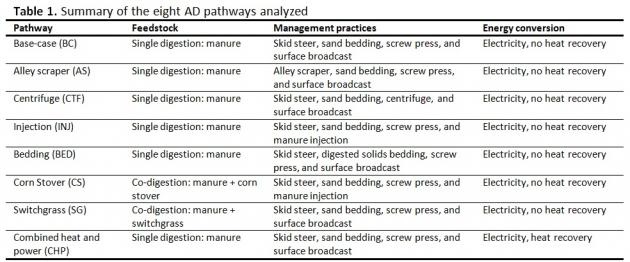
Given the important role that AD systems have to reduce greenhouse gases, we explored different AD scenarios based on manure management practices, co-digestion strategies, and energy conversion processes in order to achieve further emission reductions. AD is the main focus of this part of the study; therefore, a new functional unit was defined as 1 GJ of produced electricity. A base-case pathway was compared against seven alternative AD pathways. In the base-case, manure is collected with a skid steer, digested in a plug-flow digester, biogas is used for electricity production without heat recovery, and digestate is separated in a screw press and land-applied by surface broadcast. The alternative AD pathways are defined in Table 1.

Table 1. Summary of the eight AD pathways analyzed

Table 1

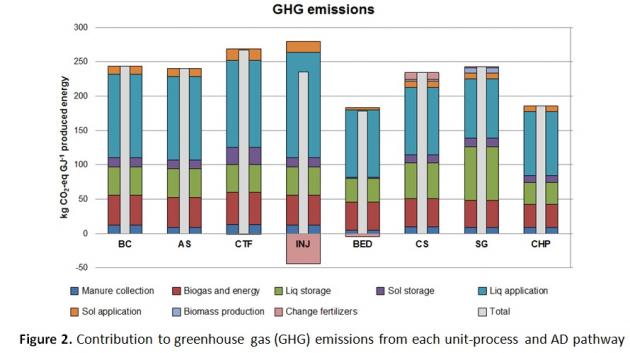
For the base-case, GHG emissions are 243.3 kg CO2-eq/GJ of produced energy. Results show that the AD pathway has a substantial influence on the estimates of environmental impacts and GHG emissions range from 178 to 267 kg CO2-eq/G J of produced energy (Figure 2).

Figure 2. Contribution to greenhouse gas (GHG) emissions from each unit-process and AD pathway

Figure 2.

What have we learned?

The dairy industry will continue to dominate agricultural activities in WI for the foreseeable future and the emerging bioenergy industry will need to be integrated into existing agricultural systems. System models like this one have potential to help farmers and policy makers identify synergies between dairy production and renewable energy development. GHG emissions of a reference dairy system representative of WI are compared to a system that integrates dairy and bioenergy production. Diet scenarios that maximize DDGS content are the most effective in reducing GHG emissions. Reductions in GHG emissions come mainly from the credits of avoided emissions and primary energy from displaced fossil fuels after system expansion. GHG emissions are further reduced when implementing AD to process the manure generated in the farm.

The second part of the study focused on improving the sustainability of AD systems by evaluating different manure management practices, co-digestion strategies, and energy conversion processes. GHG emissions can be reduced 31% by management practices alone, 24% if heat from the electricity generation process is recovered, and 4% by co-digesting manure with corn stover. Replacing sand with digested solids for cow bedding contributes to reduce GHG emissions as it avoids the manufacturing of this resource. Co-digesting corn stover with manure is an effective strategy to reduce GHG emissions as this feedstock requires only harvesting as opposed to switchgrass that needs to be added to the already existing crop mix requiring additional planting as well as harvesting. Finally, results show the major improvement in GHG emissions when heating the digester with recovered heat from the generator, highlighting the potential of this pathway to reduce environmental impacts without adding major technical or economic challenges to the farmer.

Future Plans

There is potential to expand the current analysis by using the survey data collected as part of this study. For example, it would be interesting to compare management practices coming from small and large dairy farm operations.

We still need to develop our knowledge on the sustainability impacts of co-digesting manure with other waste streams, such as cheese whey and whey permeate. These pathways can provide useful information to dairy processing plants about alternative uses of whey as an energy source with and without protein separation, which could be a decisive factor when making investment decisions.

It will be important to quantify other environmental services of AD systems, such as water quality preservation and odor reduction.

Authors

Aguirre-Villegas Horacio Andres. Postdoctoral Research Associate. Department of Biological Systems Engineering, University of Wisconsin-Madison aguirreville@wisc.edu

Larson Rebecca. Assistant Professor. Department of Biological Systems Engineering, University of Wisconsin-Madison. Reinemann Douglas J. Chair and Professor. Department of Biological Systems Engineering, University of Wisconsin-Madison

Primary author: Horacio Aguirre-Villegas, aguirreville@wisc.edu, 217-898-0345

Acknowledgements      

This study is part of the Green Cheese Project, funded by Wisconsin Focus on Energy, Environmental and Economic Research and Development Program and the National Institute of Food and Agriculture, United States Department of Agriculture, under ID number WIS01604

The authors are solely responsible for the content of these proceedings. The technical information does not necessarily reflect the official position of the sponsoring agencies or institutions represented by planning committee members, and inclusion and distribution herein does not constitute an endorsement of views expressed by the same. Printed materials included herein are not refereed publications. Citations should appear as follows. EXAMPLE: Authors. 2015. Title of presentation. Waste to Worth: Spreading Science and Solutions. Seattle, WA. March 31-April 3, 2015. URL of this page. Accessed on: today’s date.

Agenda for Waste to Worth 2015

Waste to Worth Home | Printable Agenda | Abstracts | Proceedings | Use your browser “find” function to locate a particular presenter or term on this page.

Tuesday, March 31, 2015

7:00am – 5:00pm

Registration (Grand Foyer)

8:30–9:10 am

Welcome – Joe Harrison and Mark Risse (Grand Ballroom)

Keynote – Dr. George R. Pess, USGS Northern Rockies Science Center
Removal of the Elwha Dam – The Return of the Salmon

Track=>

Western Dairy Air Quality
Grand 1 Room (Mod-Leytem)

Innovations in Anaerobic Digestion, Design & Operation
5th Ave Room (Mod-Larson)
Western Region Climate Symposium
Grand Crescent Room (Mod-Whitefield)


Measurement & Fate of N from Manure
Grand 2 Room (Mod-Rahman)
9:20 am Technologies for digestion of flushed swine manure Hamilton Western Ag outlook: Changing climate Whitely Binder NO3 testing protocol for lands receiving injected manure Meinen
9:40 am Open lot dairy NH3 losses & N balance Todd

A novel system for treatment of dry-lot manures Loetscher

Grazing in a changing climate: adaptive management Derner

Economics of N in a long-term cropping system Flores
10:00 am

Todd, cont.

10:10 Ammonia & nitrous oxide model for open lot cattle Bonifacio

Poultry digestion: emerging farm opportunity Frear Overwinter fate of fall-applied manure N Chantigny

10:20 am

Bonifacio, cont.


Two-year evaluation of a co-digestion system – final results Gooch

USDA Climate Hub update Van Horne


Fate of manure N applied for grass silage Harrison

10:40 – 11:10 am

Morning Break

Track=> Western Dairy Air Quality
Grand 1 Room(Mod-Leytem)
Innovations in Anaerobic Digestion, Design & Operation
5th Ave Room (ModLarson)
Western Region Climate
Grand Crescent Room (ModWhitefield)
Sources & Solutions for Impaired Watersheds
St. Helens Room (Mod-Harrison)
Measurement & Fate of N from Manure
Grand 2 Room (Mod-Rahman)
11:10 am Regulating NH3 from ag: potential pitfalls & limitations Shaver Effect of temperature on CH4 production from field scale digesters Arikan Beef cattle selection & management for drought Rolf What are the sources of bacteria in your watershed? Wagner How much N in dairy rations is partitioned to milk, manure, crops & environmental loss? Powell
11:30 am

Shaver, cont.


11:40 am – Controlling NOx is effective strategy to reduce PM in San Joaquin Valley Villegas


Effects of mixing on biogas production & methanogen distribution  Wang Adopting policies to encourage climate-smart agriculture Capalbo


Evaluation of reports on NO3 in wells in the Yakima Basin Lazarus

Variation in state-based manure N availability approaches Lory

11:50 am

How to capitalize on BioCNG at your wastewater plant Simmons

Fertilizer value of swine manure: Comparing a lagoon & deep pit slurry Chastain

12:10 – 1:30 pm

Keynote – Governor Jay Inslee
A Governor’s Perspective on Climate Change

Grand Ballroom – Lunch Provided

Track=> Western Dairy Air Quality
Grand 1 Room (ModLeytem)
Innovations in Anaerobic Digestion, Evaluation & Case Studies
5th Ave Room (Mod-Ogejo)
Producer Perspectives on Changing Climate
Grand Crescent Room (Mod-Powers)
Pathogens & Pharmaceuticals I
St. Helens Room (Mod-Cook)
Value-added Products from Ag & Food Waste I
Grand 2 Room (Mod-Bogardus)
1:30 pm PM from open lot dairies & cattle feeding: recent developments Auvermann The dairy bio-refinery Yorgey

Farmers & ranchers are making their operations more resilient and adapting to extremes. Meet three farmers preparing for a changing climate

Producer Panel:

Keith Berns – Nebraska (crops)

Sandra Matheson – Washington (beef)

Mike DeSmet – New Mexico (dairy)


Antibiotic losses during thermophilic composting Bary The great biogas gusher Simmons
1:50 pm

Auvermann, cont.


2:00 pm Estimation of infectious risks in residents near dairy wastewater spraying Dungan

Low tech waste to energy applications in developing countries Bledsoe

Effect of litter, swine effluent, & biosolids on plot pathogen, antibiotic resistance, & nutrient levels Brooks


Co-digestion: A primer on substrates & project considerations Frear
2:10 pm Economical anaerobic digestion of CAFO animal waste Germane Abundance & fate of fecal indicators, pathogens & antibiotic resistant bacteria in a vegetated system receiving feedlot runoff Durso Digested solids – forms, markets & trends Jensen
2:30 pm Impact of aerosols on respiratory health of dairy workers & nearby residents Reynolds Value of manure on small to mid-sized farms through compact anaerobic digestion Afghan Manure irrigation: Airborne pathogen transport & assessment of technology use in Wisconsin Larson Renewable natural gas – biogas cleaning & upgrading 101 Frear
2:50 pm  — Discharge quality water from dairy manure: McLanahan Nutrient Separation System Wallace Surface runoff transport of E. coli after litter application on pasture Payne Renewable natural gas – economics Kruger

3:10 pm

 —

  —

 —

  —

Food and processing waste for renewable energy Syu-Ruei Jhang

3:30 – 4:30 pm

Transportation to Blake Island

4:30 – 8:30 pm

Tillicum Village Salmon Bake & Show

Wednesday, April 01, 2015

7:00 am – 5:00 pm

Registration (Grand Foyer)

8:15 am – 10:00 am

Changes, Challenges, and Opportunities for Animal Agriculture (Grand Ballroom)

10: 00 am – 10:15 am

Morning Break

10:15 am – 12:00 pm

Changes, Challenges, and Opportunities for Animal Agriculture (Grand Ballroom)

12:00 pm – 12:30 pm

Pick up box lunch (provided) before boarding tour busses (Tour Descriptions)

12:30 pm – 6:30 pm

Tour 1 – Anaerobic Digester Tour (Whatcom County)

Tour 2 – Clean Samish Bay Initiative (Skagit County)

Tour 3 – Bainbridge Island: Equine & Small Farms (Bainbridge Island)

IOS Ranch
Hey Day Farm

Tour 4 – Composting Tour: Large-scale facilities (King County)

7:00 pm – 8:30 pm

Reception and Poster Presentations (Fifth Avenue Room)

Ron Sheffield Memorial Student Poster Competition

Thursday, April 02, 2015

7:00 am – 5:00 pm

Registration (Grand Foyer)

Track=> Environmental Management of Horse Farms
Grand 1 Room (Mod-Westendorf)
Reducing Nutrients in Leachate & Feeding Areas
5th Ave Room (Mod-Douridas)
Measurement & Mitigation of GHGs
Cascade Room (Mod-Ogejo)
National Air Quality Site Assessment Tool (NAQSAT)
Cascade 2 Room (Mod-Stowell)
Working to Improve the Effectiveness of P Indices
Grand 2 Room (Mod-Lory)
9:00 am Equine pasture management introduction Siciliano Wood chip pad winter feeding area for manure management Basden Life cycle GHG emissions of dairy & bioenergy Aguirre-Villegas

9:00 am – 10:20 am – Tool demonstration and case studies

Participants should bring a laptop for this hands-on training.


Methods to refine P indices from three regional indexing efforts Sharpley
9:20 am Measuring pasture dry matter intake of horses Siciliano Evaluation of feed storage runoff water quality & collection design
Larson
LCA of GHG emissions from a dairy farm  co-digesting manure & food waste Ebner Modeling P runoff in the Chesapeake Bay region to test the P Index Kleinman
9:40 am

Improving pasture utilization by optimizing horse preference Martinson

Implementation of a manure Application Risk Management (ARM) system Embertson Improving estimate of enteric CH4 emissions from cattle: A meta-analysis Liu Estimation of P loss from ag land in the South using the APEX, TBET, & APLE models Osmond

10:00 am

Effects of rotational grazing on nutrient content of a mixed grass horse pasture McIntosh

Initial evaluation of vegetated treatment areas for runoff from small swine operations Harmel

Effect of protein supplement on low-quality forage diets on enteric CH4 production of steers Cole

Estimation of P loss from ag land in the Heartland using the APEX model: evaluating P indices Lory

10:20 am – 10:50 am

Morning Break

Track=> Environmental Management of Equine Operations
Grand 1 Room (Mod-Williams)
Reducing Nutrients in Leachate & Feeding Area Runoff
5th Ave Room (Mod-Douridas)
Measurement & Mitigation of GHGs
Cascade Room (Mod-Ogejo)
National Air Quality Site Assessment Tool (NAQSAT)
Cascade 2 Room (Mod-Stowell)
Working to Improve P Indices – Challenges & Opportunities
Grand 2 Room (Mod-Sharpley)
10:50 am Existing equine pasture best management survey findings Swinker Effect of woody biochar amendment to sand on nutrient leaching with dairy manure Bradley

Feeding strategies to mitigate cost & environmental footprint of pig production Burek

10:50 am – 12:10 pm – Hands-on training (laptops required)


Phosphorus Indices: What is the water quality goal? Osmond

11:10 am Plant nutrient & carbon content of equine manure as influenced by stall management Chastain A new amendment for reducing NH3  volatilization  & P runoff from poultry litter Moore Measuring N2O & CH4 emissions from feedyard surfaces; NFT-NSS chamber technique Casey Perspectives on the P Index – nutrient management planner surveys in NY, PA & DE Kleinman
11:30 am Producer Panel, Focus Group, NRCS Participation


The importance of nitrogen stabilization Galloway Gas reduction benefits of anaerobic digestion & separation Holly User capabilities and next generation P indices Lory

11:50 am

Electrolysis of swine manure effluents using three different electrodes Rahman

Factors affecting N2O emissions following subsurface manure application Smith

Panel: Limits & opportunities using models to improve P indices Kleinman, Lory, & Osmond

12:10 pm – 1:40 pm

Lunch Provided –Student Poster Awards (Grand Ballroom 3)

Track =>

Environmental Management of Equine Operations
Grand 1 Room (Mod-Westendorf)

Nutrient Recovery & Utilization Technologies – General
5th Ave Room (Mod-Porter)
Measurement & Mitigation of GHGs
Cascade 1 Room (Mod-Smith)
Pathogens & Pharmaceuticals II
Cascade 2 Room (Mod-Cook)

Working to Improve P Indices – Challenges & Opportunities
Grand 2 Room (Mod-Kleinman)

1:40 pm Environmental management on equine farms: the good, bad, and ugly Westendorf Manure separation: bedding & nutrient recovery Lenkaitis N2O emissions in snow-covered ag soils – manure-induced fluxes Chantigny Abundance & fate of antibiotics & hormones in a VTS receiving cattle feedlot runoff Miller Checking ambition with reality – Pros & cons of national vs regional vs local P index Kleinman
2:00 pm

Westendorf, cont.

Horse manure composting: facilities & methods Bonhotal

Enhancing the recovery of P from scraped dairy manure using process effluent Ogejo

Impact of manure management on GHG emissions in semi-arid regions Miller


Antibiotic degradation during anaerobic digestion & effects of antibiotics on biogas Mitchell

2:00 Open discussion: What is your idea on how to improve the effectiveness of the P Index concept?

Conclude at 2:40


2:20 pm Bonhotal, cont.

Improved recovery of NH3 from swine manure using gas-permeable membranes & aeration Vanotti

Practical use & application of poultry C-footprint tool: Comparing two broiler farms Dunkley

Dairy cationic polymers & high-speed centrifugation effects on pathogens during separation Liu

2:40 pm

Low cost aerated static composting or small equine operations Hashemi


Utilizing acid-tolerant nitrifying bacteria to generate acidity needed to operate NH3 scrubbers Moore

Effects of treated poultry litter on potential GHG emission & field application Bolu

Environmental antibiotic resistance bacteria & genes: A link to public health? Roberts

3:00 pm – 3:30 pm

Afternoon Break

Track => Environmental Management of Equine Operations

Grand 1 Room (Mod- Westendorf)

Value-added Products from Ag & Food Processing Waste II
5th Ave Room (Mod-Lim)
Odor & Gas Measurement & Mitigation
Cascade 1 Room (Mod-Whitehead)
EPA Session
Cascade 2 Room (Mod-Subramanian)
Identifying & Managing Sources of Legacy P
Grand 2 Room (Mod-Sharpley)
3:30 pm Markets for composted agricultural waste Bogardus Factors affecting household use of organic fertilizer McCann Humic manure additive reduces odor from PA swine finisher Fabian 3:30 pm – Panel Discussion – Expanding markets for manure treatment technologies: Making innovations economically viable and reaching underserved users How legacy nutrients affect farm conservation Sharpley
3:50 pm Composting horse mortality and mortality disposal alternatives Bonhotal Coupling anaerobic digesters with greenhouses Gooch Effects of subsurface litter application on odor quality Hile Organic & inorganic soil P after long-term litter amendment: effects of rate & land-use Waldrip
4:10 pm Case study of contaminated compost: collaborations to mitigate persistent herbicide residues Greene Making dairy manure more valuable than milk Freund Use of zilpaterol hydrocholride to reduce odors & gases from beef fed diets with/out ethanol byproducts Woodbury Removing P from drainage water: the P removal structure Payne
4:30 pm Use of compost as an alternative horse stall bedding Youngquist

Industrial scale production of amino acid fertilizer from fish waste Ovissipour

Manure management for mitigation of gases from naturally ventilated dairy barns Ndegwa 4:30 pm – 2014-2015 Nutrient recovery technology challenge


Relationship between surface waters & ditch sediment in selected Eagle Creek tributaries Williams

4:50 pm

Reducing hay waste associated with outdoor feeding of adult horses Martinson

VOC emissions from pen surface as affected by location, moisture, & temperature Woodbury

5:10 pm            

Dinner on Your Own

5:10 pm – 7:00 pm

NRCS Meeting

AACC Project Team Meeting


Friday, April 03, 2015

7:00 am – 8:40 am

Registration

Track=> Success, Tools, & Skills in Outreach
Grand 1 Room (Mod-Cortus)
Nutrient Recovery & Utilization – Manure to Energy
5th Ave Room (Mod-Bredeweg)
Climate Impacts & Adaptation
Cascade 1 Room (Mod-Knox)
Cascade 2 Room Feed Nutrient Management Planning Software
Grand 2 Room (Mod-Harrison)
8:40 am

Manure hauler education improves implementation of NMPs Halopka

A primer on available & emerging N, P, &salt recovery – performance & cost Ma Farms of the future: seeking energy independence Simmons

8:40-10:00

Software training

9:00 am

Whole farm walkovers prioritize soil & water management Klingberg

A profitable process for the removal of N & P from waste streams Burke Anaerobic digestion projects: environmental credits 101 Kruger
9:20 am Effects of observability & complexity on adopting env. practices McCann A look at North Carolina’s clean energy future Simmons Adapting dairy farms to climate change Rotz
9:40 am The Pathways Project Cortus  Gasification of animal manures – another tool for the toolbox Porter Farming Systems Lally

10:00 am – 10:30 am

Morning Break

Track=> Success, Tools, & Skills in Outreach to Producers
Grand 1 Room (Mod-Cortus)
Nutrient Recovery & Utilization – Manure Treatment & Land Application
5th Ave Room (Mod-Porter)
Preparing Agriculture for a Changing Climate
Cascade 1 Room (Mod-Stowell)
Animal Mortality Management & Composting (Mukhtar) Grand 2 Room
10:30 am Anaerobic digestion – highlights of a successful feasibility study Jensen Field scale management of separated dairy manure fractions Haak

10:30-12:10

This panel will discuss research in the animal agriculture & climate change field. Each panelist will present a short introduction to their program and highlight extension applications.

Panel:

Kristy Borrell – Univ of Idaho; REACCH Project

Peter Tomlinson – Kansas State; Great Plains Grazing

Mark Powell – USDA; Global Research Alliance

Bradley Boyd – Univ of Nebraska; Beef GHG

Greg Thoma – Univ of Arkansas; Pork Carbon Footprint

Rebecca Larson – Univ of Wisconsin; Dairy CAP

Mortality and Manure Management in a Farm Biosecurity Plan for PEDV Schmidt

#1: Manure composting

#2: Swine mortality compost

10:50 am University & anaerobic digestion industry partnerships – lab testing Mitchell Low-power aerators combined with center pivot manure application at a NE hog finisher Melvin
11:10 am Farm-based anaerobic digestion – wastewater & nutrient considerations Yorgey

Sustainable Dairy Housing / Manure System: Compost Bedded Loose Barn Taraba

Multi-specie mortality composting demonstrations in SW Neb Hicks

11:30 am Using solar to provide animals with water while protecting water quality Hawkins


Composting swine slurry to reduce indicators & antibiotic resistance genes Cook

11:50 am

Evaporation pond – waste storage design spreadsheet Hanson

 —  

12:10 pm                

Adjourn


Waste to Worth Conference Social & Networking Activities

waste to worth 2017 conference logoOne of the most valuable aspects of a face to face conference is the opportunity to meet and get to know other people working in your area/s of interest. As such, we have developed several optional informal activities to encourage networking among conference participants.

W2W Home | Run/Walk | Dinner for Six/Nearby Restaurants | Sharing Photos | Facebook & Twitter | Lunch Conversations

Welcome Table

A “welcome” table will be located next to the registration table. There, you can stay updated on informal activities and opportunities to meet with other professionals at the conference. Handouts or sign up sheets for most of the activities below will be located at the welcome table.

Run/walk

Meet in the hotel lobby near the front doors at 6:30 a.m. on Tuesday, Wednesday, and Thursday mornings of the conference. This group will run 3-4 miles and will plan to be out for 30-60 minutes. This is not a race! The point is to settle into a conversational pace running group, clear the mind for learning, and burn-off the previous night’s dessert. Reflective gear or bright clothes may be suitable (sunrise averages 6:37 a.m. on the days of the conference).  Dress weather appropriate; historic average low is 48 degrees F, with daylight temperatures rising.

Please note: This outing has an informal host. Waste-to-Worth promoters and affiliated institutions are not responsible for issues of personal safety. Use common sense, remember your turns, obey all traffic signals, stay with a buddy or group, and watch your time.  

Contact: Tommy Bass tmbass@montana.edu.

Dinner for Six

During the evenings of Monday (pre-conference) and Thursday, participants can sign up to go out for dinner with a group of around six people. Each group will have a volunteer leader and the goal is to help participants meet new people they might not have otherwise. Each person is responsible for their own meal costs. The number six is used to encourage chances for everyone to talk and because reservations are usually not needed for a small group.

List of restaurants within walking distance of the hotel.

If you think we’re missing a good restaurant please feel free to share it!

Contact: Mary Berg mary.berg@ndsu.edu 

Sharing Photos

Share your photos of Waste to Worth 2017 so everyone can enjoy them! We will be using a photo-sharing tool where you can simply text your photos to share as well as see other’s photos.

You will find an instruction sheet here: How to include your pictures in the Waste to Worth 2017 conference slideshow.

The phone number for texting pictures will be available April 17 through April 30.

The slideshow Waste to Worth 2017 Slideshow preview.

Please note: We reserve the right to remove any photos from the group page if they are deemed inappropriate. Not all photos will be shown at the conference; we will select the best from those submitted. Photos submitted to the slideshow may be used to promote future Waste to Worth events. Do not share photos of any site, farm, or business unless they have granted permission to the group to take and share photos. Please ask at the tour site if you are unsure if it is OK to take photos.

Contacts: Leslie Johnson leslie.johnson@unl.edu and Robb Meinen rjm134@psu.edu

Facebook and Twitter

Post your tweets with the hashtag #wastetoworth and connect with other animal ag professionals on social media.

The LPELC Facebook page is at: https://www.facebook.com/lpelc.cop. Post your questions, photos, and thoughts there.

Lunch Conversations

This is an optional activity at lunch on Wednesday and Thursday. Look for table tents with posted topics on some tables in the lunch area. If you see a topic you would like to talk about, sit at that table. If you are not interested in any of the topics or want to multi-task at lunch, pick a table without a table tent. If you would like to lead a discussion please email mary.berg@ndsu.edu.

A current list of topics for Wednesday is:

  • Early Career Advice…What to focus on and what to let go of. Lead by Leslie Johnson. 
  • Manure and Soil Health…The best opportunity for win/win. Lead by Rick Koelsch. 
  • Grant Writing Tips…Come to gather tips as well as share!

A current list of topics for Thursday is:

  • Better Together…Engaging our producers. Lead by Mary Berg.

Suggestions for topics can be sent to Mary Berg (mary.berg@ndsu.edu) any time before or during (earlier is better) the conference.

Poster Session

The Poster Session will be held on Wednesday, April 19 from 5:15 p.m. – 7: 00 p.m. During this time you will have the opportunity to browse the posters on display and meet the authors. We will also have heavy hors d’oeuvres and tables for socializing.