Manure and Litter Additives for Odor Control on Farms

Air emissions from animal agriculture operations and their associated manure storage are being examined more closely as a way to mitigate potentially harmful gases and odors. Manure additives and litter amendments go right to the source and are used to change one or more characteristics of manure to try and reduce emissions emissions of odorous gases. The materials on this page were developed to assist educators and professors who include manure additives or litter amendments as a topic in their classrooms or educational programs.

Fact Sheets

Sanjay Shah, Garry Grabow, Philip Westerman, North Carolina State University

Sanjay Shah, Philip Westerman, James Parsons, North Carolina State University

Technology Summaries

These are from a 2008 conference hosted by Iowa State University

Acknowledgements

These materials were developed by the Air Quality Education in Animal Agriculture (AQEAA) project with with financial support from the National Research Initiative Competitive Grant 2007-55112-17856 from the USDA National Institute of Food and Agriculture.

For questions about the materials on this page contact Dr. Kevin Janni, University of Minnesota (kjanni@umn.edu). For questions about the AQEAA project, contact Dr. Rick Stowell, Unviersity of Nebraska (rstowell2@unl.edu).

If you have presentations, photos, video, publications, or other instructional materials that could be added to the curricula on this page, please contact Dr. Janni or Jill Heemstra (jheemstra@unl.edu).

Wet Scrubbers for Cleaning Air Emissions from Animal Housing Curriculum Materials

Air emissions from animal housing systems are being examined more closely for ways to mitigate potentially harmful gases. Wet scrubbers are one way to remove pollutants from air being exhausted from mechanically ventilated buildings.  The materials on this page were developed to assist educators and professors who include wet scrubbers as a topic in their classrooms or educational programs.

Fact Sheets

Roderick B. Manuzun and Lingying Zhao, The Ohio State University; Allison Jonjak, Nebraska

LPES Curriculum Lessons

Technology Summaries

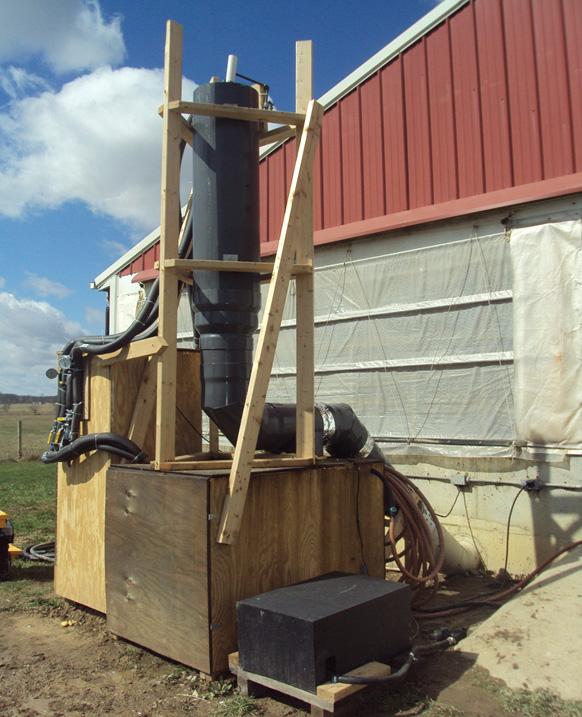
Figure 1. A prototype wet scrubber developed by the Ohio State University for a deep-pit swine facility. Photo courtesy of Lingying Zhao, Ohio State.

This is from a 2008 conference hosted by Iowa State University

Acknowledgements

These materials were developed by the Air Quality Education in Animal Agriculture (AQEAA) project with with financial support from the National Research Initiative Competitive Grant 2007-55112-17856 from the USDA National Institute of Food and Agriculture.

For questions about the materials on this page contact Dr. Linying Zhao, Ohio State University (zhao.119@osu.edu). For questions about the AQEAA project, contact Dr. Rick Stowell, Unviersity of Nebraska (rstowell2@unl.edu).

If you have presentations, photos, video, publications, or other instructional materials that could be added to the curricula on this page, please contact Dr. Zhao or Jill Heemstra (jheemstra@unl.edu).

Manure Storage Covers Curriculum Materials

Air emissions from animal agriculture operations and their associated manure storage are being examined more closely as a way to mitigate potentially harmful gases. Covers are becoming popular as a way to collect methane (a potent greenhouse gas) for beneficial reuse as a renewable energy source.  The materials on this page were developed to assist educators and professors who include manure storage covers as a topic in their classrooms or educational programs.

Fact Sheets

Rose Stenglein, Charles J. Clanton, David R. Schmidt, Larry D. Jacobson, and Kevin A. Janni, University of Minnesota

Video: Manure Storage Covers for Reducing Odor Emissions

Photo Galleries

Positive Air Pressure Covers

Negative Air Pressure Covers

Technology Summaries

These are from a 2008 conference hosted by Iowa State University

Acknowledgements

These materials were developed by the Air Quality Education in Animal Agriculture (AQEAA) project with with financial support from the National Research Initiative Competitive Grant 2007-55112-17856 from the USDA National Institute of Food and Agriculture. For questions about the materials on this page contact Dr. Kevin Janni, University of Minnesota (kjanni@umn.edu). For questions about the AQEAA project, contact Dr. Rick Stowell, Unviersity of Nebraska (rstowell2@unl.edu). If you have presentations, photos, video, publications, or other instructional materials that could be added to the curricula on this page, please contact Dr. Janni or Jill Heemstra (jheemstra@unl.edu).

Mandatory Greenhouse Gas Emissions Reporting for Animal Agriculture

logo for animal agriculture climate change which includes a weather vane with cow and topImportant note: Congress has prohibited EPA from expending any funds to implement subpart JJ (manure management) of the rule. Industry efforts to overturn subpart JJ are underway, but the outcome is unknown at this time. Though EPA cannot technically enforce the rule, livestock and poultry operations should remain aware of the requirements in the event the Congressional
prohibition is allowed to expire.

[Archived webinar] Mandatory GHG Reporting Rule & Carbon Footprint of Dairy Systems

Which Livestock or Poultry Facilities Meet the Reporting Threshhold?

Several industries are impacted by this rule, including animal agriculture. The rule estimates that around 100 animal facilities will meet the threshhold of 25,000 metric tons of annual carbon dioxide (equivalent) emissions. The following table was excerpted from page 558 of the rule after it was first published (2009). For updates, please visit the EPA Greenhouse Gas Reporting Program.

Animal Population (Annual) Below Which Facilities Are Not Required to Report Emissions
Animal Group Average Annual Animal Population (Head)
Beef 29,300
Dairy 3,200
Swine 34,100
Poultry: Layers 723,000
Poultry: Broilers 38,160,000
Poultry: Turkeys 7,710,000

Facilities below these populations will not be required to report emissions. Facilities that meet or exceed these populations will need to conduct an analysis to determine if they emit more than 25,000 tons of CO2 equivalent.

An important point in the reporting requirements for animal agriculture are that emissions need to be calculated and reported only for the manure management system. Enteric fermentation (fermentation occurring naturally in the rumen or gut) is not included. Emissions from land application of manure are also not included.

Large facilities with more than one type of animal (even if the species present do not individually meet the population listed above) will need to calculate a combined animal group factor.

Reducing GHG Emissions Can Change Reporting Requirements

Facilities that implement technologies or management that reduce their GHG emissions will be able to cease reporting:

  • after 5 consecutive years of emissions below 25,000 metric tons CO2e/year
  • after 3 consecutive years of emissions below 15,000 metric tons CO2e/year
  • if the GHG-emitting processes or operations are shut down

Learning More About Greenhouse Gas Emissions from Animal Agriculture

Technologies for Mitigating Volatile Organic Compounds (VOCs) from Animal Agriculture

Reprinted, with permission, from the proceedings of:
Mitigating Air Emissions From Animal Feeding Operations Conference.

The proceedings, “Mitigating Air Emissions from Animal Feeding Operations”, with expanded versions of these summaries can be purchased through the Midwest Plan Service.

Technologies for VOC Mitigation in Animal Agriculture

Odors from Livestock Farms Curriculum Materials

One of the easiest air emissions to recognize from livestock and poultry farms is odor. It is also the most complex to characterize and study. Odors are a combination of hundreds of different emissions. Each person who smells odor interprets it differently than another person as well. With all of these variables, how can we communicate the issue of odor to students and ag professionals? These materials were developed for instructors to use in classrooms or extension programs.

Laboratory Exercise on Odor and Smell

From Dr. Doug Hamilton, Oklahoma State University

Slides and recording of author presenting the workshop. A 2 hour laboratory/workshop exercise has been presented to over 250 college freshmen.

Odor Laboratory–step by step instructions on setting up a laboratory exercise on odor

Observations and Data from Oklahoma State experience with the laboratory exercises

Video: Odors on Livestock and Poultry Farms

What role does odor play today for livestock and poultry producers? Are there ways to effectively manage odors from livestock and poultry operations and still keep the industry viable? This video examines some of the odor issues that exist in rural communities and shows examples from Nebraska of how research information is being put to use on farms.

Download a Copy of This Video

To download this video, right click on the link and select “save link as”.
Odors from Livestock Farms: A Case Study in Nebraska
File size: 34MB
Format: MP4

For More Information

Some additional resources for learning about odors and animal feeding operations:

Acknowledgements

If you have any questions or comments about the lecture or laboratory exercises, contact Dr. Doug Hamilton, Oklahoma State University dhamilt@okstate.edu. For questions on this video, contact Dr. Rick Stowell, University of Nebraska, rstowell2@unl.edu.

These materials were developed by the Air Quality Education in Animal Agriculture (AQEAA) project with with financial support from the National Research Initiative Competitive Grant 2007-55112-17856 from the USDA National Institute of Food and Agriculture.

NRCS Online Air Quality, Energy and Climate Change Courses

The Natural Resources Conservation Service (NRCS) has begun developing online courses in three curriculum tracks: air quality, energy, and climate change. Air Quality, Climate Change, and Energy is the lead-in to the three tracks.

The courses are designed for all Natural Resource Conservation Service (NRCS) employees, but particularly for State Air Quality and Energy Contacts, conservation planners, partnership employees, and conservation technical assistance providers to assist them in integrating air quality, energy and climate change into conservation planning and programs. Although these courses were developed specifically for NRCS employees, the information contained in them may also be useful to NRCS partners and others associated with conservation in agriculture.

*A USDA eAuthentication account is needed to access the courses.*

Introductory Course

Air Quality Curriculum Track

Energy Curriculum Track

Climate Change Curriculum Track

Environmental Credit Trading

Other courses are either in development or are being planned to supplement the learning modules for each of these curriculum tracks

Air Quality, Climate Change, and Energy

Turkey production. Photo courtesy USDA NRCS.

Upon completion of the course, participants will be able to:

  • Define air quality, climate change, and energy as they relate to the NRCS mission and explain how they are interrelated
  • Explain the importance of these issues for land managers and NRCS itself
  • Recognize how soil, water, air, plants, animals and human activity all affect, and are affected by, energy and climate change
  • Identify examples of how air quality, climate change, and energy concepts apply to agricultural conservation
  • List and locate additional resources that can be used to expand knowledge of these topics

Course Link. Air quality is already a functional part of the NRCS conservation portfolio (the first ‘A’ in SWAPA+H). Climate change and energy are now becoming significant considerations in conservation planning. This course will provide a broad overview of these three topics, and how they are related to each other and SWAPA+H components. Students will learn how agricultural activities can contribute to air emissions, sequester carbon, manage greenhouse gas emissions, and better conserve energy. The course also will provide examples of addressing these issues via NRCS planning and programs. 90 minutes Go to Air Quality, Climate Change, and Energy….

Why Should We Care About Air Quality?

Upon completion of the course, participants will be able to:

  • State why air is an important natural resource
  • Explain why it is important to take a holistic approach to conservation planning
  • List the major reasons why NRCS addresses air quality and atmospheric change
  • Identify several agricultural activities that can release air emissions
  • Describe various reasons for land managers to address air quality and atmospheric change
  • Identify the role of NRCS employees in addressing air quality and atmospheric change

Course link. As the first “A” in SWAPA+H, air is an important natural resource that is vital to life. Although our agency has addressed issues related to air quality and atmospheric change since its formation, these issues have not been a traditional focus area for the NRCS in most locations. As our partners and the public have begun placing a larger emphasis on air quality and atmospheric change issues, NRCS has needed to develop the technical expertise for integrating conservation of the air resource into our assistance portfolio.

This course will provide a broad overview of air quality and atmospheric change and begin to equip NRCS conservationists and our partners with the knowledge and confidence to address air-related resource concerns. 30 minutes. Go to Why Should We Care About Air Quality?…

Manure management system for a swine farm. Photo courtesy USDA NRCS.

Air Quality Resource Concerns

Upon completion of the course, participants will be able to:

  • Identify the four primary air quality resource concerns and the emissions that contribute to these concerns
  • Identify the effects of particulate matter, ozone precursors, and odors on air quality
  • Discuss greenhouse gases as an atmospheric change issue
  • Derive potential solutions to reduce agricultural emissions of particulate matter, ozone precursors, odors, and greenhouse gases
  • List and locate additional resources that can be used to expand knowledge of these topics

Course link. The NRCS utilizes the concept of “resource concerns” in conservation planning. There are four broad categories of air-related resource concerns: particulate matter, ozone precursors, odors, and greenhouse gases and carbon sequestration. This course provides an overview of each of these four air quality resource concerns and how they can most effectively be addressed in the NRCS planning framework. Principal air emissions from agricultural operations are discussed, and how each of these is related to one or more of the air resource concerns. Finally, a variety of mitigation strategies are presented for managing emissions and improving these four air quality concerns. 50 minutes Go to Air Quality Resource Concerns…

Air Quality and Animal Agriculture

Upon completion of the course, participants will be able to:

  • Identify the primary reasons that animal production operations are currently the main focus when discussing air quality issues in agriculture
  • Identify the primary air emissions from animal production operations and describe how these emissions are generated, emitted, and transported
  • Identify NRCS options for mitigating air emissions from animal production operations

When discussing air quality issues in agriculture, animal production operations are typically the primary focus for mitigation and regulation.  This course will introduce the air emissions associated with animal operations and provide information on how NRCS can help producers mitigate these emissions. 60 minutes Go to Air Quality and Animal Agriculture…

Greenhouse Gases and Carbon Sequestration

Upon completion of the course, participants will be able to:

  • Explain the greenhouse effect
  • Discuss the characteristics of sunlight and earth’s radiation balance
  • Determine how changes in greenhouse gas emissions can influence global climate change
  • Identify methodologies in which agricultural and natural resource systems can mitigate greenhouse gas emissions and effects
  • Given a scenario, explain the importance of a holistic approach to the reduction of greenhouse gas emissions

Course Link Climate change and carbon offset trading have gained great interest in many parts of the agricultural community over the past few years. But why should we as NRCS conservationists be interested in these issues? Conservation systems that we design and help implement can often have a positive influence on the emission or storage of gases which, when in the atmosphere, can affect climate change. This course shows the importance of greenhouse gases to life on earth, the potential negative consequences of increasing greenhouse gas concentrations in the atmosphere, agricultural sources of greenhouse gases, and potential methods in which agriculture can reduce its net emissions of greenhouse gases to the atmosphere. 60 minutes Go to Greenhouse Gases and Carbon Sequestration…

Why Do We Care About Energy?

Upon completion of the course, participants will be able to:

  • Describe why energy costs and energy security are so important to land managers.
  • Describe environmental impacts of fossil fuel exploration, production and use.
  • Describe energy opportunities available to land managers and NRCS

Course Link While energy has not traditionally been addressed in the NRCS planning process, it is receiving unprecedented attention in the national and international news. This short course provides insight into why energy issues are important to agriculture and the nation. It gives participants the opportunity to explore how our energy choices can impact NRCS and the natural resources we work to conserve. 30 minutes Go to Why Do We Care About Energy?…
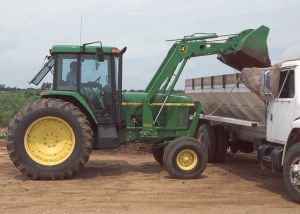
Tractor loading chicken litter into spreader truck. Photo courtesy USDA NRCS.

Energy Basics

Upon completion of the course, participants will be able to:

  • Describe basic terminology and energy concepts.
  • Identify non-renewable and renewable sources of energy and describe their origins, benefits and uses
  • Explain life cycle analysis and it relevance to comprehensive energy planning
  • Describe agriculture’s role in utilizing renewable energy alternatives

Course Link Understanding energy basics is fundamental to effective energy conservation planning. This course establishes a technical foundation to prepare NRCS planners to incorporate energy considerations into conservation plans. It provides general background on the fundamental principles behind energy issues in agricultural settings. 90 minutes Go to Energy Basics…

Why Do We Care about Climate Change?

At the completion of this course, students will be able to:

  • Understand climate change and its key drivers
  • Explain the impacts of climate change on agriculture and natural resources
  • Differentiate mitigation from adaptation
  • Discuss NRCS’ role in helping land managers and owners in mitigating and adapting to the impacts of climate change

Course link. Climate plays a key role in conservation planning, natural resource management and agricultural production. Changes in climate can have significant impacts on managing and protecting agricultural and natural resources.  NRCS is educating its employees and partners about climate change, and communicating climate change impacts to NRCS customers. Understanding climate change and its impacts will help NRCS assist private landowners, producers, and land managers cope and adapt to changing climate.

This course discusses climate change and related concepts, the impacts of climate change on agriculture and natural resources, and NRCS’ role in helping private land owners and land managers address climate change mitigation and adaptation through conservation planning. 30 minutes. Go to “Why Care About Climate Change?”

Technical Contact: Carolyn Olson at Carolyn.olson@wdc.usda.gov

Introduction to Environmental Credit Trading

Course link: This course provides an introductory discussion of environmental credits, environmental credit trading, and market-based approaches providing environmental and economic benefits.

At the completion of this course, students will be able to:

  • Understand environmental credit trading
  • Identify markets for environmental credits
  • Explore the benefits and costs of participating in markets
  • Understand how different environmental practices can produce various environmental credits
  • Outline various ways agricultural producers can benefit from environmental credit trading
  • Explain how producers can participate in environmental credit trading

Course length: 90 minutes. Go to “Introduction to Environmental Credit Trading”

Technical Contact: Carolyn Olson at carolyn.olson@wdc.usda.gov

Page Manager

Greg Zwicke, P.E.
Air Quality Engineer
Air Quality and Atmospheric Change Team
USDA-NRCS, WNTSC
2150 Centre Ave.
Building A, Suite 231
Ft. Collins CO  80526

greg.zwicke@ftc.usda.gov
Ph. 970.295.5621
Efficacy of Vegetative Environmental Buffers to Mitigate Emissions from Tunnel-Ventilated Poultry Houses

Reprinted, with permission, from the proceedings of: Mitigating Air Emissions From Animal Feeding Operations Conference.

The proceedings, “Mitigating Air Emissions from Animal Feeding Operations”, with expanded versions of these summaries can be purchased through the Midwest Plan Service.

This Technology is Applicable To:

Species: Poultry (Broiler and Turkey)
Use Area: Animal Housing
Technology Category: Environmental Barriers
Air Mitigated Pollutants: Dust, Ammonia, Odor

System Summary

Emissions of dust, gases and odor from poultry facilities pose major challenges for the poultry industry worldwide. Cost-effective technologies to abate emissions from modern tunnel-ventilated poultry houses are limited. In 2002 a three-row planting of trees was installed opposite two, 1.2 meter (4 ft) diameter tunnel fans to evaluate vegetative environmental buffers (VEB) as a means of mitigating emissions from the poultry house. The first row, 9.1 meters (30 ft) from the fans was 4.8 meter (16 ft) high bald cypress, followed by 4.3 meter (14 ft) high Leyland cypress and the outer most row of 2.4 meter (8 ft) high Eastern red cedar. Over the next six years the efficacy of these trees to reduce total dust, ammonia and odor was determined. Measurements were taken at 1.2 meter (4 ft) height on 47 days during peak fan operation with market-age broilers. The relative change in concentration across this 6.7 meter (22 ft) wide vegetative buffer found the VEB significantly reduced total dust, ammonia and odor by 56%, 54% and 26%, respectively. Meteorological conditions and the type of crop next to the VEB appeared to influence the efficacy of vegetation to reduce odor. Dust and ammonia concentration was influenced by these factors to a lesser degree. This suggests the use of trees as vegetative filters may offer a long-term, cost-effective means of partially abating emissions from houses. The local poultry industry trade association for the Delmarva Peninsula has hired a coordinator to implement tree plantings around farms to help abate emissions and to be proactive in addressing increasing neighbor-relations concerns.

Applicability and Mitigating Mechanism

  • Certain plants have the ability to absorb ammonia and capture particulates
  • Vegetation also acts as a sink for chemical constituents of odor
  • A properly designed windbreak aids in dispersion and dilutions of odors as well as reducing wind speed
  • A VEB planting has multiple goals; abate emissions, improve neighbor-relations, and provide shade and shelter of the house

Limitations

  • Growers need technical assistance on the proper design, implementation and care of VEB that is tailored to the unique features of each operation
  • Retrofitting a farm with VEB to capture emissions from all fans is difficult.
  • Species of tree and proper implementation influences time required for VEB to become effective in reducing emissions
  • VEB is a practical and multi-purpose BMP to partially abate emissions.


Cost

Average cost for implementing a VEB on an existing broiler farm is ~$5,500. Cost range from $1,500 for a limited one-row planting to provide a visual screen of the farm, and up to $12,000 for multi-row plantings around the outside perimeter of the poultry houses. There is limited information on design and efficacy of VEB plantings between houses. Locally, cost-share programs have provided support to cover most of the costs associated with implementing this program. Plantings to address neighbor-relations have been a driving factor in VEB establishment. An estimated 1/3 of all poultry farms have established VEB on the Delmarva Peninsula. A VEB is also a requirement for a new house loan from one of the major lending institutions.

Authors

George Malone1, Gary VanWicklen1, Stephan Collier1
1University of Delaware
Point of Contact:
George Malone, malone@udel.edu

The information provided here was developed for the conference Mitigating Air Emissions From Animal Feeding Operations Conference held in May 2008. To obtain updates, readers are encouraged to contact the author.

Mitigating Air Emissions from Animal Manure: Summaries of Innovative Technologies

Reprinted, with permission, from the proceedings of: Mitigating Air Emissions From Animal Feeding Operations Conference.

Summaries Sorted By:

Technologies that apply to multiple species, uses, technology types, and/or pollutants are listed under all applicable groups.

Animal Species

Facility or Use Area

Type of Technology

Pollutant Mitigated

Multi-pollutant Scrubbers for Removal of Ammonia, Odor, and Particulate Matter from Animal House Exhaust Air

Reprinted, with permission, from the proceedings of: Mitigating Air Emissions From Animal Feeding Operations Conference.

The proceedings, “Mitigating Air Emissions from Animal Feeding Operations”, with expanded versions of these summaries can be purchased through the Midwest Plan Service.

This Technology is Applicable To:

Species: Swine, Poultry
Use Area: Animal Housing
Technology Category: Scrubber
Air Mitigated Pollutants: Ammonia, Odor, Particulate Matter

System Summary

In The Netherlands, Germany and Denmark packed-bed biotrickling filters and acid scrubbers for removal of ammonia from exhaust air of animal houses are off-the-shelf techniques for ammonia removal (70 – 95% average removal). At the moment a new generation of so-called “multi-pollutant scrubbers” is being developed and tested that not only removes ammonia but also aims for significant removal of odor and particulate matter (PM10 and PM2.5) from the air. Recently a 3-year research program has started that monitors and aims to improve the performance of five farm-scale multi-pollutant scrubber from different manufacturers. The preliminary results show that the average ammonia removal is relatively high (83%, n = 7) but that the average removal of odor (40%, n = 8) and particulate matter (PM10: 43%, n = 2; PM2.5: 42%, n = 2) needs to be improved further.

Applicability and Mitigating Mechanism

  • Ammonia scrubbers consist of two types: either acid scrubbers or biotrickling filters
  • Multi-pollutant air scrubbers usually consist of two or more scrubbing stages where subsequent removal of coarse dust, ammonia and odor takes place
  • Scrubber are mainly applied in pig housings with central ventilation ducts; application in poultry housings are scarce because of high dust concentrations
  • Already 10% of all exhaust air from pig houses The Netherlands is treated; this equals a treatment capacity of 79 million m3/hour

Limitations

  • Odor and dust removal is less effective than ammonia removal, at least for now
  • High concentrations of coarse dust result in blockage of packing material and increased energy use (pressure drop)
  • Costs are considered high, but multi-pollutant scrubbers provide an option for large scale livestock operations to remain in operation in areas nearby residential areas and sensitive ecosystems

Cost

Investment and operational cost of scrubbers for newly built production facilities in € / animal space.
Acid Scrubber Biotrickling Filter Multi-pollutant scrubber (3-stage water/acid/biotrickling)
Investment Costs 32.8 43.5 50.3
Operational Costs (year^1):
Depreciation (10%) 2.6 3.4 4.2
Maintenance (3%) 1.5 1.8 2.0
Interest (6%) 0.8 1.0 1.2
Electricity use ((€ 0.11 kWh^-1) 3.3 3.8 3.7
Water use (€ 1.0 m^-3) 0.6 1.7 0.6
Chemical use (€ 0.6 L^-1 H2SO4, 98%) 1.4 n/a 0.7
Water discharge [b 0.6 2.5 1.0
Total operational costs (year^-1) 10.8 14.3 13.5

[a] The investment costs are based on a maximum ventilation capacity of 60 m3 animal place-1 h-1.
[b] Water disposal costs are assumed of € 10/m3 for discharge from acid scrubbing and € 2/m3 for discharge from biotrickling or water scrubbing. For the multi-pollutant scrubber, discharge water from the biotrickling or water scrubbing step is reused in the acid scrubbing step. The systems do not include a denitrification unit which might significantly decrease water discharge costs.
[c] n/a = not applicable.

Authors

Roland W. Melse, Nico W.M. Ogink, Bert J.J. Bosma; Animal Sciences Group, Wageningen University and Research centre, The Netherlands
Point of Contact:
Roland W. Melse, roland.melse@wur.nl

The information provided here was developed for the conference Mitigating Air Emissions From Animal Feeding Operations Conference held in May 2008. To obtain updates, readers are encouraged to contact the author.