Odorgon: Overhead Spray System to Neutralize Odors

Reprinted, with permission, from the proceedings of: Mitigating Air Emissions From Animal Feeding Operations Conference.

This Technology is Applicable To:

Species: Poultry, Dairy, Beef, Swine
Use Area: Animal Housing
Technology Category: Chemical Amendment
Air Mitigated Pollutants: Ammonia, Hydrogen Sulfide, Odors

System Summary

Odorgon is a water based formulation that is applied in confined animal feeding operations through a high pressure mist system. Odorgon is sprayed on an automated timer basis from the ceilings through high pressure nylon lines and nozzles to neutralize malodors.

Applicability and Mitigating Mechanism

  • Unique class of cationic surfactants
  • Atomized solution sprayed at 600 psi
  • Buffer resulting in non volatile organic salts
  • Greatly reduces ammonia & hydrogen sulfide
  • Creates better environment for animals to thrive in resulting in lower mortality, less culls and less days to finish.
  • Better conditions for workers/employees
  • Mitigates neighbor/social issues

Limitations

  • Water based, subject to freezing
  • Summer use may be curtailed in

open buildings during windy conditions

Cost

Equipment cost for a 42 by 200 foot finishing building with all components installed is approximately $4900. Annual usage for this facility would average $2100 of Odorgon concentrate or .73 per animal unit but could vary with region/climate. Nursery cost for swine is .19 per animal unit. Odorgon is mixed with water at a rate of 50 parts water to 1 part concentrate resulting in a cost of $1.50 per gallon diluted. Cost also varies based on building dimensions and desired results.

Authors

Steve Opheim, VP Klean Air Inc.
Point of Contact:
Ron Hamilton, rrhamilto@aol.com

The information provided here was developed for the conference Mitigating Air Emissions From Animal Feeding Operations Conference held in May 2008. To obtain updates, readers are encouraged to contact the author.

Effects of Waste Management Techniques to Reduce Dairy Emissions from Freestall Housing

Reprinted, with permission, from the proceedings of: Mitigating Air Emissions From Animal Feeding Operations Conference.

The proceedings, “Mitigating Air Emissions from Animal Feeding Operations”, with expanded versions of these summaries can be purchased through the Midwest Plan Service.

This Technology is Applicable To:

Species: Dairy
Use Area: Animal Housing
Technology Category: Management
Air Mitigated Pollutants: Volatile Organic Compounds, Ethanol & Methanol

System Summary

Recent dairy emission research has identified alcohols (methanol and ethanol) as the major volatile organic compound (VOC) group originating from fresh waste (Shaw et al., 2007; Sun et al., 2008). Effective control of these alcohols from dairies will help the dairy industry meet regulatory standards, satisfy public concerns, and improve local and regional air quality. Enhancing industry typical freestall waste management practices, which currently are predominant practices like flushing and scraping of fresh waste, may provide a large impact on mitigation of oxygenated VOC emissions in a cost effective manner.

Our research has shown that flushing is more effective than scraping in reducing methanol (MeOH) and ethanol (EtOH) emissions from barns. Flushing three times daily versus scraping three times daily yields an emission reduction efficiency of 50% for both MeOH and EtOH. Furthermore, flushing frequency by itself significantly reduces emissions. A comparison of 3 times versus 6 times flushing daily showed decreased emissions by 79% for MeOH and 63% for EtOH.

Applicability and Mitigating Mechanism

  • Oxygenated VOC (e.g., alcohols MeOH and EtOH) are produced by fermenting microbes present in fresh waste
  • Frequent waste removal effectively mitigates MeOH and EtOH emissions from fresh waste
  • VOC alcohols are water-soluble and become effectively trapped in water when flushed
  • Flushing is more effective than scraping, and increasing flushing frequency further decreases VOC emissions

Limitations

  • Scraping methods leave a thin film of manure on concrete ground that continues to produce emissions

Cost

There is no cost associated with increasing the flushing frequency of a liquid manure handling system. Essentially, flushing frequency is increased, while the amount of water per flushing event is decreased. Since the water used to flush barns is recycled water from the lagoons, there is no cost to re-circulate lagoon water through the barn alleys.

Authors

M. Calvo, K. Stackhouse, Y. Zhao, Y. Pan, Ts Armitage, and F. Mitloehner, University of California, Davis
Point of Contact:
Frank Mitloehner, fmmitloehner@ucdavis.edu

The information provided here was developed for the conference Mitigating Air Emissions From Animal Feeding Operations Conference held in May 2008. To obtain updates, readers are encouraged to contact the author.

Biofiltration: Mitigation for Odor and Gas Emissions from Animal Operations

Reprinted, with permission, from the proceedings of: Mitigating Air Emissions From Animal Feeding Operations Conference.

The proceedings, “Mitigating Air Emissions from Animal Feeding Operations”, with expanded versions of these summaries can be purchased through the Midwest Plan Service.

This Technology is Applicable To:

Species: Swine, Dairy
Use Area: Animal Housing
Technology Category: Biofilter
Air Mitigated Pollutants: Hydrogen Sulfide, Ammonia, Methane, Volatile Organic Compounds, Odors

System Summary

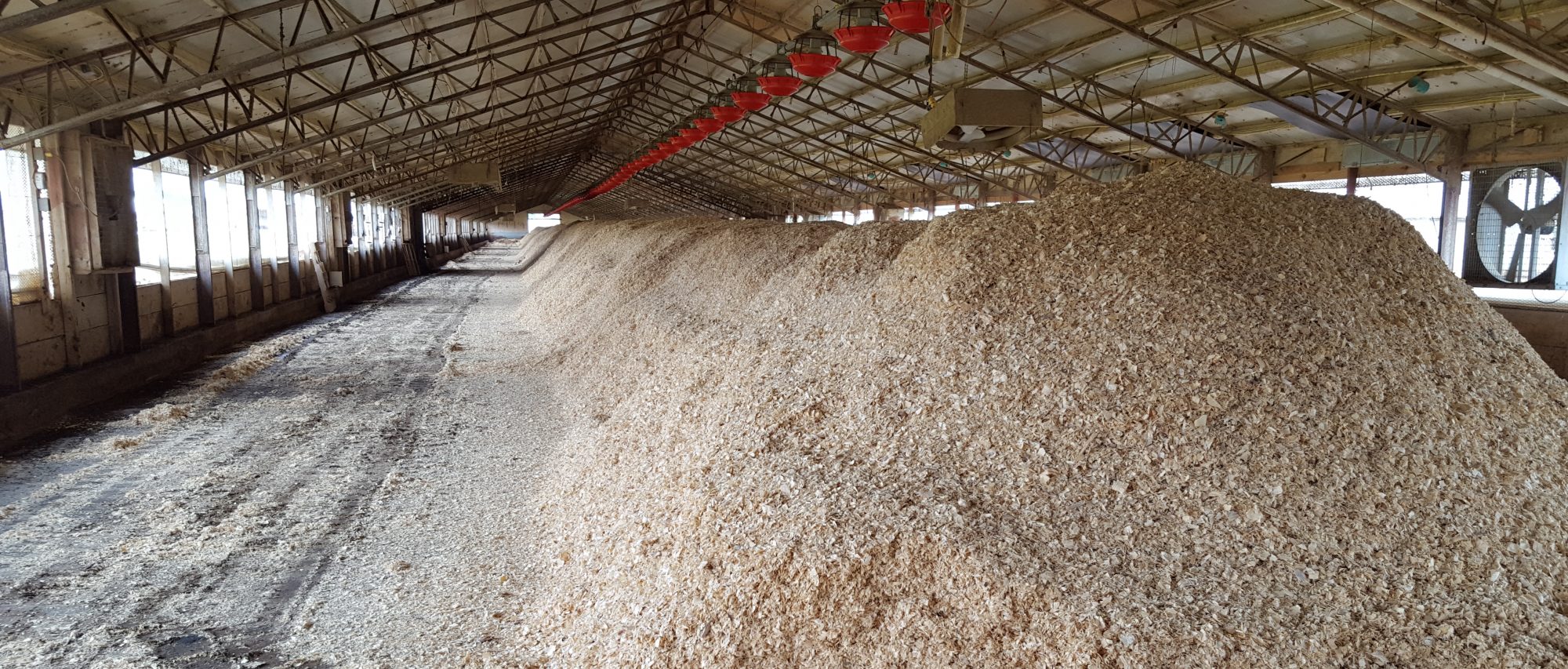
A biofilter is simply a porous layer of organic material, typically wood chips or a mixture of compost and wood chips, that supports a population of microbes. Odorous building exhaust air is forced through this material and is converted by the microbes to carbon dioxide and water. The compounds in the air are transferred to a wet biofilm that grows on the filter material where microorganisms breakdown the odorous compounds.

Biofiltration can reduce odor and hydrogen sulfide (H2S) emissions by as much as 95% and ammonia by 65%. The method has been used in industry for many years and was recently adapted for use in livestock and poultry systems. Biofilters work in mechanically ventilated buildings or on the pit fans of naturally ventilated buildings. Biofilters can also treat air vented from covered manure storage.

Two configurations of biofilters are being used to treat exhaust air from swine buildings: a horizontal media bed and a vertical media bed. Horizontal biofilters require more land area but are less expensive than vertical biofilters. Horizontal beds can be shallow (< 0.45 m) or deep (> 0.75 m).

Applicability and Mitigating Mechanism

Key factors influencing biofilter size and performance:

  • time the odorous gases spend in the biofilter
  • volume of air treated
  • moisture content of the filter material
  • sizing the biofilter media volume
  • selecting fans capable to push the air through the biofilter
  • choosing biofilter media

Limitations

  • Biofilters are only effective when there is a captured air stream
  • Media moisture content effects the biofilter performance, i.e. dry media results in poor odor reduction
  • Media porosity is related to the fan’s ability to move air through the biofilter. If media is less than 50% porosity most agriculture ventilation fans will not perform satisfactorily

Cost

Costs to install a biofilter include the cost of the materials—fans, media, ductwork, plenum—and labor. Typically, cost for new horizontal biofilter on mechanically ventilated buildings will be between $150 and $250 per 1,700 m3/hr (1,000 cfm). A vertical biofilter is approximately 1.5 times the cost of a horizontal biofilter. Annual operation/maintenance of the biofilter is estimated to be $5-$10 per 1,700 m3/hr (1,000 cfm). This includes the increase in electrical costs to push the air through the biofilter and the cost of replacing the media after 5 years.

Authors

R.E. Nicolai1, K.J. Janni2, D.R. Schmidt21South Dakota State University, 2University of Minnesota
Point of Contact:
Richard Nicolai, richard.nicolai@sdstate.edu

The information provided here was developed for the conference Mitigating Air Emissions From Animal Feeding Operations Conference held in May 2008. To obtain updates, readers are encouraged to contact the author.

Methane Emissions from Dairy Cattle

Reprinted, with permission, from the proceedings of: Mitigating Air Emissions From Animal Feeding Operations Conference.

This Technology is Applicable To:

Species: Dairy
Use Area: Animal Housing
Technology Category: Diet Modification
Air Mitigated Pollutants: Methane

System Summary

There are a large number of options that can potentially be used to mitigate methane emissions from dairy cattle. The basic result of using these approaches is an improvement in the efficiency of nutrient use in the animal and increased productivity. Methane emissions per unit of milk produced will decrease as a result of these changes. An important component is continuing to improve forage quality. Higher quality forages have higher digestibility in the cow and less methane emissions than lower quality forages. A second approach is to better balance the diet protein and carbohydrate fractions to improve the efficiency of both rumen fermentation and feed nutrient use. Methane emissions will be reduced as a result. There are also opportunities to provide specific feed additives to decrease methane emissions from the cow. Their use is currently limited due to lack of data to demonstrate their efficacy in lactating dairy cows. Ionophores are one feed additive that does have data indicating improved feed efficiency and decreased methane emissions.

Applicability and Mitigating Mechanism

Potential mitigation options include:

  • Improved forage quality
  • Rations balanced to improve efficiency of rumen fermentation
  • Use of ionophores in rations

Limitations

  • Many options will require some financial investment
  • Management changes may be needed
  • Requires a systems approach
  • Feed additives that could be helpful in reducing methane emissions have not been tested in animal trials
  • Cost to benefit ratio cannot be defined for many practices that could be use

Cost

The cost of practices that could be implemented on a dairy farm to reduce methane emissions will be highly farm specific. Each farm will need to evaluate the available mitigation options to determine the best choices for their situation. The costs for implementation will also vary between farms due to differences in their current cost structures. The initial benefits to the farm will be improved efficiency of animal production, efficiency of nutrient use and improved profitability.

Authors

Larry Chase, Cornell University
Point of Contact:
Dr. L.E. Chase, lec7@cornell.edu

The information provided here was developed for the conference Mitigating Air Emissions From Animal Feeding Operations Conference held in May 2008. To obtain updates, readers are encouraged to contact the author.

A Review of Manure Injection to Control Odor and Ammonia Emissions During the Land Application of Manure Slurries

Reprinted, with permission, from the proceedings of: Mitigating Air Emissions From Animal Feeding Operations Conference.

The proceedings, “Mitigating Air Emissions from Animal Feeding Operations”, with expanded versions of these summaries can be purchased through the Midwest Plan Service.

This Technology is Applicable To:

Species: Swine, Dairy, Beef
Use Area: Land Application
Technology Category: Management (manure injection/incorporation)
Air Mitigated Pollutants: Odor, Ammonia

System Summary

Manure slurry injection provides a significant reduction in land application odor and ammonia emissions release when compared to conventional manure surface broadcasting. Release of odor and ammonia during land application can be reduced by more than 90% compared to conventional application methods (Ohio State University, 2007). Manure can be successfully injected in both conventional tillage and no-till systems with currently available equipment. Additionally, slurry tanker wagons currently used for broadcast application can also be retrofitted with Injection tool bars.

Research by Hanna et al., (2000) compared the odor and ammonia emissions from various types of manure injection techniques to slurry that was surface applied (broadcasted). Odor and ammonia tests were run for both fall and spring slurry application. Ammonia was below the detection limit (0.2 ppm) for all but two (measured at 0.6 and 1.3 ppm) of the 72 samples taken. Broadcast application required approximately four to five times more fresh air dilutions than injection to reach the odor threshold (the level at which the odor can no longer be detected) indicating much lower odor release associated with injection.

Applicability and Mitigating Mechanism

  • Injection tools create sub-surface cavities
  • Slurry is injected into the cavity directly behind the tool
  • Injection minimizes slurry exposure to air reducing odor and ammonia volatilization
  • Injection can be used with all slurry and liquid manures

Limitations

  • Injection systems are not currently commercially available for solid manures
  • Injection can require up to 30% more tractor horsepower than broadcast
  • Injection may not be desirable when the producer does not want the soil or crop root system disturbed (forages, pasture/sod)
  • Injection equipment requires more maintenance than broadcast equipment

Cost

Generally, injection is more costly than broadcast application. Injection requires more tractor horsepower and more equipment (injection tool bars). Because tool bars are pulled through the soil, wear and maintenance is greater with injection systems. Cost increases as application rate decreases and distance from the manure storage site increases. The increase in cost as application rate decreases is due to wear on the application equipment. At lower application rates, field speed is increased causing wear (and eventually maintenance) on the equipment to increase. At a 5,500 gallons per acre application rate, commercial drag hose injection cost is currently $.014/gal compared to $.0085/gal for broadcast (Puck, 2008).

Authors

Ross Muhlbauer1, Jeremy Puck2, Ben Puck2, Robert Burns1, 1Iowa State University, 2 Puck Custom Enterprises
Point of Contact:
Ross Muhlbauer, rmuhlbar@iastate.edu

The information provided here was developed for the conference Mitigating Air Emissions From Animal Feeding Operations Conference held in May 2008. To obtain updates, readers are encouraged to contact the author.

Effect on Residue Cover and Crop Yield of Manure Incorporation Equipment

Reprinted, with permission, from the proceedings of: Mitigating Air Emissions From Animal Feeding Operations Conference.

The proceedings, “Mitigating Air Emissions from Animal Feeding Operations”, with expanded versions of these summaries can be purchased through the Midwest Plan Service.

This Technology is Applicable To:

Species: Swine, Dairy, Beef
Use Area: Land Application
Technology Category: Management (manure injection/incorporation)
Air Mitigated Pollutants: Odor, Hydrogen Sulfide

System Summary

Injection or incorporation application treatments other than broadcast almost always reduce odor during and immediately after application and have a neutral or beneficial effect on crop yield. Although the amount of odor reduction among various injection and incorporation treatments may be similar, the level of surface residue cover reduction is different. For land areas where erosion is a concern operating an application system with no more than an appropriate amount of soil and residue disturbance should be strongly considered. Costs of using injection or incorporation equipment are on the order of $0.001 to $0.003 per gallon applied depending on the type of equipment and annual volume applied. Additional application costs for using injection or incorporation equipment even in the upper end of this range are typically not greater than the cost of a secondary tillage pass. The choice of injection or incorporation style should be strongly influenced by balancing the needs for odor control, residue cover maintenance, and fertilizer placement for the subsequent crop.

Applicability and Mitigating Mechanism

  • Odor is reduced with minimal soil contact
  • Residue cover protects soil prone to erosion
  • Tillage and fertility placement may be beneficial depending on conditions
  • Greater options on flatter fields

Limitations

  • Fragile residue cover is strongly affected by equipment type and usage
  • Reduced residue cover may accelerate erosion
  • Drawbar power required may be increased
  • Needs of odor control, erosion control, and fertilizer placement should be considered

Cost

Factors affecting costs include the initial cost of the application toolbar, annual usage rate, and increased tractor power requirement to pull the injection device. Calculated costs are associated with either a custom annual application volume of 20 million gallons or private application volume of 3 million gallons, 5- (custom) or 15- (private) year equipment life, and application with a double-disc or narrow knife system. Costs of using a double-disc or narrow knife application toolbar are in the range of $0.001 and $0.002 per gallon, respectively, for the higher-volume custom applicator example. Costs are $0.0015 and 0.003 per gallon, respectively, for the lower-volume private applicator example. Costs of using additional tractor power are roughly one-third to one-half of total costs at the smaller annual application volume, but over three-fourths of costs at the higher application volume. Diesel fuel was valued at $3 per gallon. If the pass of a field tillage implement is eliminated (e.g., strip tillage) because of application, costs of injection or incorporation may be balanced by savings in the cost of the tillage pass.

Authors

H. Mark Hanna1, Steven K. Mickelson1, Steven J. Hoff11Iowa State University
Point of Contact:
H. Mark Hanna, hmhanna@iastate.edu

The information provided here was developed for the conference Mitigating Air Emissions From Animal Feeding Operations Conference held in May 2008. To obtain updates, readers are encouraged to contact the author.]

Gas Impermeable Film and Sheet for Control of Methane and Odors in Agricultural Applications

Reprinted, with permission, from the proceedings of: Mitigating Air Emissions From Animal Feeding Operations Conference.

The proceedings, “Mitigating Air Emissions from Animal Feeding Operations”, with expanded versions of these summaries can be purchased through the Midwest Plan Service.

This Technology is Applicable To:

Species: Swine, Dairy, Beef, Poultry
Use Area: Manure Storage, Manure Treatment
Technology Category: Covers
Air Mitigated Pollutants: Odors, Methane, Ammonia

System Summary

For many years, food packaging has incorporated barrier layers to contain odors, flavors, oils and moisture along with the food contents while excluding contamination and oxygen. Until recently, agricultural films and geomembranes were monolithic structures employing only a single polymer or blend. Recent advances in extrusion and lamination equipment allow the incorporation of these barrier layers in large scale agricultural structures and operations such as floating covers over animal waste storage, containment geomembranes for biogas generation, silage storage and fumigation films.

To view the video in full screen, click the icon second from right on the bottom of the viewer.
Download a copy of this video

Co-extruding a thin layer of ethylene vinyl alcohol (EVOH) in a linear low density polyethylene (LLDPE) geomembrane dramatically reduces the permeability to a wide range of gases and volatile organic carbon molecules including: methane, ammonia, carbon dioxide, oxygen, aromatic hydrocarbons, aliphatic hydrocarbons, methyl bromide and most odorous compounds. Methane permeabilites for four geomembranes are given below.

Methane Permeability (cc/(m2*day))
PVC LLDPE HDPE Barrier LLDPE
0.76 mm (30 mils) 1.0 mm (40 mils) 1.0 mm (40 mils) 0.5 mm (20 mils)
900 690 300 <1

Applicability and Mitigating Mechanism

  • Barrier to noxious gases and odors
  • Useful in cover and containment systems

Limitations

  • EVOH is a crystalline polymer and is not elastic. It is flexible but should not be used as part of an elastomeric structure.

Cost

Engineered floating covers with ballasted weight systems, gas extraction systems and rainwater removal systems costs vary greatly. For waste lagoon of about 1/2 acre in size, the cover system can cost from $150,000 to $200,000. Addition of the barrier layer to the geomembrane adds less than $5,000.

Authors

Gary Kolbasuk, Raven Industries, Engineered Films Division
Point of Contact:
Gary.Kolbasuk@Ravenind.com

The information provided here was developed for the conference Mitigating Air Emissions From Animal Feeding Operations Conference held in May 2008. To obtain updates, readers are encouraged to contact the author.

Characterizing Ammonia Emissions from Swine Farms in Eastern North Carolina – Part II. Potential Environmentally Superior Technologies for Waste Treatment

Reprinted, with permission, from the proceedings of: Mitigating Air Emissions From Animal Feeding Operations Conference.

This Technology is Applicable To:

Species: Swine
Use Area: Manure Storage
Technology Category: Other Treatments
Air Mitigated Pollutants: Ammonia, Odors, Pathogens

System Summary

The need for developing environmentally superior and sustainable solutions for the management of animal waste is vital for the future of animal farms in North Carolina, the U.S. and the world. In addressing that need, the North Carolina Attorney General initiated the development, implementation, and evaluation of environmentally superior swine waste management technologies (ESTs) that would be appropriate to each category of hog farms in North Carolina. This study focuses on the emissions of nitrogen in the form of NH3 from different components/processes involved in hog waste handling and treatment, including waste storage lagoons, hog houses, and spray fields at eight selected EST sites.

A flow-through dynamic chamber system and two sets of open-path FTIR spectrometers measured NH3 fluxes continuously from water holding structures and emissions from housing units at the EST and conventional LST sites. In order to compare the emissions from the water-holding structures at the ESTs with those from the lagoons at the conventional sites under similar conditions, a statistical-observational model for lagoon NH3 flux was used. A mass balance approach was used to quantify the emissions. All emissions were normalized by nitrogen excretion rates.

Six of the eight ESTs that contained an anaerobic lagoon as part of the system did not substantially reduce ammonia emissions and therefore require additional technical modifications to be qualified as unconditional EST relative to ammonia emissions reductions. Two of the eight ESTs did not contain an anaerobic lagoon component. Both of these farms showed substantial reductions in NH3 emissions from their water-holding structures. Under the conditions reported herein these two potential ESTs meet the criteria established for ammonia emissions as described for ESTs.


Applicability and Mitigating Mechanism

  • Differs for each of the ESTs

Limitations

  • Differs for each of the ESTs

Cost

Is different for each of the ESTs (range is approximately $90-400 reported as 10 year annualized cost ($ per 1000 lbs. steady state live weight per year).


Authors

V.P. Aneja1, S.P. Arya1, I.C. Rumsey1, C.M. (Mike) Williams21Department of Marine, Earth and Atmospheric Sciences North Carolina State Univesity, 2 Department of Poultry Science, & Director, Animal and Poultry Waste Management Center, North Carolina State University
Point of Contact:
Viney P. Aneja, viney_aneja@ncsu.edu

The information provided here was developed for the conference Mitigating Air Emissions From Animal Feeding Operations Conference held in May 2008. To obtain updates, readers are encouraged to contact the author.

Characterizing Ammonia Emissions from Swine Farms in Eastern North Carolina – Part I. Conventional Lagoon and Spray Technology for Waste Treatment

Reprinted, with permission, from the proceedings of: Mitigating Air Emissions From Animal Feeding Operations Conference.

This Technology is Applicable To:

Species: Swine
Use Area: Manure Storage
Technology Category: Anaerobic Lagoon, Management
Air Mitigated Pollutants: Ammonia

System Summary

The conventional lagoon and spray technology (LST), is the current system predominantly used in North Carolina to manage pig waste. It consists of anaerobic lagoons to store and biologically treat pig waste (~99.5% liquid). Effluent from the lagoons is sprayed on surrounding crop fields as a nutrient source. Four distinct components and associated processes of LSTs release NH3 to the atmosphere: (1) production houses, (2) waste storage and treatment systems such as lagoons, (3) land application through injection or spraying, and (4) biogenic emissions from soils and crops

Applicability and Mitigating Mechanism

  • Anaerobic lagoons used to store and biologically treat hog manure
  • Manure sprayed on crops as source of nutrients


Limitations

  • Significant emissions of ammonia, odor and potential pathogens
  • Flooding during extreme weather events


Cost

Ten year annualized costs for a “Baseline” LST for a 4,320-head finishing farm using a pit recharge system of manure removal is predicted to be approximately $90 per 1,000 lbs. steady state live weight per year (Williams, 2006. see Table 8a, page 58 – Development of Environmentally Superior Technologies. 2006. Phase 3 Technology Determination Report, published by NCSU College of Agriculture and Life Sciences, 716 pgs, on file with NCSU Animal and Poultry Waste Management Center (March 8,2006). Also available at www.cals.ncsu.edu/waste_mgt/

Authors

V.P. Aneja1, S.P. Arya1, I.C. Rumsey1, C.M. (Mike) Williams21Department of Marine, Earth and Atmospheric Sciences North Carolina State Univesity, 2 Department of Poultry Science, & Director, Animal and Poultry Waste Management Center, North Carolina State University
Point of Contact:
Viney P. Aneja, viney_aneja@ncsu.edu

The information provided here was developed for the conference Mitigating Air Emissions From Animal Feeding Operations Conference held in May 2008. To obtain updates, readers are encouraged to contact the author.

Management of Dairy Operations to Prevent Excessive Ammonia Emissions

Reprinted, with permission, from the proceedings of: Mitigating Air Emissions From Animal Feeding Operations Conference.

This Technology is Applicable To:

Species: Dairy
Use Area: Animal Housing, Manure Storage
Technology Category: Management
Air Mitigated Pollutants: Ammonia

System Summary

Ammonia emissions data from open-lot and hybrid (combination of free-stalls and open-lots) dairies in the milder climate of southwest US indicated that summer emissions from these facilities were nearly 50% higher than winter emissions. Due to their large surface areas, lagoons and open-lot corrals were the highest contributors of NH3 emissions but little NH3 was emitted from lagoons during the winter months. Within open-lot corrals and free-stalls, NH3 emissions increased with greater manure loading and actively composting manure emitted considerable NH3 even during winter months. While reduction in dietary N intake is known to reduce manure nitrogen content, no information on technologies to mitigate NH3 emissions from these two types of dairy operations is available. Management practices such as frequent removal of manure from heavily loaded areas of open-lots and free-stalls, proper management of lagoons and other manure storage structures, summer irrigation of lagoon effluent during cooler temperatures, and where possible, incorporation or injection of effluent will help reduce excessive NH3 emissions. While frequent scrapping of targeted open-lot corral areas can be achieved without substantial increase in costs, covering lagoons to reduce NH3 emissions will be a very expensive mitigation practice.

Applicability and Mitigating Mechanism

  • Ammonia volatilization rate from dairy manure and processes generated waste water exposed to the environment depends upon total ammonium concentration, pH, moisture content, air velocity, temperature etc.
  • The management practices apply to mitigation of excessive NH3 emitting from open-lot corrals, lagoons, and free-stall surface of dairy operations
  • Existing dairy waste management practices can be adopted to reduce excessive NH3 emissions from critical sites at the dairy operation and during effluent irrigation during summer season


Limitations

  • Lack of excess fresh or recycled water for frequent flushing
  • Lack of extra storage capacity of retention control structures (RCS) to store additional flushed effluent.
  • Terminating or relocating the composting system out of the dairy operation


Cost

Increased frequency of flushing will require more fresh or recycled water as well as a higher storage capacity of an existing RCS or building a new one, adding higher costs to implement this practice. Another substantial cost may be covering large storage and treatment structures such as anaerobic lagoons to reduce NH3 emissions.

Authors

Saqib Mukhtar, Atilla Mutlu, Shafiqur Rahman
Texas A&M University System
Point of Contact:
Saqib Mukhtar, mukhtar@tamu.edu

The information provided here was developed for the conference Mitigating Air Emissions From Animal Feeding Operations Conference held in May 2008. To obtain updates, readers are encouraged to contact the author.