Balancing Earth, Air and Fire In The Kansas Flint Hills

Waste to Worth: Spreading science and solutions logoWaste to Worth home | More proceedings….

Abstract

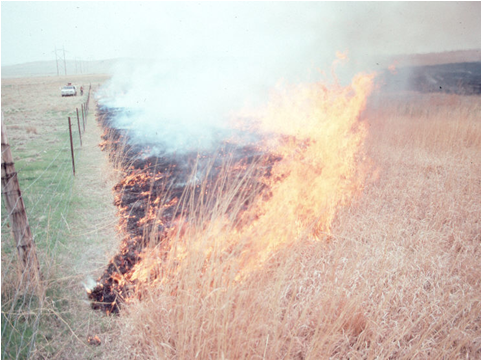
Native Americans placed great value on the four elements of life,  earth, water, air and fire. They recognized, as we do today, that fire is the most powerful land management tool. The 4.8 million acre Flint Hills region of Kansas is the largest remaining expanse of tallgrass prairie in North America.   Prescribed fire is routinely practiced in the region to enhance livestock forage quality, control invasive species, provide grassland wildlife habitat and improve plant vigor.  But where there is fire, there is smoke, and there are public health concerns when excessive smoke is in the atmosphere.   Ground level ozone can have serious public health consequences and major cities adjacent to the Flint Hills, have recorded excessive ozone levels resulting from Flint Hills prescribed fire.   A collaborative effort including the Kansas Dept of Health & Environment, EPA,  K-State Research & Extension, Kansas Livestock Association and other groups completed the Flint Hills smoke management plan in December, 2010, with the objective of reducing health concerns from prescribed fire, while retaining it as a land management tool.  The plan established a  website of “best smoke management practices” and a comprehensive education and outreach effort for land managers was implemented, involving prescribed fire schools, news articles and radio airplay.   Results of the plan are positive, indicating  that Kansas has responded to the smoke issue appropriately and will retain prescribed fire as a management practice that maintains both the tallgrass prairie of the hills, and the air quality of adjacent metro areas.  The inter-relationships of earth, water, air and fire are continual, each impacting the other.   The Kansas Flint Hills now has a plan to ensure harmony of these essential elements of life.

A prescribed fire in the Kansas Flint Hills

Prescribed Fire in Tallgrass Prairie

The Flint Hills Smoke Management Plan is a collaborative effort designed to maintain the benefit of prescribed fire on the private grasslands of the Flint Hills, while also protecting the air quality of ajor metropolitan areas such as Kansas City and Wichita.   The Flint Hills have particular environmental implications, as they are the largest expanse of tallgrass prairie remaining in North America.

What Did We Do?

Kansas Department of Health and Environment wrote the plan, but embraced those involved with the issue, including K-State Research and Extension, the KS Livestock Association, Farm Bureau, Tallgrass Legacy Alliance, KS Prescribed Fire Council, Cities of Wichita and Kansas City, Natural Resource Conservation Service, KS Dept. of Wildlife Parks & Tourism to develop a plan that would address the goals of all those involved.   A website was developed to give ranchers day by day information regarding smoke emission and direction from a prescribed fire that day or the following day.

What Have We Learned?

Those that practice prescribed fire in the Kansas Flint Hills respect the health and environment of their city neighbors.   Conversely, those living in neighboring metropolitan areas understand the economic importance of prescribed fire as related to beef cattle production, and the role fire plays in preserving the integrity of the tallgrass prairie.   By engaging all entities involved, agreements can be reached, solutions can be found and advancements can be made.

Prescribed fire controls woody species, maintaining the integrity of the tallgrass prairie.

Future Plans

In the years ahead,  KS Dept of Health and Environment will continue monitoring smoke emissions due to prescribed fire in the Flint Hills.  Those practicing prescribed fire will be encouraged to use the best smoke management methods of prescribed fire.   This will be done through K-State Research & Extension prescribed fire schools, the KS Prescribed Fire Council workshops and the KDHE website.

Authors

Jeff Davidson  K-State Research & Extension Watershed Specialist      Kansas State University     jdavidso@ksu.edu

Additional Information

http://ksfire.org

Acknowledgements

K-State Research & Extension, Kansas Precribed Fire Council, Kansas Livestock Association, KS Dept. of Health & Environment,  Tallgrass Legacy Alliance, KS Dept. of Wildlife, Parks & Tourism, Natural Resource Conservation Service, Farm Bureau, Cities of Wichita and Kansas City.


The authors are solely responsible for the content of these proceedings. The technical information does not necessarily reflect the official position of the sponsoring agencies or institutions represented by planning committee members, and inclusion and distribution herein does not constitute an endorsement of views expressed by the same. Printed materials included herein are not refereed publications. Citations should appear as follows. EXAMPLE: Authors. 2013. Title of presentation. Waste to Worth: Spreading Science and Solutions. Denver, CO. April 1-5, 2013. URL of this page. Accessed on: today’s date.
Manure management and temperature impacts on gas concentrations in mono-slope cattle facilities

Waste to Worth: Spreading science and solutions logoWaste to Worth home | More proceedings….

Why Study Air Emissions from Mono-slope Beef Barns?

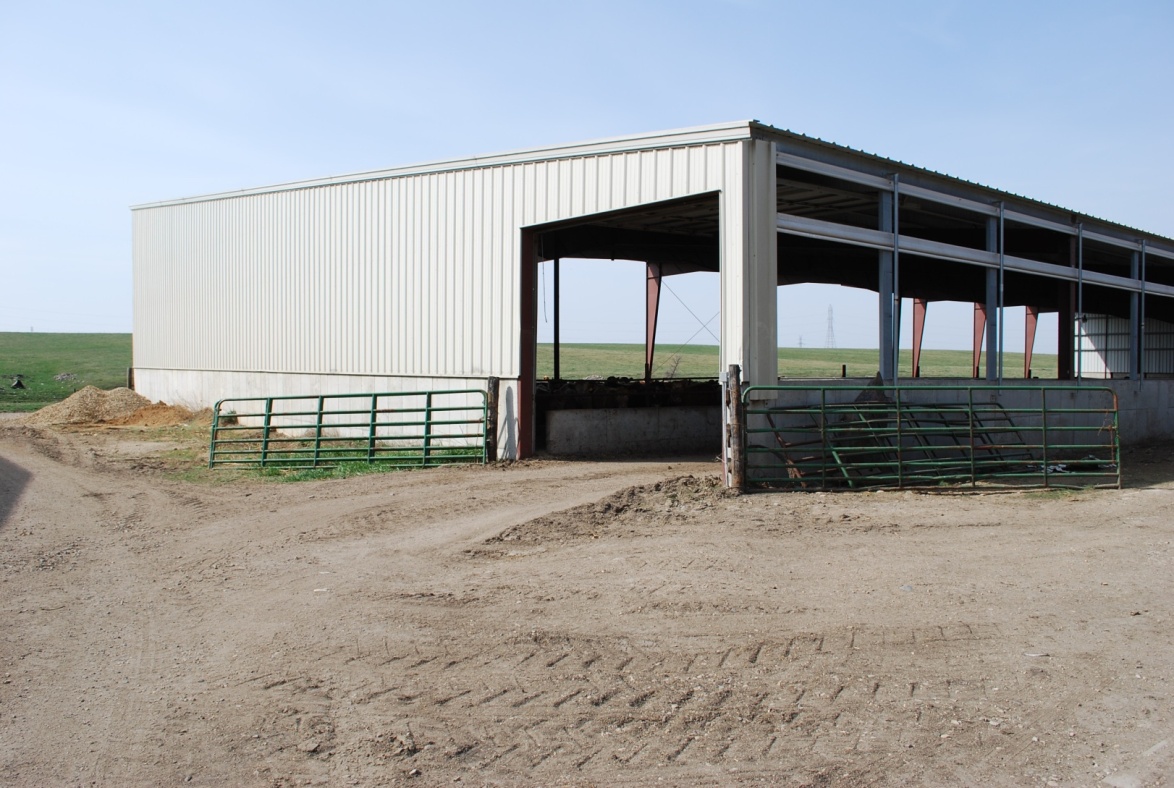
Mono-slope buildings (Figure 1) are one type of roofed and confined cattle feeding facility that is becoming increasingly popular in the Northern Great Plains. However, little is known about the impact of these housing systems and associated manure management methods on the air quality inside and outside the barn.  The objective of this study was to determine gas concentrations in mono-slope beef cattle facilities and relate these concentrations to environmental and manure management factors.

Figure 1. View of a monoslope cattle facility from the northeast. Adjustable curtains in the rear (north) wall are used to limit airspeed through the barn during colder weather.

What Did We Do?

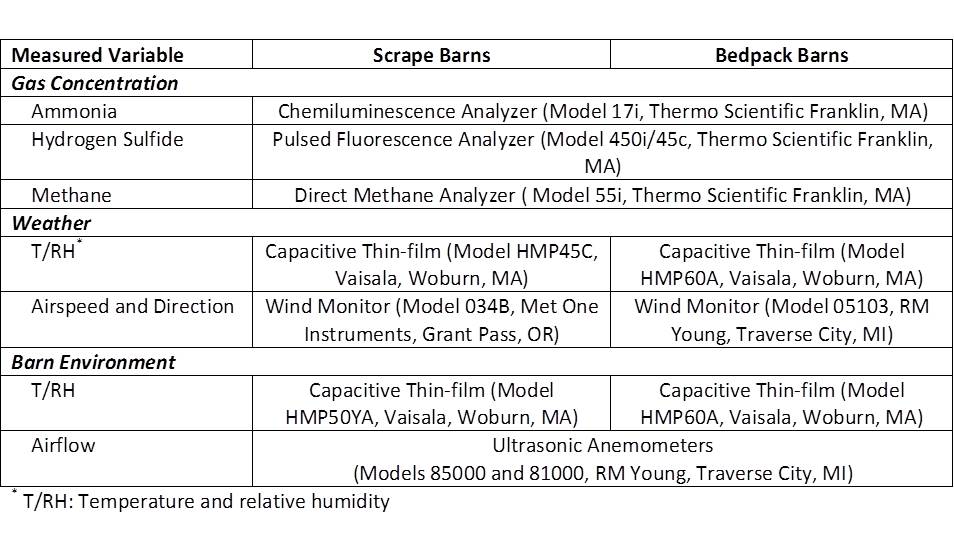
Four producer-owned and operated beef deep-bedded mono-slope facilities were selected for monitoring. Two barns maintained deep-bedded manure packs (Bedpack), whereas two barns scraped manure and bedding from the pens weekly (Scrape). Each site was monitored continuously for one month each quarter for two years to capture both daily and seasonal variations. At each facility, the environment-controlled instrument trailer and associated equipment were located adjacent to the barn. The trailer contained:  a gas sampling system (GSS) that consisted of Teflon tube sample lines connected to a computer-controlled sampling manifold, gas analyzers, computer, data acquisition system, calibration gas cylinders, and other supplies. In addition to the sampling lines, there were environmental instruments to measure the airflow and weather conditions for two pens in each barn. The analyzers and sensors used are summarized in Table 1.

Table 1. Analyzers and sensors used for air quality and environmental monitoring

Ammonia, hydrogen sulfide and methane concentrations were sequentially sampled from two south wall locations and three north wall locations per pen. The maximum hourly mean concentrations measured at the north or south wall of either pen in the barn were used in this analysis. The seasonal average hourly means of maximum concentrations and corresponding environmental variables were calculated.

What Have We Learned?

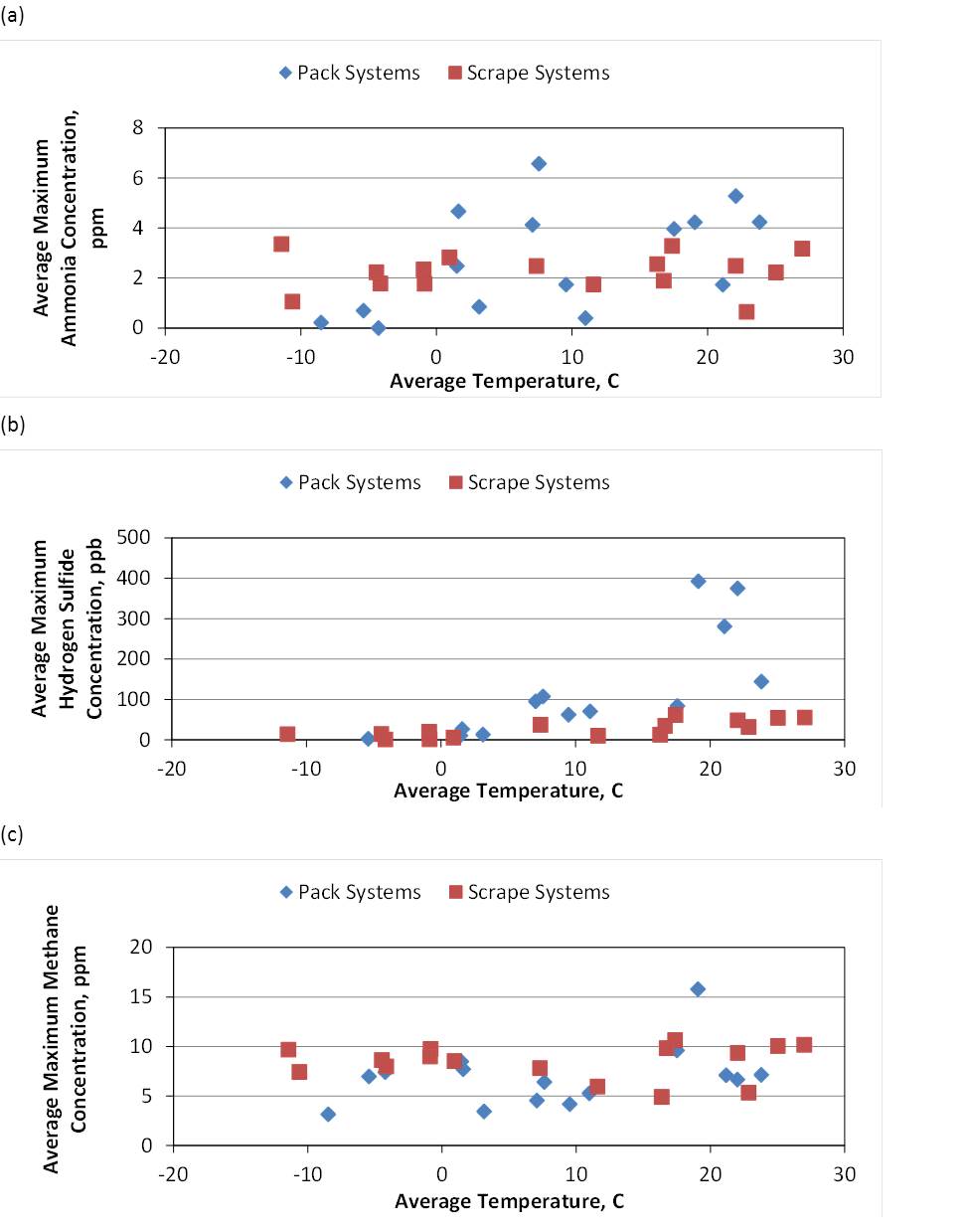
Figure 2. Seasonal averages of maximum hourly mean ammonia (a), hydrogen sulfide (b) and methane (c) concentrations for the bedpack and scrape manure management systems monitored in four monoslope cattle facilities, as influenced by ambient temperature.

The seasonal average hourly maximum ammonia concentration ranged from 0.6 to 3.3 ppm with the Scrape barns and from 0.2 to 7.1 ppm with the Bedpack barns (Fig 2a). The range of maximum hydrogen sulfide concentrations was 0 to 61 ppb in the Scrape barns and 0 to 392 ppb in the Bedpack barns (Fig 2b). The maximum methane concentration ranges were 4.9 to 10.6 and 3.1 to 15.8 ppm in the Scrape and Bedpack barns, respectively (Fig 2c). There are indications of differences between gas release rates for bedpack and scrape manure management systems and increased release rates with temperature for ammonia and hydrogen sulfide. Methane concentrations were more consistent between systems and for different temperature conditions.

This project expands the knowledge base of gaseous concentrations from deep-bedded beef barns. This integrated project also provides management techniques that producers can implement to minimize emissions, and improve air quality.

Future Plans

Emission values will be calculated using these concentration data, in conjunction with airflow data, which also varies with site and temperature conditions.

Authors

Erin L. Cortus, Assistant Professor, South Dakota State University, erin.cortus@sdstate.edu

Md Rajibul Al Mamun, Graduate Research Assistant, South Dakota State University

Ferouz Y. Ayadi, Graduate Research Assistant, South Dakota State University

Mindy J. Spiehs, Research Animal Scientist, USDA ARS Meat Animal Research Center

Stephen Pohl, Professor, South Dakota State University

Beth E. Doran, Extension Beef Program Specialist, Iowa State University Extension and Outreach

Kris Kohl, Extension Ag Engineer Program Specialist, Iowa State University Extension and Outreach

Scott Cortus, Engineering Research Technician, South Dakota State University

Richard Nicolai, Associate Professor (Retired), South Dakota State University

Additional Information

Acknowledgements

Project funded by Agriculture and Food Research Initiative Competitive Grant no. 2010-85112-20510 from the USDA National Institute of Food and Agriculture. Technical assistance provided by Alan Kruger, John Holman, Todd Boman, and Bryan Woodbury.

The authors are solely responsible for the content of these proceedings. The technical information does not necessarily reflect the official position of the sponsoring agencies or institutions represented by planning committee members, and inclusion and distribution herein does not constitute an endorsement of views expressed by the same. Printed materials included herein are not refereed publications. Citations should appear as follows. EXAMPLE: Authors. 2013. Title of presentation. Waste to Worth: Spreading Science and Solutions. Denver, CO. April 1-5, 2013. URL of this page. Accessed on: today’s date.
Effects of Corn Processing Method and Dietary Inclusion of Wet Distillers Grains with Solubles (WDGS) On Enteric Methane Emissions of Finishing Cattle

Waste to Worth: Spreading science and solutions logoWaste to Worth home | More proceedings….

Abstract

The use of wet distiller’s grains with solubles (WDGS) in feedlot diets has increased as a result of the growing U.S. ethanol industry.  However, few studies have evaluated the use of WDGS in finishing diets based on steam-flaked corn (SFC), the processing method used extensively in the Southern Great Plains.  The effects of corn processing method and WDGS on enteric methane (CH4) production, carbon dioxide (CO2) production and energy metabolism were evaluated in two respiration calorimetry studies.  In Exp. 1, the effects of corn processing method (SFC or dry rolled corn – DRC) and WDGS inclusion (0 or 30% of diet dry matter- DM) were studied using a 2 x 2 factorial arrangement of treatments and four Jersey steers in a 4 x 4 Latin square design.  In Exp. 2, the effects of WDGS inclusion rate (0, 15, 30, or 45% of diet DM) on CH4 and CO2 production were measured in a 4 x 4 Latin square design. Results indicate that cattle consuming SFC-based diets produce less enteric CH4 and retain more energy than cattle fed  DRC-based diets.  When dietary fat levels were held constant, dietary inclusion of WDGS at 15% of diet DM did not affect enteric CH4 production, WDGS inclusion at 45% of diet DM significantly increased enteric CH4 production and WDGS inclusion at 30% of diet DM had variable effects on enteric CH4 production.

Purpose

Our objectives were to determine the effects of corn processing method and WDGS inclusion rate on enteric methane losses from finishing cattle using respiration calorimetry.

What Did We Do?

Steer in open circuit respiration calorimetry chamber.

Eight steers were used in two studies.  In each study steers were fed one of four diets at 2 x maintenance energy requirements in a 4 x 4 Latin square design.  Each period of the Latin squares included a 16 d adaptation period followed by 5 days of total fecal and urine collection and measurement of gas exchange in respiration chambers.  In Experiment 1 dietary treatments consisted of corn processing method (steam flaked -SFC or dry rolled -DRC) and WDGS inclusion rate (0 or 30% of DM).  All diets were balanced for ether extract.   In Exp. 2, cattle were fed SFC-based diets containing 0, 15, 30 or 45% WDGS (DM basis).  The calorimetry system consisted of 4 chambers with an internal volume of 6500 L.   Outside air was pulled through chambers using a mass flow system.  Gas concentrations were determined using a paramagnetic oxygen analyzer and infrared methane and carbon dioxide analyzers (Sable Systems, Las Vegas, NV)  Data were statistically analyzed using the Mixed procedure of SAS.

What Have We Learned?

In Exp. 1. no iteractions between grain processing method and WDGS inclusion were detected (P > 0.47).  Cattle fed DRC-based diets had greater (P < 0.05) CH4 production (L/steer, L/kg of DMI, % of gross energy intake, and % of digestible energy intake) than cattle fed SFC-based diets probably the result of differences in ruminal fermentation and ruminal pH.  Methane losses as a proportion of GE intake (2.47 and 3.04 for SFC and DRC-based diets, respectively) were similar to previous reports and to IPCC (2006) values but were somewhat lower than EPA (2012) values.  Grain processing method did not affect CO2 production (13 to 14 Kg/d).  WDGS  inclusion rate did not affect CH4 or CO2 production.  In Exp. 2, CH4 production (L/d) increased quadratically (P = 0.03) and CH4 production as L/kg of DMI and as a proportion of energy intake increased linearly (P < 0.01) with increasing concentrations of WDGS in the diet.  Feeding WDGS did not affect (P > 0.23) total CO2 production.  Conclucions: Our results indicate that cattle consuming DRC-based finishing diets produce approximately 20% more enteric CH4 than cattle fed SFC-based diets.  When WDGS comprised 30% or less of the diet and diets were similar in total fat content, feeding WDGS had little effect on enteric CH4 but when fed at higher inclusion rates enteric CH4 production was increased by approximately 40%.

Future Plans

Over 80% of the enteric methane emissions of the U.S. beef cattle herd are produced by cows, calves, and yearling on pasture.  Therefore, additional research will study the effects of supplementation strategies and forage quality on enteric methane production by cattle.

Authors

N. Andy Cole; Research Animal Scientist/Research Leader; USDA-ARS-CPRL, Bushland, TX andy.cole@ars.usda.gov

Kristin E. Hales, Research Animal Scientist, USDA-ARS-MARC, Clay Center, NE

Richard W. Todd, Research Soil Scientist, USDA-ARS-CPRL, Bushland, TX

Ken Casey, Associate Professor, Texas AgriLife Research, Amarillo, TX

Jim C. MacDonald, Associate Professor, Dept. of Animal Science, Univ. of NE, Lincoln

Additional Information

Hales, K. E. , N. A. Cole, and J. C. MacDonald.  2013. Effects of increasing concentrations of wet distillers grains with solubles in steam-flaked corn-based diets on energy metabolism, carbon-nitrogen balance, and methane emissions of cattle. J. Anim. Sci. (in press)

Hales, K. E. , N. A. Cole, and J. C. MacDonald.  2012. Effects of corn processing method and dietary inclusion of wet distillers grains with solubles on energy metabolism, carbon-nitrogen balance, and methane emissions of cattle. J. Anim. Sci. 90:3174-3185.

Acknowledgements

Mention of trade names or commercial products in this article is solely for the purpose of providing specific information and does not imply recommendation or endorsement by the USDA.  USDA is an equal opportunity provider and employer.

We wish to thank USDA-NIFA for partial funding through Project # TS-2006-06009 entitled “Air Quality: Odor, Dust and Gaseous Emissions from Concentrated Animal Feeding Operations in the Southern Great Plains”

The authors are solely responsible for the content of these proceedings. The technical information does not necessarily reflect the official position of the sponsoring agencies or institutions represented by planning committee members, and inclusion and distribution herein does not constitute an endorsement of views expressed by the same. Printed materials included herein are not refereed publications. Citations should appear as follows. EXAMPLE: Authors. 2013. Title of presentation. Waste to Worth: Spreading Science and Solutions. Denver, CO. April 1-5, 2013. URL of this page. Accessed on: today’s date.

What Practices Increase Infiltration and Reduce Runoff on Slopes Greater Than 30%?

Waste to Worth: Spreading science and solutions logoWaste to Worth home | More proceedings….

Why Are We Concerned About Runoff on Farms?

Farming in the driftless region of Wisconsin where the steep fields and waterways are all connected to rivers and streams can have signficant risks to water quality.  Sediment and nutrient movement into streams, rivers, and lakes in this part of the state has always been an issue, and agriculture has been identified as the largest contributor.  This talk is given by a farmer living and farming in one of the most challenging areas of the country.

What Did We Do?

Home dairy farm

For seven years, the UW – Discovery Farm Program (DFP) and the United States Geological Survey (USGS) conducted a paired research project on a livestock operation in the driftless region of Wisconsin.  This farm consisted of about 800 acres of tillable acres where fields are steep (some >30% slope), and every one drains into a waterway or stream which eventually flows into the Mississippi River.

What Have We Learned?

The USGS installed two in-stream monitoring stations in two small headwater streams that divide the farm.  The north basin consists of 430 acres with 150 acres cropland, 250 acres woodland, and 30 acres pasture.  The south basin consists of 215 acres with 39 acres cropland and pasture, 107 acres woodland, and 69 acres in CRP/CREP.  The farming system uses a combination of conservation tools and techniques that have been adapted to fit the physical setting of the area, and the goals and vision of the producer who has a rich history of conservation. Harvesting precipitation is constantly at the forefront of operations through careful soil management, a network of small check dams and larger at-grade stabilization structures, and a focus on minimizing soil disturbance activities. Seven years of data indicated that almost all sediment losses occurred during a few large summer storms that exceed the design criteria.

Overlooking the dairy farm

Future Plans

This project is completed and all that remains is the development of outreach and education materials.

Authors

Joe Bragger, Dairy Farm Manager, Bragger Family Dairy,  braggfam@triwest.net

Dennis R Frame, Director, UW – Discovery Farms

Amber Radatz, Outreach Specialist, UW – Discovery Farms

Eric Cooley, Outreach Specialist, UW – Discovery Farms

Dam on the farm

Additional Information

Information is available through the website (http://www.uwdiscoveryfarms.org) or by contacting the office at 1-715-983-5668.

The authors are solely responsible for the content of these proceedings. The technical information does not necessarily reflect the official position of the sponsoring agencies or institutions represented by planning committee members, and inclusion and distribution herein does not constitute an endorsement of views expressed by the same. Printed materials included herein are not refereed publications. Citations should appear as follows. EXAMPLE: Authors. 2013. Title of presentation. Waste to Worth: Spreading Science and Solutions. Denver, CO. April 1-5, 2013. URL of this page. Accessed on: today’s date.

Mono-Slope Beef Barn Air Quality Research Project

monoslope beef barnResearchers and university specialists from USDA’s Meat Animal Research Center (USMARC), South Dakota State University, and Iowa State University recently finished a four-year study looking at mono-slope beef barns and how to improve cattle and environmental performance.
How Do Mono-slope Barns Stack Up For Air Quality?

A research team worked for three years to gather baseline data for the levels of gas emissions from mono-slope beef barns. The study involved a total of four mono-slope beef barns in South Dakota and Iowa. Researchers also evaluated two different manure-handling systems to determine if there are any differences in gas emissions.

The results of that study are summarized in a eight-page publication “Air Quality in Mono-Slope Bedded Beef Barns“. They measured ammonia, hydrogen sulfide, methane, carbon dioxide, and nitrous oxide. The first three are the primary focus of the publication, since those are most commonly associated with beef feedlots. Also discussed are impacts of building orientation, manure-handling system, pen density, bedding type, and curtain opening (ventilation).

Beef Facilities Conference

Over 300 people attended the November, 2013 conference on beef confinement buildings held in Sioux Falls, South Dakota. The recordings and written papers are linked below.

Environmental and Regulatory Aspects of Beef Barns

The page numbers next to each are the location of companion written papers in the Beef Facilities Conference proceedings.

  • Results of Air Quality Research on Mono-slope Bedded Beef Barns – pages 5-9.
  • Air Quality Regulations and implications of the air quality research project – pages 10-17

The third presentation focuses on manure and nutrient production, and nutrient management for manure produced in these systems.

  • Capturing, managing, and using nutrients from the barn – pages 18-21

Producer Panel – Virtual Tours

Four producers shared aspects of their different building designs including ventilation, manure management, what works well, and things they would change. Their summaries are on pages 22-26 of the Beef Facilities Conference Proceedings.

  • Hoop buildings – one farm tour and a short synopsis of different building designs in use in Iowa
  • Mono-slope buildings – narrow and wide designs
  • Slatted floor barn (with rubber mats) – originally built without mats

Cattle Performance and Comfort In Beef Barns

University specialists compared feed intake, animal performance, carcass characteristics, and management considerations with barns compared to other systems. The page numbers next to each are the location of a companion written paper in the Beef Facilities Conference Proceedings.

The third presentation looks at international and domestic research into the use of rubber mats in deep pit barns with concrete slats.

Webcasts

Two live webinars were recorded and archived. The presenters included researchers, extension specialists, and farmers.

Open Houses Provide Opportunities to Learn More

Photo of a bedded beef barn in South Dakota.
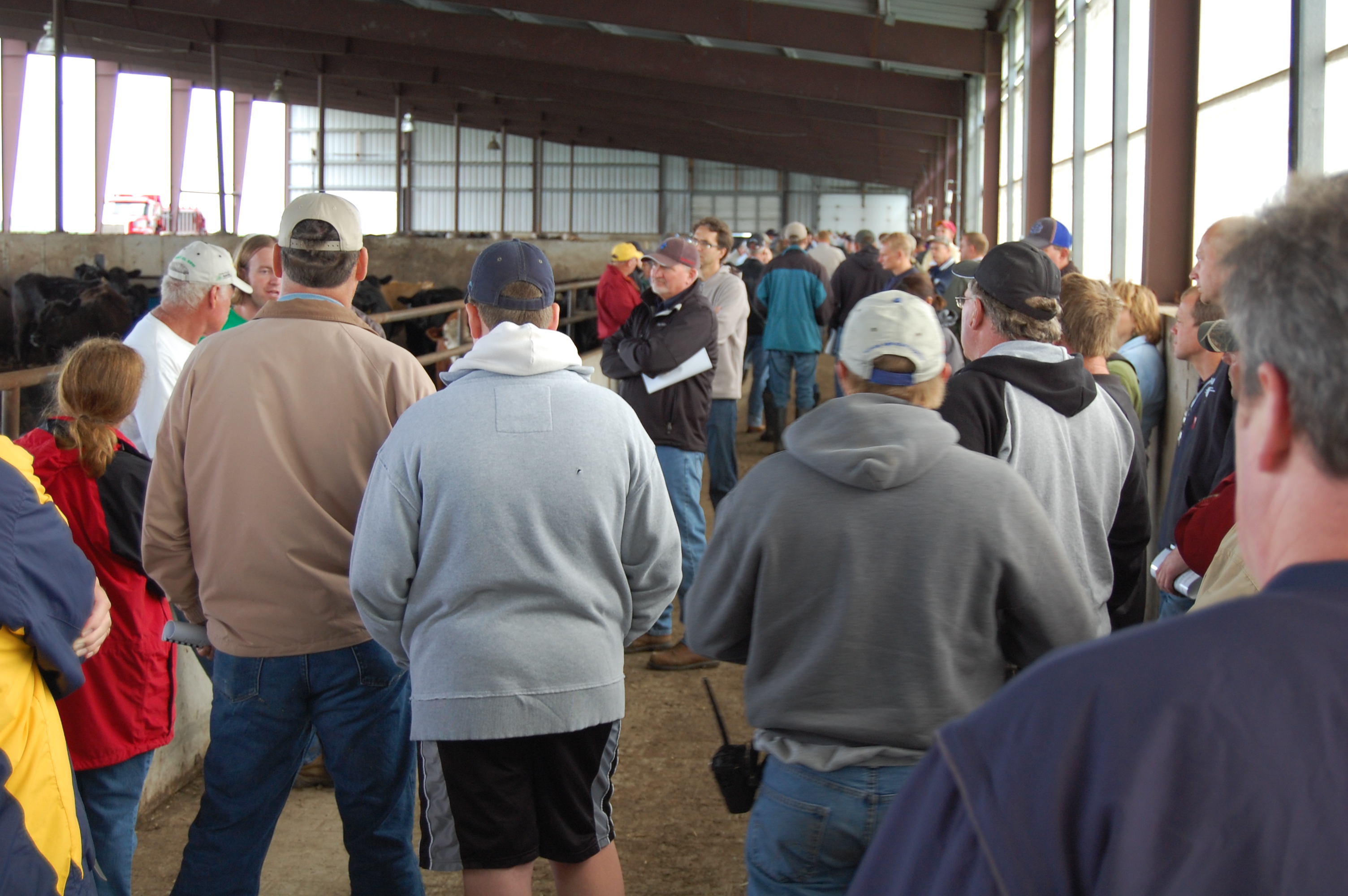
It was standing room only as participants listened to station presentations in the alleyway of the mono-slope barn.

As part of the outreach plan for this project, a series of open houses were scheduled to inform cattle producers, regulatory and technical agency staff, Extension employees, service providers and legislative and local policy-makers about air quality management and manure and environmental issues with these facilities.

Over 200 people from Iowa, Minnesota, South Dakota and Nebraska attended the Mono-Slope Beef Barn Open House in June of 2011. The open house was hosted by Ron and Clayton Christensen of Royal, Iowa and featured barn and manure management, cost-sharing opportunities, the tri-state air quality project and environmental regulations.

The open house was organized by ISU Extension and Outreach, SDSU Ag and Biosystems Engineering, and the USDA Meat Animal Research Center at Clay Center, NE.  Sponsors included Animal Medical Centers of Spencer, Clay County Cattlemen’s Association, Clay County Farm Bureau, Coalition to Support Iowa’s Farmers, Farm Credit Services of America -Emmetsburg, Spencer Ag Center and Spencer Chamber of Commerce Ag Committee.

second open house was hosted in South Dakota in August of 2011. The open house was hosted by Goodwin Heritage Cattle Company, with approximately 125 people in attendance from South Dakota and neighboring states. Sponsors included Coteau Hills Cattlemen’s Association, Watertown Chamber of Commerce Ag Committee, SPN & Associates, Glacial Lakes Energy LLC., Landmark Builders Inc., South Dakota Farm Bureau, Ag United for South Dakota, Banner Associates and Form-A-Feed, Inc.

As a result of the two open houses:

  • 95% had a better understanding of the air quality regulations and why this research is needed*
  • 88% learned where they could find financial resources to construct a mono-slope barn*
  • 89% had improved knowledge about how gases and dust are measured*

*Based on 19.7% participation in a short survey after each open house

Learn more about the successes of these open houses.

A facility tour, Science Behind Environmental Policy, was held June 22, 2012 in NW Iowa.  This tour was attended by state and federal legislators, state policy makers and stakeholders representing Extension and university specialists. Enthusiasm for research efforts was proclaimed by the legislators. See what they learned.

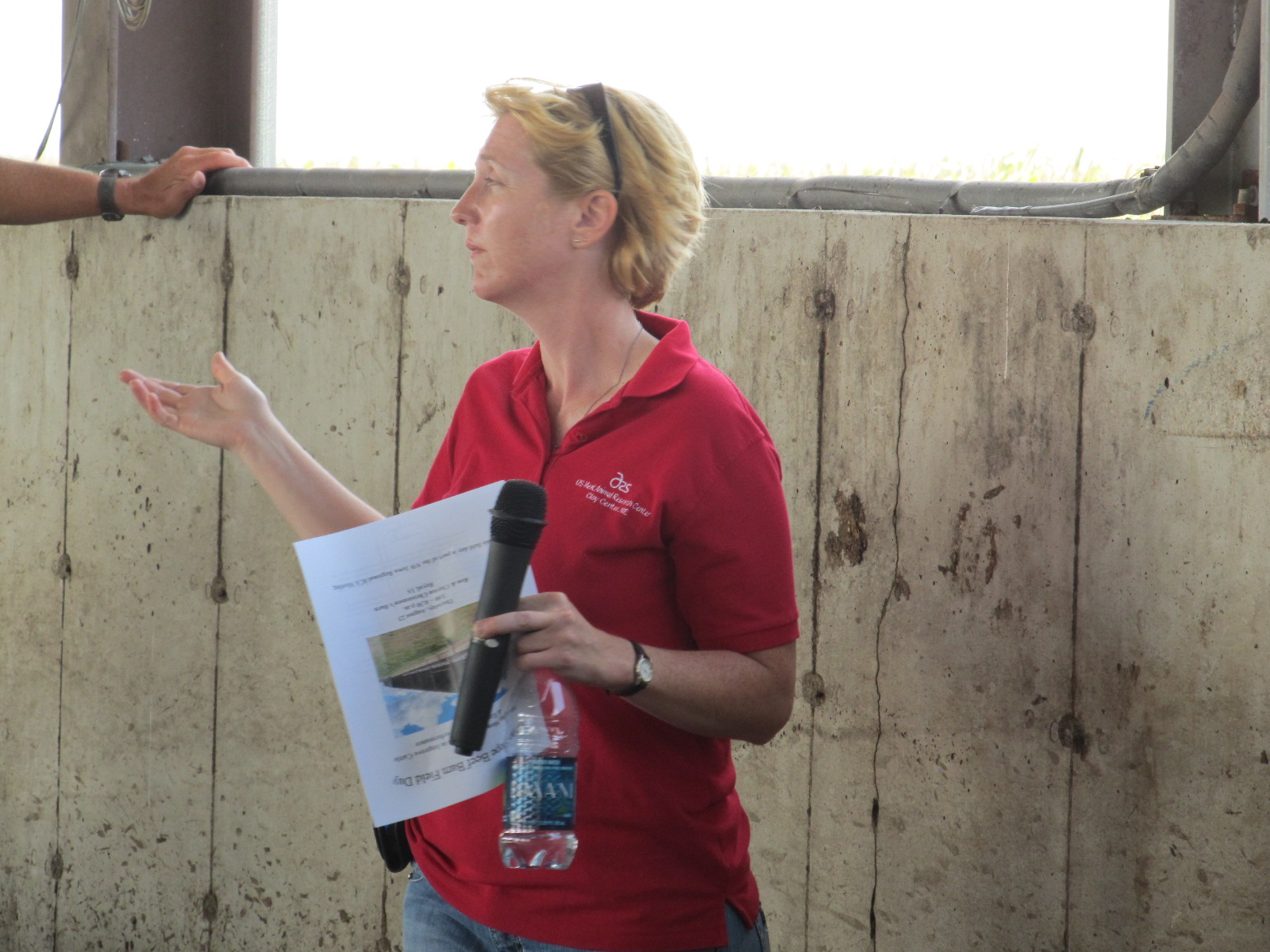
NW Iowa cattlemen listened to Mindy Spiehs, researcher with USDA ARS Meat Animal Research Center at Clay Center, share progress about the Tri-State Air Quality Project.  The update and tour at the Christensen barn were part of a NW regional meeting sponsored by the Iowa Cattlemen’s Association on August 23, 2012.

Mindy Spiehs
Mindy Spiehs talks about the Tri-State Air Quality Project.

Waste to Worth Conference Presentations

In April, 2013 researchers presented air emissions results from this project at the Waste to Worth: Spreading Science and Solutions conference in Denver, CO. These proceedings include a short written paper, recording and links to additional information. The different aspects presented were:

The above proceedings compliment the Beef Facilities Conference recordings and webcasts on the research project (both further up on this page).

Acknowledgements

This page was developed as a part of the Monoslope Beef Barn Air Quality Research project that was funded by Agriculture and Food Research Initiative Competitive Grant no. 2010-85112-20510 awarded to South Dakota State University, USDA ARS U.S. Meat Animal Research Center, Iowa State University, and University of Nebraska – Lincoln from the USDA National Institute of Food and Agriculture. For more information about the research study, contact Erin Cortus erin.cortus@sdstate.edu or Mindy Spiehs mindy.spiehs@ars.usda.gov. For more about the outreach and extension, contact Beth Doran doranb@iastate.edu.

project partner logos - South Dakota State University, USDA-ARS, Iowa State University, and University of Nebraska - Lincoln

Mono-Slope Beef Barns

There is growing interest in feeding cattle in bedded confinement buildings for a multitude of reasons including (but not limited to): performance advantages, limited space for open lots, and keeping manure dry as well as preventing feedlot run-off and reducing environmental concerns. Oftentimes these confined cattle are housed in mono-slope barns.

What Is a Monoslope Beef Barn?

This video is excerpted from a webcast presentation by Shawn Shouse, Iowa State University


Mono-slope barns, by definition have only one slope to their roof and are usually naturally ventilated. They are typically positioned to take advantage of seasonal climatic conditions. This means in the northern hemisphere the higher side would be south-facing with the lower side to the north. This allows for shade in the summer and sun exposure in the winter.  In bedded units, the bedding absorbs moisture and provides a softer surface for cattle to walk and lay on.

Comparing Confinement Farms with Conventional Feedlots


Shawn Shouse of Iowa State University compares
confinement systems to open lots for beef cattle.


While there are many advantages to mono-slope beef barns, the question that has been raised is: “What is the quality of air in these barns?”. A recent, on-going research project takes on this question.

Recommended Reading

Webcasts

Inquiries about the mono-slope barns may be directed to:

Beth Doran, Iowa State University (phone: 712-737-4230)

Kris Kohl, Iowa State University (phone: 712-732-5056)

Erin Cortus, South Dakota State University (phone: 605-688-5141)

Mindy Spiehs, U.S. Meat Animal Research Center (phone: 402-762-4271)

This page was developed as a part of the Monoslope Research project that was funded by Agriculture and Food Research Initiative Competitive Grant no. 2010-85112-20510 awarded to South Dakota State University, USDA ARS U.S. Meat Animal Research Center, Iowa State University, and University of Nebraska – Lincoln from the USDA National Institute of Food and Agriculture.

project partner logos - South Dakota State University, USDA-ARS, Iowa State University, and University of Nebraska - Lincoln

Mitigating Ammonia Emissions from Animal Agriculture

Air emissions from animal agriculture operations consist of many different gases as well as suspended particulates (dust or microbes). One of these gases, ammonia, is gaining greater attention for its role in odor, but also as a precursor of fine particulate matter (PM 2.5). PM 2.5 has implications in haze and visibility as well as human health.

The materials on this page were developed to be used by educators and professors who include this topic in their classrooms or educational programs.

Fact Sheet

Sharon L. P. Sakirkin, Texas AgriLife Research; N. Andy Cole and Richard W. Todd, USDA-Agricultural Research Service; Brent W. Auvermann, Texas AgriLife Extension Service, Texas AgriLife Research

Alternate download: Ammonia from Cattle Operations part 1 (Introduction) and part 2 (abatement) combined in a single document (17 pages; PDF format)

Videos

Reducing Ammonia Emissions from Cattle Feedyards (5 min)

Andy Cole, USDA ARS

___

Mitigation of Nitrogen Excretion Through Dietary Manipulations

Mark Hanigan, Virginia Tech (14 minutes)

Note: the pixelation present at the start cleans up at the 2:00 minute mark

Presentation Slides

Archived Webinar

This webinar contains four individual video segments (ranging from 10 to 27 minutes) that discuss current and future mitigation options for reducing ammonia emissions from poultry litter. Presenters are: Eileen Wheeler, Pennsylvania State University; Hongwei Xin, Iowa State University; and Robert Burns, University of Tennessee. The archive also includes handouts and links to additional information. If you have difficulties please see our webcast troubleshooting page. If you need to download a copy of a segment, submit a request.

Acknowledgements

These materials were developed by the Air Quality Education in Animal Agriculture (AQEAA) project with with financial support from the National Research Initiative Competitive Grant 2007-55112-17856 from the USDA National Institute of Food and Agriculture.

For questions about the materials on this page contact Dr. Kevin Janni, University of Minnesota (kjanni@umn.edu). For questions about the AQEAA project, contact Dr. Rick Stowell, Unviersity of Nebraska (rstowell2@unl.edu).

If you have presentations, photos, video, publications, or other instructional materials that could be added to the curricula on this page, please contact Dr. Janni or Jill Heemstra (jheemstra@unl.edu).

Dust From Cattle Feedyards: A Case Study From Texas

When talking about air quality around animal agriculture, one of the most common neighbor complaints comes from dust (sometimes also called particulate matter).  Dust is given off from cattle feedyards as animals move around on the pen surface. Although this dust usually settled out of the air relatively close to the feedlot, it can lead to nuisance issues with neighbors or nearby roadways. What causes dust emissions and how can we manage cattle feedyards in ways that reduce dust?

Download a copy of this video

Download this video to use in your offline education or extension programs and presentations.

Size: 50 MB

Format: MP4

Acknowledgements

This video was authored by the late Dr. Ron Sheffield, Louisiana State University AgCenter. If you have any questions or suggestions, please contact Dr. Rick Stowell, rstowell2@unl.edu

These materials were developed by the Air Quality Education in Animal Agriculture (AQEAA) project with with financial support from the National Research Initiative Competitive Grant 2007-55112-17856 from the USDA National Institute of Food and Agriculture.

A Review of Manure Injection to Control Odor and Ammonia Emissions During the Land Application of Manure Slurries

Reprinted, with permission, from the proceedings of: Mitigating Air Emissions From Animal Feeding Operations Conference.

The proceedings, “Mitigating Air Emissions from Animal Feeding Operations”, with expanded versions of these summaries can be purchased through the Midwest Plan Service.

This Technology is Applicable To:

Species: Swine, Dairy, Beef
Use Area: Land Application
Technology Category: Management (manure injection/incorporation)
Air Mitigated Pollutants: Odor, Ammonia

System Summary

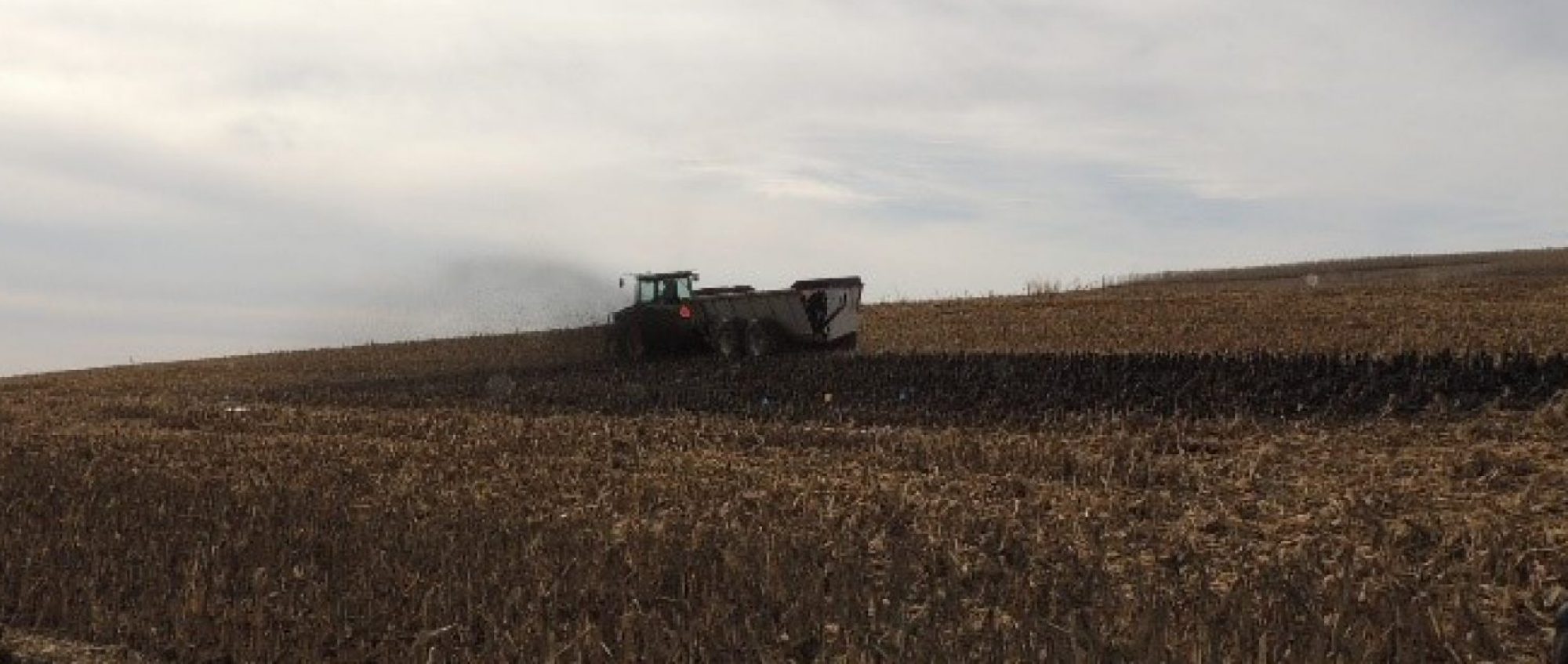
Manure slurry injection provides a significant reduction in land application odor and ammonia emissions release when compared to conventional manure surface broadcasting. Release of odor and ammonia during land application can be reduced by more than 90% compared to conventional application methods (Ohio State University, 2007). Manure can be successfully injected in both conventional tillage and no-till systems with currently available equipment. Additionally, slurry tanker wagons currently used for broadcast application can also be retrofitted with Injection tool bars.

Research by Hanna et al., (2000) compared the odor and ammonia emissions from various types of manure injection techniques to slurry that was surface applied (broadcasted). Odor and ammonia tests were run for both fall and spring slurry application. Ammonia was below the detection limit (0.2 ppm) for all but two (measured at 0.6 and 1.3 ppm) of the 72 samples taken. Broadcast application required approximately four to five times more fresh air dilutions than injection to reach the odor threshold (the level at which the odor can no longer be detected) indicating much lower odor release associated with injection.

Applicability and Mitigating Mechanism

  • Injection tools create sub-surface cavities
  • Slurry is injected into the cavity directly behind the tool
  • Injection minimizes slurry exposure to air reducing odor and ammonia volatilization
  • Injection can be used with all slurry and liquid manures

Limitations

  • Injection systems are not currently commercially available for solid manures
  • Injection can require up to 30% more tractor horsepower than broadcast
  • Injection may not be desirable when the producer does not want the soil or crop root system disturbed (forages, pasture/sod)
  • Injection equipment requires more maintenance than broadcast equipment

Cost

Generally, injection is more costly than broadcast application. Injection requires more tractor horsepower and more equipment (injection tool bars). Because tool bars are pulled through the soil, wear and maintenance is greater with injection systems. Cost increases as application rate decreases and distance from the manure storage site increases. The increase in cost as application rate decreases is due to wear on the application equipment. At lower application rates, field speed is increased causing wear (and eventually maintenance) on the equipment to increase. At a 5,500 gallons per acre application rate, commercial drag hose injection cost is currently $.014/gal compared to $.0085/gal for broadcast (Puck, 2008).

Authors

Ross Muhlbauer1, Jeremy Puck2, Ben Puck2, Robert Burns1, 1Iowa State University, 2 Puck Custom Enterprises
Point of Contact:
Ross Muhlbauer, rmuhlbar@iastate.edu

The information provided here was developed for the conference Mitigating Air Emissions From Animal Feeding Operations Conference held in May 2008. To obtain updates, readers are encouraged to contact the author.

Effect on Residue Cover and Crop Yield of Manure Incorporation Equipment

Reprinted, with permission, from the proceedings of: Mitigating Air Emissions From Animal Feeding Operations Conference.

The proceedings, “Mitigating Air Emissions from Animal Feeding Operations”, with expanded versions of these summaries can be purchased through the Midwest Plan Service.

This Technology is Applicable To:

Species: Swine, Dairy, Beef
Use Area: Land Application
Technology Category: Management (manure injection/incorporation)
Air Mitigated Pollutants: Odor, Hydrogen Sulfide

System Summary

Injection or incorporation application treatments other than broadcast almost always reduce odor during and immediately after application and have a neutral or beneficial effect on crop yield. Although the amount of odor reduction among various injection and incorporation treatments may be similar, the level of surface residue cover reduction is different. For land areas where erosion is a concern operating an application system with no more than an appropriate amount of soil and residue disturbance should be strongly considered. Costs of using injection or incorporation equipment are on the order of $0.001 to $0.003 per gallon applied depending on the type of equipment and annual volume applied. Additional application costs for using injection or incorporation equipment even in the upper end of this range are typically not greater than the cost of a secondary tillage pass. The choice of injection or incorporation style should be strongly influenced by balancing the needs for odor control, residue cover maintenance, and fertilizer placement for the subsequent crop.

Applicability and Mitigating Mechanism

  • Odor is reduced with minimal soil contact
  • Residue cover protects soil prone to erosion
  • Tillage and fertility placement may be beneficial depending on conditions
  • Greater options on flatter fields

Limitations

  • Fragile residue cover is strongly affected by equipment type and usage
  • Reduced residue cover may accelerate erosion
  • Drawbar power required may be increased
  • Needs of odor control, erosion control, and fertilizer placement should be considered

Cost

Factors affecting costs include the initial cost of the application toolbar, annual usage rate, and increased tractor power requirement to pull the injection device. Calculated costs are associated with either a custom annual application volume of 20 million gallons or private application volume of 3 million gallons, 5- (custom) or 15- (private) year equipment life, and application with a double-disc or narrow knife system. Costs of using a double-disc or narrow knife application toolbar are in the range of $0.001 and $0.002 per gallon, respectively, for the higher-volume custom applicator example. Costs are $0.0015 and 0.003 per gallon, respectively, for the lower-volume private applicator example. Costs of using additional tractor power are roughly one-third to one-half of total costs at the smaller annual application volume, but over three-fourths of costs at the higher application volume. Diesel fuel was valued at $3 per gallon. If the pass of a field tillage implement is eliminated (e.g., strip tillage) because of application, costs of injection or incorporation may be balanced by savings in the cost of the tillage pass.

Authors

H. Mark Hanna1, Steven K. Mickelson1, Steven J. Hoff11Iowa State University
Point of Contact:
H. Mark Hanna, hmhanna@iastate.edu

The information provided here was developed for the conference Mitigating Air Emissions From Animal Feeding Operations Conference held in May 2008. To obtain updates, readers are encouraged to contact the author.]