
Environmental Benefits of Manure Application

For centuries, animal manure has been recognized as a soil “builder” because of its contributions to improving soil quality. Environmental benefits are possible from manure application if manure and manure nutrients are applied and timing and placement follows best management practices. When compared to more conventional fertilizer, manure properly applied to land has the potential to provide environmental benefits including:

    • Increased soil carbon and reduced atmospheric carbon levels
    • Reduced soil erosion and runoff
    • Reduced nitrate leaching
    • Reduced energy demands for natural gas-intensive nitrogen(N) fertilizers

Manure Effects on Soil Organic Matter

Manure contains most elements required for plant growth including N, P, potassium, and micronutrients (Manure as a Source of Crop Nutrients and Soil Amendment). However, it is manure’s organic carbon that provides its potential environmental value. Soil organic matter is considered nature’s signature of a productive soil. Organic carbon from manure provides the energy source for the active, healthy soil microbial environment that both stabilizes nutrient sources and makes those nutrients available to crops.

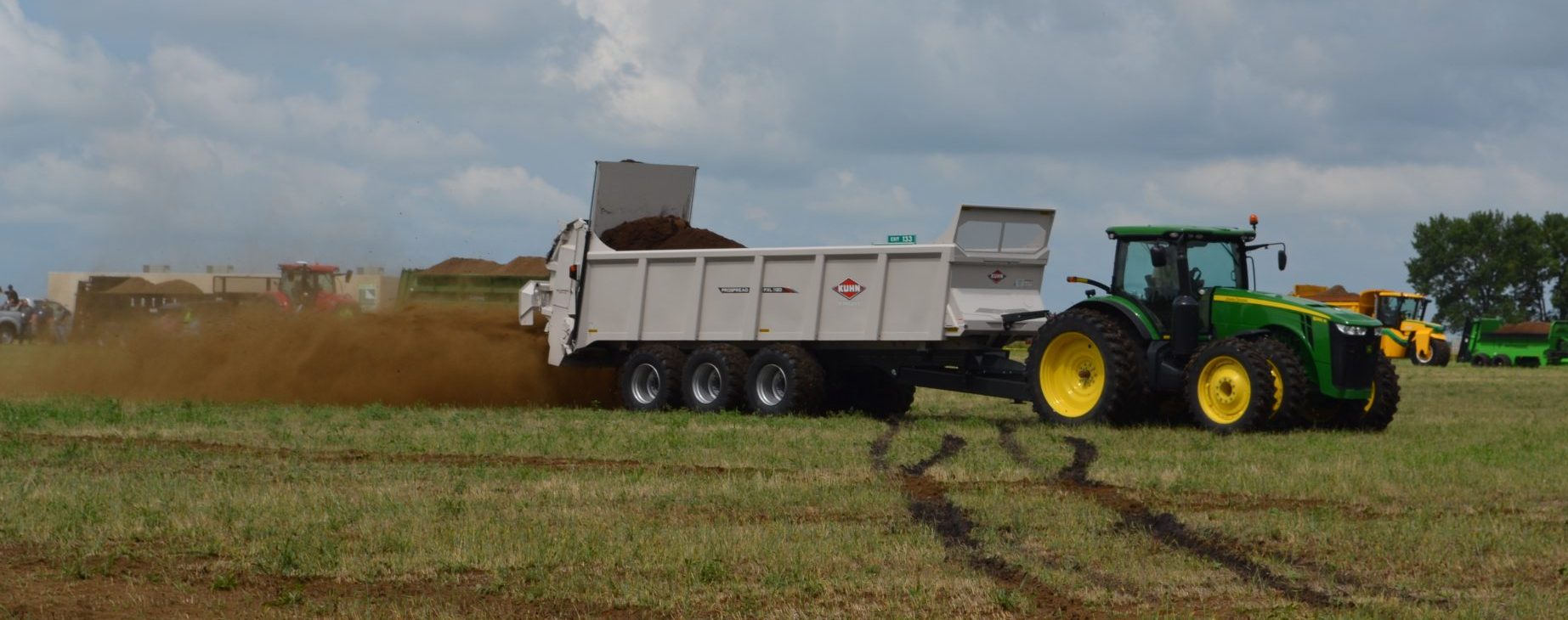
photo of solid manure spreader
Manure is comparable to commercial fertilizer as a plant food and, if applied according to a sound nutrient plan, has environmental benefits over commercial fertilizer. cc2.5 manure nutrient management group

Several long-term manure application studies have illustrated its ability to slow or reverse declining soil organic levels of cropland:

  •  

    The ability of manure to maintain or build soil organic matter levels has a direct impact on enhancing the amount of carbon sequestration in cropped soils.Manure organic matter contributes to improved soil structure, resulting in improved water infiltration and greater water-holding capacity leading to decreased crop water stress, soil erosion, and increased nutrient retention. An extensive literature review of historical soil conservation experiment station data from 70 plot years at 7 locations around the United States suggested that manure produced substantial reductions in soil erosion (13%-77%) and runoff (1%-68%). Increased manure application rates produced greater reductions in soil erosion and runoff. Additional studies during years following manure application suggest a residual benefit of past manure application.

    Overview of Manure Impacts on Soil (Mark Risse, University of Georgia). Visit the archived webinar for additional videos on carbon, fertility, and soil health.

    Manure Effects on Soil Erosion

    In addition, surface application of manure behaves similarly to crop residue. Crop residue significantly decreases soil erosion by reducing raindrop impact which detaches soil particles and allows them to move offsite with water runoff. Data has been published showing how manure can coat the soil surface and reduce raindrop impact in the same way as crop residue. Therefore, in the short-term, surface manure applications have the ability to decrease soil erosion leading to a positive impact on environmental protection.

    Organic Nitrogen

    In addition, organic N (manure N tied to organic compounds) is more stable than N applied as commercial fertilizer. A significant fraction of manure N is stored in an organic form that is slowly released as soils warm and as crops require N. Commercial fertilizer N is applied as either nitrate or an ammonium (easily converted to nitrate). Nitrate-N is soluble in water and mobile. These forms contribute to leaching during excess precipitation (e.g., spring rains prior to or early in growing season) or irrigation. Manure N’s slow transformation to nitrate is better timed to crop N needs, resulting in less leaching potential. In fact, manure N is a natural slow-release form of N.

    Energy Benefits

    Recycling of manure nutrients in a cropping system as opposed to manufacturing or mining of a new nutrient resource also provides energy benefits. Commercial nitrogen fertilizers consume significant energy as a feedstock and for processing resulting in greenhouse gas emissions. Anhydrous ammonia requires the equivalent of 3300 cubic feet of natural gas to supply the nitrogen requirements of an acre of corn (assuming 200 lb of N application). Phosphorus and potassium fertilizers also have energy requirements for mining and processing. Substituting manure for commercial fertilizers significantly reduces crop production energy costs

    It is important to remember that the environmental benefits of manure outlined in this article are only beneficial when best management practices for reducing soil erosion are implemented in concert with proper levels of manure nutrient application and use.

    Recommended Reading on Environmental Benefits of Manure


  • Authors: Rick Koelsch, University of Nebraska, and Ron Wiederholt, North Dakota State University
  • Reviewers: Charles Wortmann, University of Nebraska, and Steve Brinkman, Iowa NRCS
    Last reviewed on October 25, 2022 by Leslie Johnson, Animal Manure Management Extension Educator, Nebraska Extension.
Archived Webinars, Livestock and Poultry Environmental Learning Center

Browse Webinars in Chronological Order

Each archive page contains video clips, presentation slides, written summaries of the question and answer session (when available), and links to additional information.

Most Recent Webinars

Software Need to View Archived Webinars

Webinars require Flash Player (already installed in 98% of web browsers). The power point presentations and other documents are available in PDF format and require Adobe Reader to open.

Air Quality

Regulations

Manure Treatment Technologies

Manure Nutrient Management

Manure Value and Economics

Emerging Issues

Manure Storage, Handling and Mortality Management

Small Farms

Environmental Planning

Professional Development

LPELC Marketing

How do I use the fact sheets and social media post?

These downloadable sheets and social media posts are meant to help individuals learn about the Livestock and Poultry Environmental Learning Community.

Fact Sheets and Social Media Posts

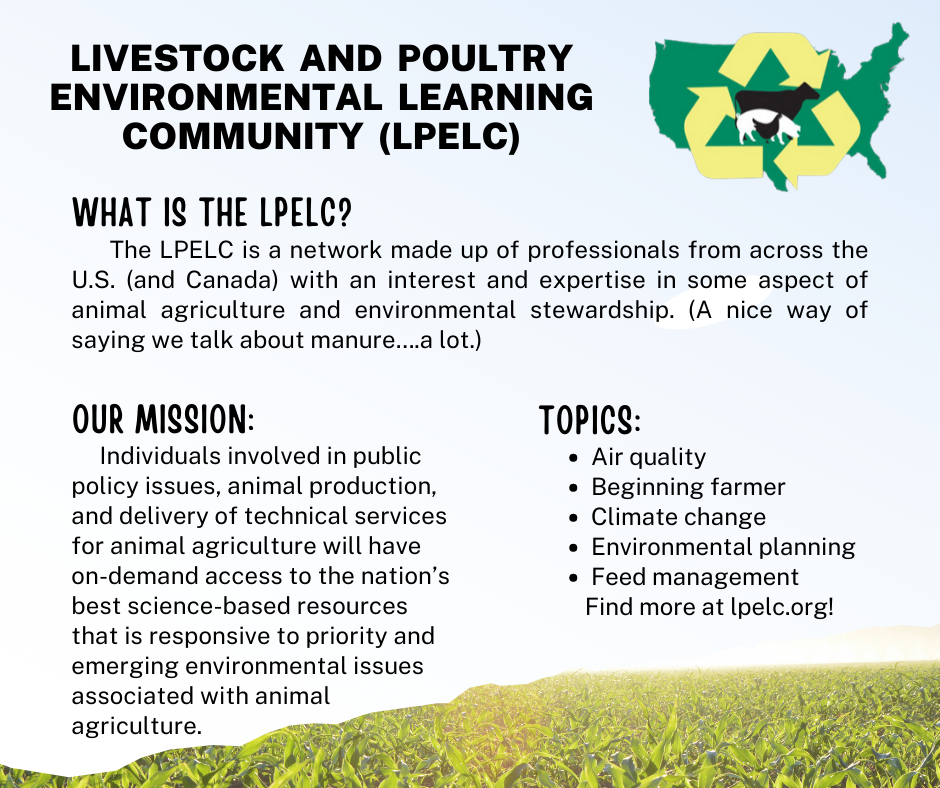
What is the LPELC?

The LPELC is a learning network that strives to bring together all types of expertise; all the way from research and technical knowledge to application of science on the farm.

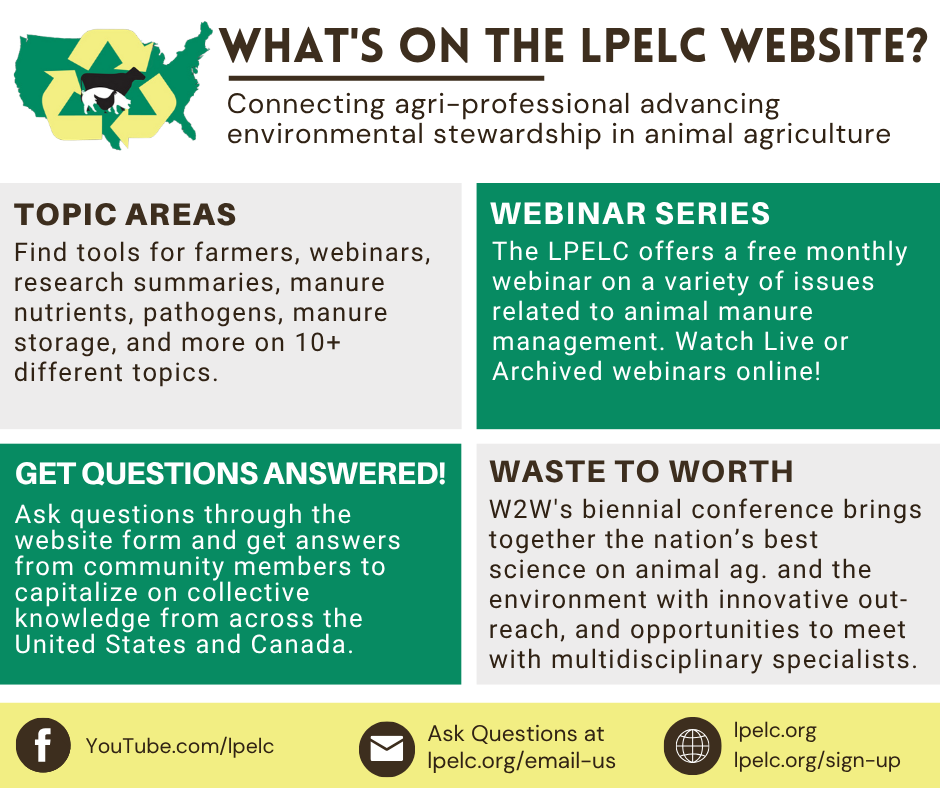
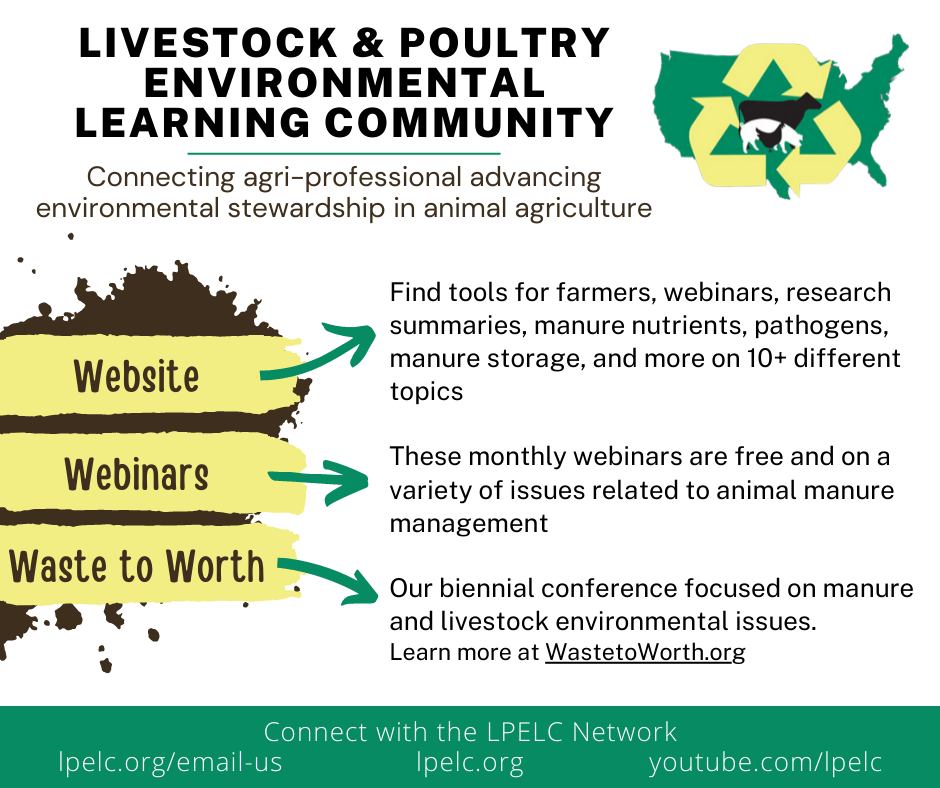
What is on the LPELC website?

The website contains educational curricula, tools for farmers, regulations, and more, across 10+ topic areas. It has monthly and archived webinars, waste to worth conference proceedings. You can also get all of your manure questions answered by experts across the country.

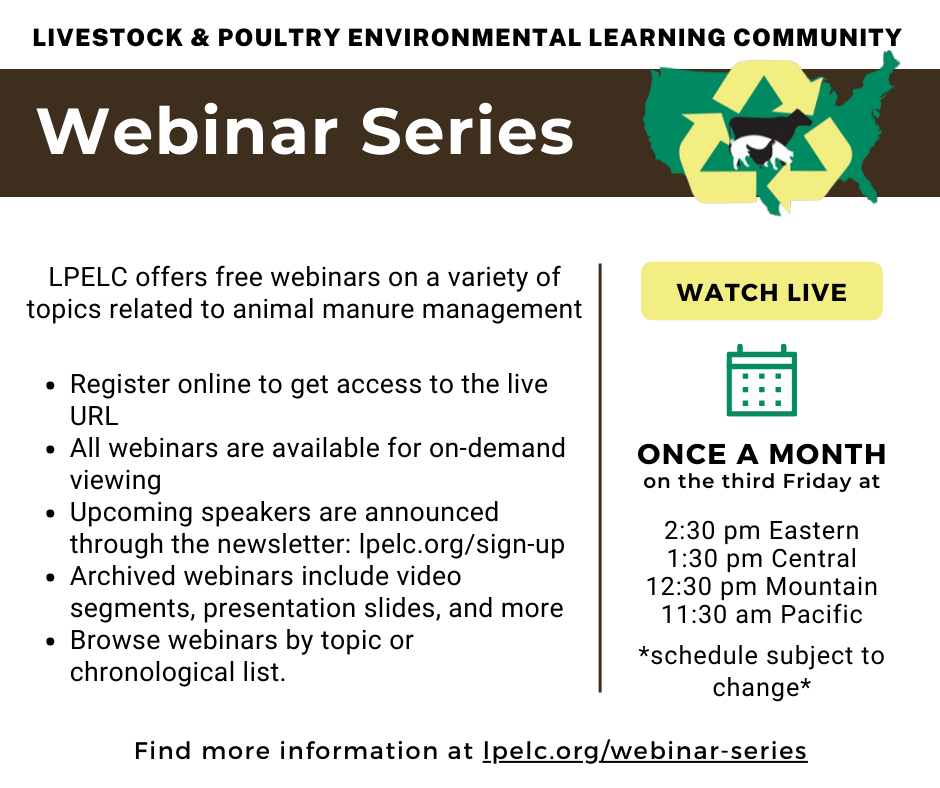
 Check out the LPELC Webinar Series

LPELC offers a free monthly webinar on a variety of issues related to animal manure management. Missed a webinar or want to watch past topic? You can find the archived webinars on our website too.

Learn about the Merits of Manure Content Library

The Merits of Manure Content Library was created to provide educators and advisors with access to recommended resources that will assist them in their discussion of manure’s  benefits and challenges.

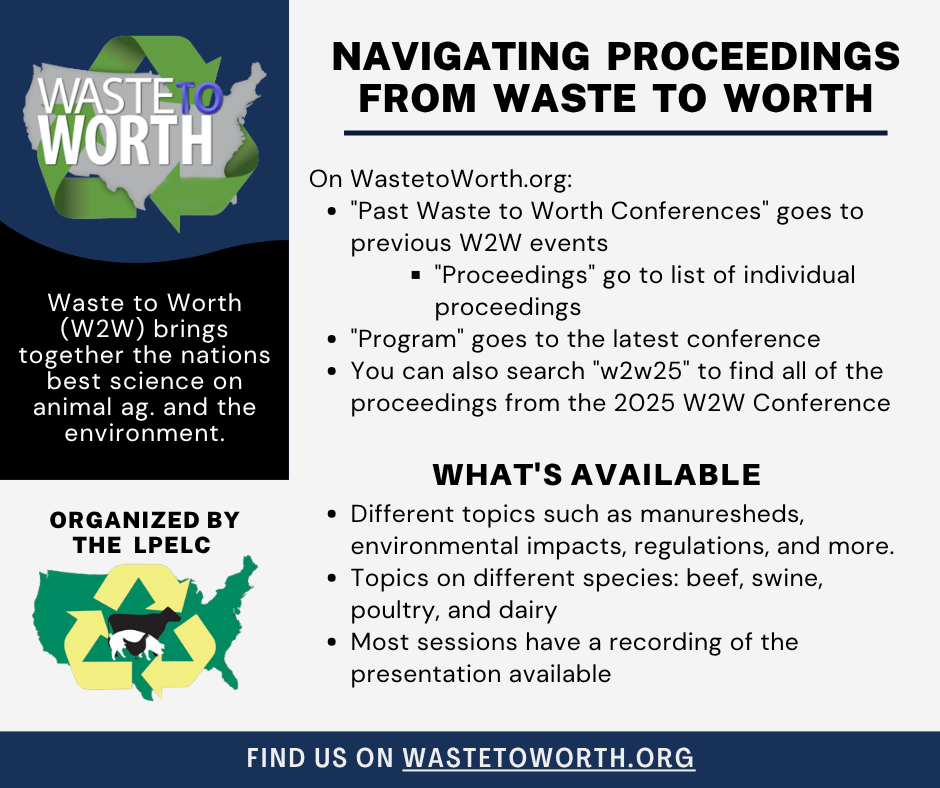
Navigate the W2W proceedings

Waste to Worth (W2W) is a biennial conference that brings together the nations best science on animal agriculture and the environment.  Find sessions about many different topics including air quality, manure management, environmental impacts, and more!

Business Cards and Half Sheets

LPELC Business Cards & LPELC Half-Sheet Cards


LPELC Factsheet Downloadable PDF Links

LPELC Factsheet Downloadable PNG Links

Economics of Anaerobic Digesters for Processing Animal Manure

Digesters are of interest with regards to climate changeenergyair quality, and water quality. However, digesters are capital-intensive and difficult to maintain. Profitability of a farm-based digester usually requires utilizing the energy, carbon credits, tipping fees, and marketing other co-products such as manure solids that are separated out and composted.

The Environmental Protection Agency’s AgSTAR program has a website http://www.epa.gov/agstar/ with information to assist livestock producers who are considering installation of a digester.  The website contains a database of farm digesters that are operating in the United States or that have operated in the past.  It also provides a spreadsheet-based screening tool to help assess the potential feasibility of a project based on factors such as the feedstock, onsite conditions, the system type and size, and the planned biogas use.

What does a digester cost to install?  Costs will vary widely depending on the situation, but the two sources discussed below show what some recent dairy farm digester installations have cost. The reports are the 2015 article by Manning and Hadrich, and the annual reports of the California Department of Food and Agriculture’s Dairy Digester Research and Development Program (CDFA).

The CDFA funded 117 dairy farm projects between 2015 and 2021.  All but one of them were covered lagoon digesters (see the fact sheet by Hamilton for a discussion of digester types).  Those funded in 2015 generated electricity, but most of those funded in 2017 and later have renewable natural gas (RNG) as the end-use of the biogas.  The AgSTAR database lists the herd sizes for 19 of these digester projects that are producing RNG.  For those projects, the average herd size was 7,479 cows and the average project cost was $947/cow or $4,384,479 total before deducting the CDFA grant.  For the entire group of 117 projects, the CDFA grant funds covered 33 percent of the total cost.

The total cost of the greenhouse gas reductions achieved by these 117 projects was $30.94 per 1 metric ton of carbon dioxide equivalent including both the CDFA grants and the matching funds, or $9.88/1 metric ton considering only the CDFA grant funding.  Those greenhouse gas reductions are calculated using methodology developed by the California Air Resources Board.

Manning and Hadrich report on 12 California dairy operations that had installed digesters and were using the biogas to generate electricity.  They found that in 2014 the average initial cost of a lagoon system was $1.1 million ($869/cow with an average herd size of 2,496 cows) while a plug-flow system was $ 1.5 million ($1,114/cow and 1,620 cows).  Subsidies covered around half of the initial investment on average.

The 12 Manning-Hadrich digesters included seven covered lagoon digesters and five plug-flow digesters.  Seven of the digesters were providing benefits to the operations that exceeded their costs after subsidies.  The other five were not operating profitably, including three of the plug-flows and two of the lagoon systems.  Three of the unprofitable plug-flow digesters had ceased operation at the time of the study while the others were all operating.  The seven profitable digesters had average annual operating costs of $0.98/cow while the five unprofitable ones averaged $2.72/cow.

Author: William F. Lazarus, University of Minnesota

Related:

Dairy Digester Research and Development Program (2022). Report of Funded Projects (2015-2022) 2022: Report to the Joint Legislative Budget Committee, California Department of Food and Agriculture, from https://www.cdfa.ca.gov/oefi/ddrdp/docs/2022_DDRDP_Legislative_Report.pdf.

Hamilton, D. (2019). “Types of Anaerobic Digesters.”   Retrieved 8/4/22, 2022 from https://lpelc.org/types-of-anaerobic-digesters/.

Manning, D. T. and J. C. Hadrich (2015). “An evaluation of the social and private efficiency of adoption:  Anaerobic digesters and greenhouse gas mitigation.” Journal of Environmental Management 154: 70-77.

U.S. AgSTAR. “AgSTAR:  Biogas Recovery in the Agriculture Sector.”   Retrieved 8/3/22, from http://www.epa.gov/agstar/.

Decision-Support Tools

ManureTech DST

The dairy and swine decision-support tools developed by the MaNuRe Project are based upon inputs related to:

    • herd characteristics,
    • manure production,
    • crop selection,
    • crop fertility needs,
    • equipment,
    • labor and land constraints,
    • capital and operating expenses, and
    • management priorities.

The tools provide the user with rankings of potential manure management system scenarios, based upon management’s prioritization of various economic, environmental, and functional/logistical criteria. There are two versions available, swine (now available) and dairy (coming soon).

Swine

Dairy

Functionality and Logistics Survey: Results from this survey will provide insights to the DST developers by providing them with information from boots-on-the-ground professionals. The information we are looking for is related to the adoption rate, operational reliability, and operational resilience of different technologies that may be used on dairy and swine farms. Participants will provide regional information to avoid skewing results.

Take the surveys:

Newtrient

Newtrient helps dairy farmers, technology providers, and other stakeholders to assess manure management opportunities and challenges to make informed decisions.  Their mission is to “reduce the environmental footprint of dairy and make it economically viable to do so.” They have three priorities: 1) manure-based products, 2) ecosystem service markets, and 3) innovative technologies and effective practices.

Newtrient was founded by 12 leading milk cooperatives representing almost 20,000 dairy farmers that produce approximately half of the nation’s milk supply. To learn more about Newtrient, go to FAQs – Newtrient.

MaNuRe About

Management of Nutrients for Reuse (MaNuRe) aims to address the need in livestock agriculture to better manage and reuse both water and nutrient resources. MaNuRe is a multi-university, multi-disciplinary project to develop, assess, and support the best in manure treatment technology.

With the combination of continued global population growth and trend of extreme climate events and the resulting variability in reliable water resources, the requirement of water recycling becomes an integral part of agriculture wastewater resource management. Important nutrients are also lost to wastewaters, but could be recycled and reused for food production. Water treatment and nutrient needs vary geographically and change based on production, thus the user-driven strategy inherently demands a systems-based, flexible decision-making approach.

Mission and Goals

Our Team

Articles and Publications

Extension and Outreach

ManureTech DST

Research